Tag: travel

The Mighty Million Dollar Highway

Ouray to Durango – 135 miles

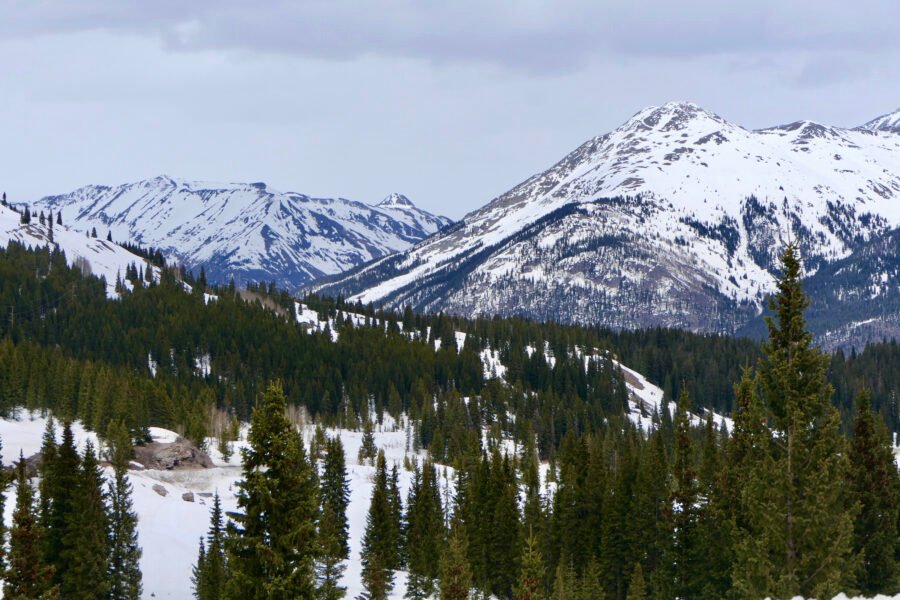
It’s early morning in Ouray, Colorado and we’re preparing to head south, up into the mountains to tackle the Million Dollar Highway. Classed as one of America’s most spectacular roads, there are a few theories as to where the name for the highway came from. It could be that the spectacular views looked a million dollars, or the fact that locals used to joke that they would only attempt the journey if paid a million dollars to do so. The steep grades, winding turns, snow and ice for half the year, and a distinct lack of guard rails makes this mountain pass a challenging drive. Almost no guard rails seems madness, but with up to 300 inches of snow falling annually, it allows the ploughs to push the snow off the side of the road down into the gorges. Anyway there are few places either enough room to build barriers. It also means drivers take more care and negotiate the hairpins as if their life depended on it – which it does.

Though the entire stretch from Ouray to Silverton is called the Million Dollar Highway, it is actually just the twelve miles south of Ouray that carry the name, through the Uncompahgre Gorge, which is an incomprehensible name to pronounce anyway, to the summit of Red Mountain Pass.  The name most likely came from the fact that each mile on the Million Dollar Highway cost around a million dollars to build.

Million Dollar Highway

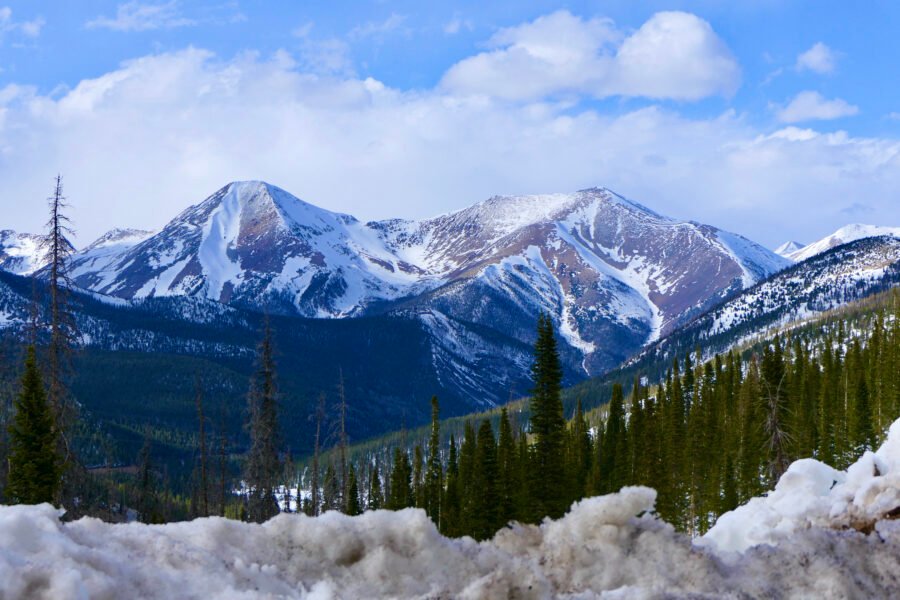
The snow starts to fall just as we are leaving Ouray. I am somewhat apprehensive about starting the journey. If it’s falling heavily here, what is it like at 11,000 feet, coupled with the difficulty of the drive even in good weather. Like all good adventurers we ignore the warnings and carry on. As usual Americans tend to overdo the hype. Yes – the snow is thick, the drive spectacular, the guard rails absent and the climb awesome, but it was no more difficult than driving a one-track road in the north of Scotland. Just a lot fewer highland cows to avoid. 
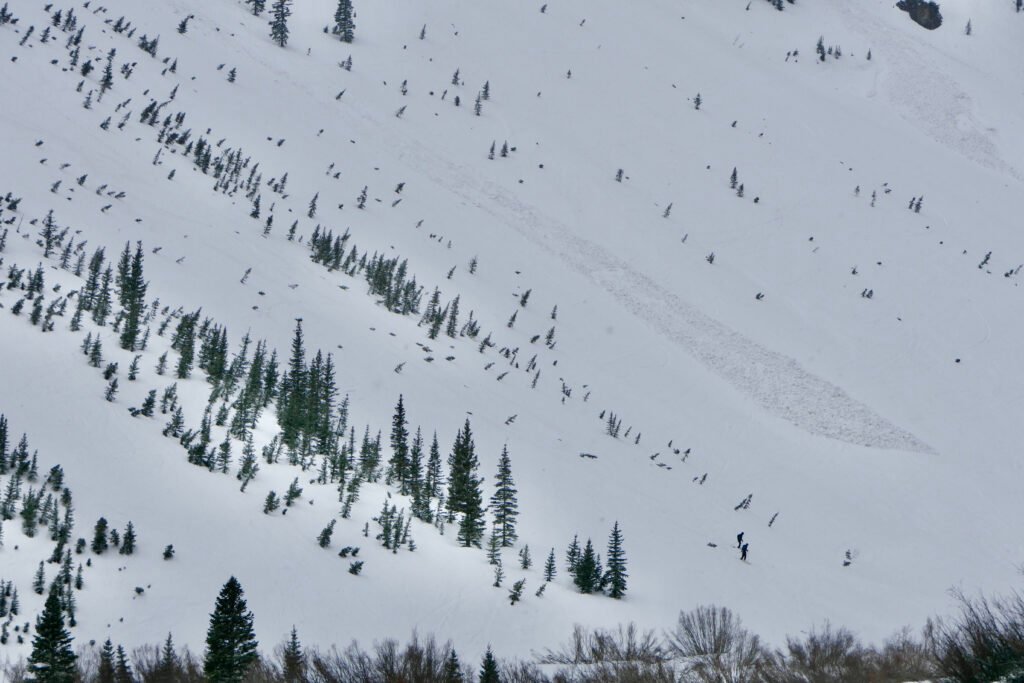
Two Lonely Skiers

Just past the summit we watch two skiers sliding to a halt after a steep run down one of the many slopes. With no ski lift, it must have been a helluva climb to get up the mountain to the point where it made sense coming here to ski in the first place! I admire their tenacity, if not their reasoning.

Old Mine, Ironton

We’re still at 9,800 ft when an old abandoned mine comes into view as we run into Ironton, described by Wikipedia as an “extinct” town. I would never describe a settlement where buildings still stand erect and proud, if somewhat dilapidated, as extinct. Communities like this which were once thriving, communicate a vision of what has gone before, like memories of a distant relative who has passed on. This little enclave may have passed, but somehow the soul remains in the wooden timbers still resisting the elements, but as each winter passes more abandoned shacks topple in the winter gales.   

This is part of the Red Mountain Mining district where up to 40 mines operated at its peak. There is a good deal of snow today, and apparently not an easy track to encourage us to investigate, so we leave it for another trip, and carry on down the mountainside into the larger and non-extinct popular old mining town of Silverton. 

Silverton

I love the place immediately. It’s uncompromising, with a seemingly haphazard layout, but still has a classic wild west style Main St – long and wide enough for a Jumbo jet to land with room to spare. We walk around the few streets taking in the film-set like buildings. With exotic names such as Bent Elbow, presumably a saloon, Shady Lady Saloon most definitely a bar, and Natalia’s Restaurant. The latter advertises itself in the window as the former brothel in days gone by, pointing out that this service is no longer available, but the food is good. Shame really.
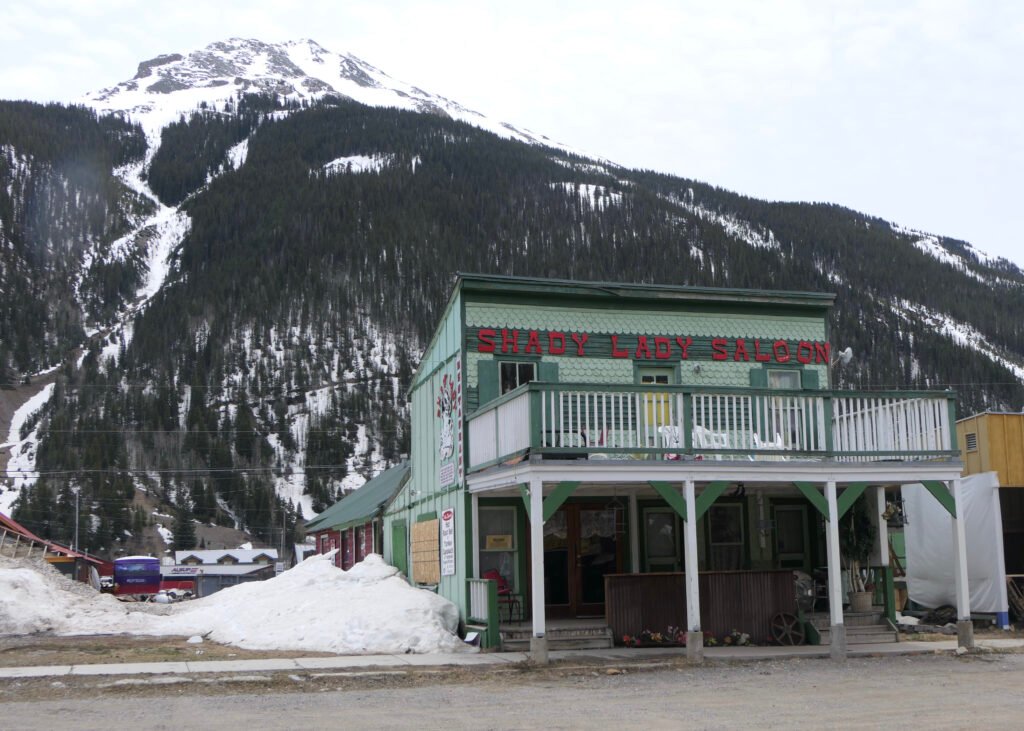
In July 1882 the Denver & Rio Grande Railroad rolled into Silverton from Durango for the first time. Apparently, the growth was dramatic as by the following year, Silverton boasted of having a population of 2,000 people with 400 buildings, including 2 banks, 5 laundries, 29 saloons, several hotels and a red-light district situated on Blair Street which would ultimately assume great notoriety. 
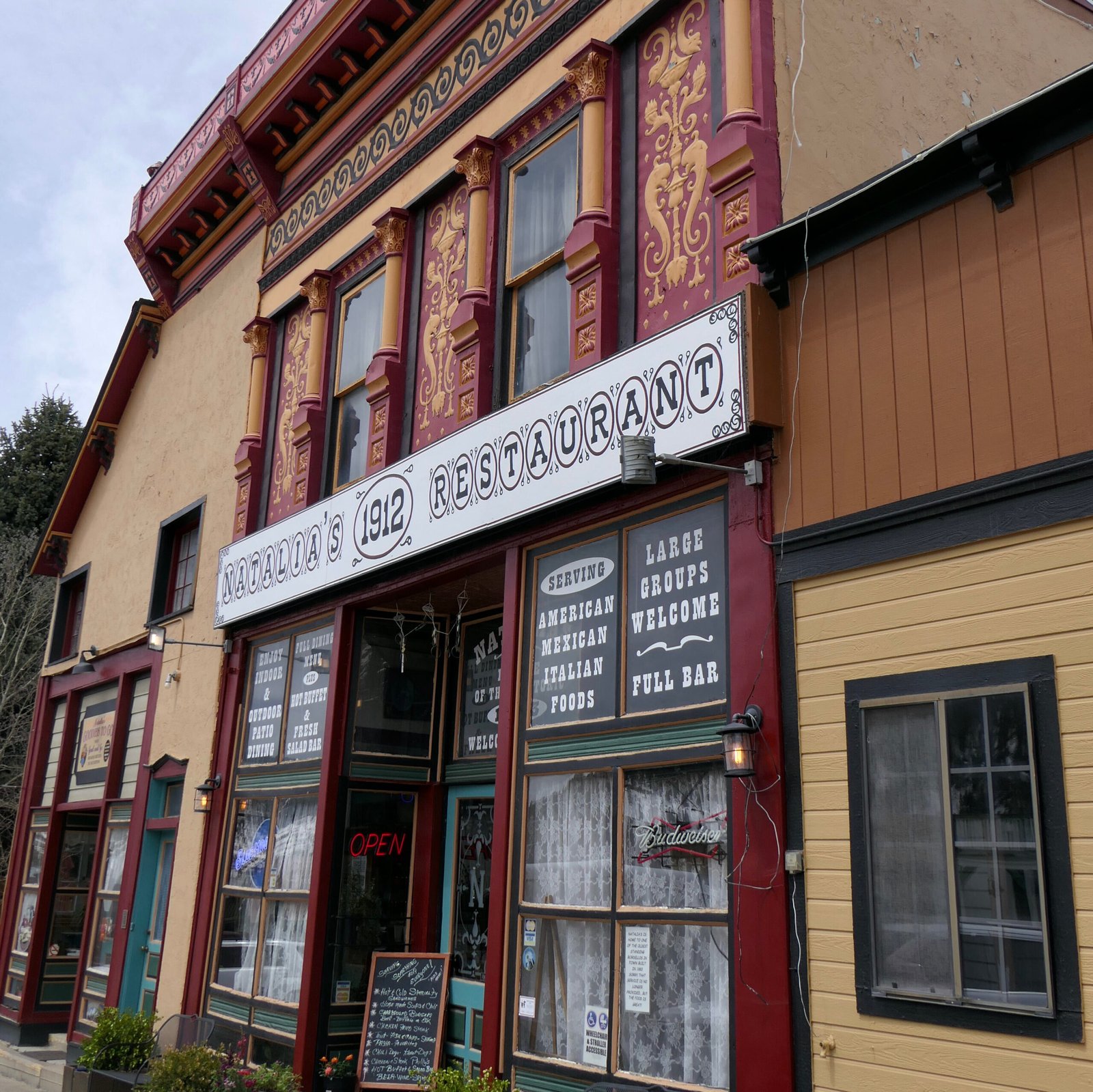
Natalia’s Restaurant

Eight years earlier, men were bringing their wives and families to live in Silverton. This influx of families provided an incentive for citizens to keep at least part of the town respectable. An imaginary line apparently ran down Greene Street dividing the town between the law-abiding, church-going residents and the gamblers, bordello’s, variety theatres, dance halls and saloons. Gambling and prostitution were generally accepted so long as the practice didn’t upset the more respectable areas of town and indeed the fines imposed for scandalous or drunken behaviour were put to good use to improve Silverton facilities. Bordellos flourished. Saloons stayed open round the clock. Silverton was wild, wicked and sinful. Then came the crash of 1893 and the exodus began. Saloon keepers closed their doors. Dance halls were boarded up, and the bordello’s went quiet.

Today for miles around, the ghostly remains of the bonanza days are visible, boarded-up mines and windowless cabins recalling a time when Silverton roared. Now the town has nothing but tourism to keep it afloat.

We head into a shop entitled Railroad Art where we meet the owner Scotty, a fascinating character who tells me his wife has only just come back from her home country of Thailand. Apparently, she doesn’t do winters in Silverton which at -15 degrees centigrade on an average day, I’m with her on that. Scotty stays behind to mind the store. He regales me with tales of the railways in the UK. He knows them all and I appreciate his knowledge but by the time we get down to talking about the size of track gauges, it’s time to depart. I buy a poster out of a desire to make Scotty’s day, and he informs us that the steam train is due in town in a few minutes.
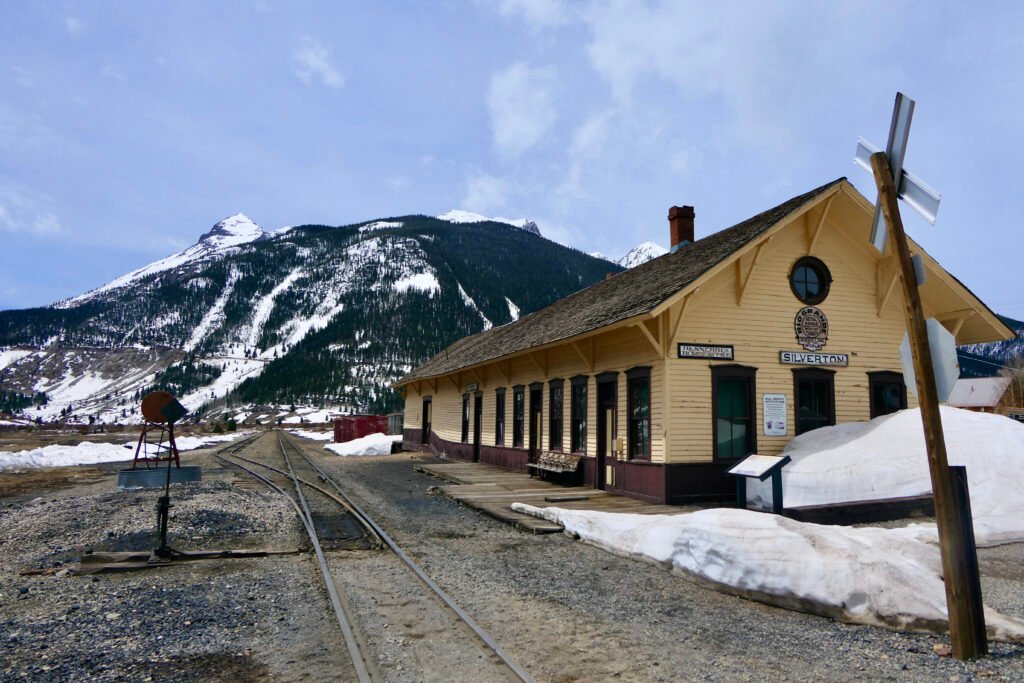
Original Silverton Station

We rush down to the yellow clapboard station just at the edge of town as a high-pitched whistle in the distance heralds the arrival of the Durango and Silverton steam train, lumbering through the valley into town. As we stand expectantly beside the track, the train puffs into the station, then through it and keeps on going with steam hissing like a dragon. It disappears up a side street where the track finishes right in the middle of town. Clearly, we had miscalculated the need for those onboard to be dropped right outside the best café in Silverton. Their legs clearly couldn’t sustain the 200 yard walk from the original platform where we stood. What would all those long disappeared hardy miners have thought?
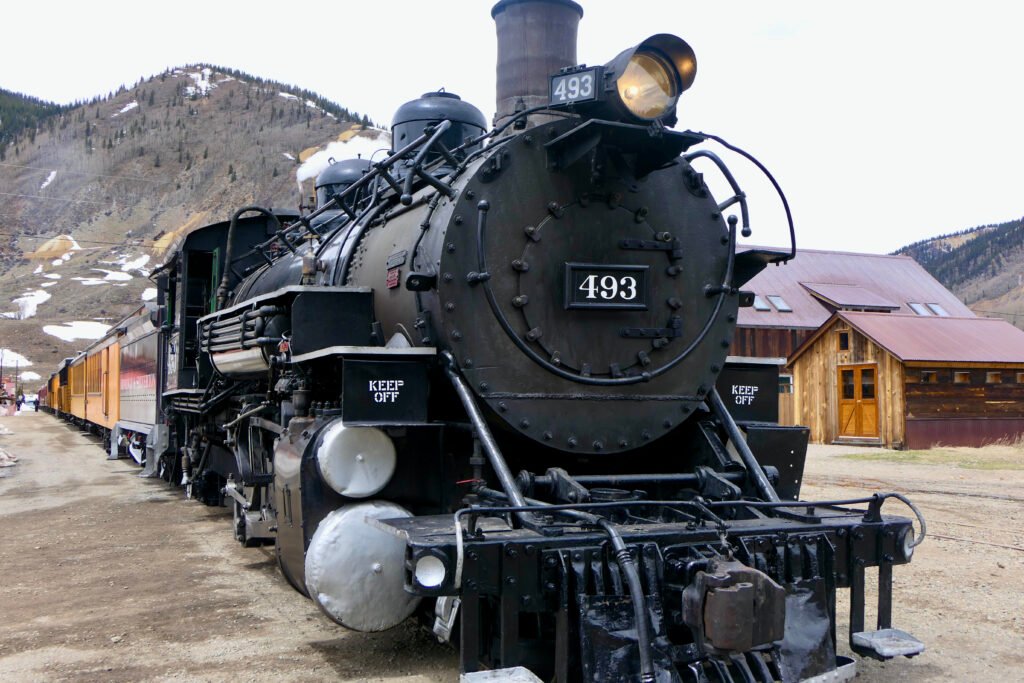
Rain hangs in the air above the old Victorian buildings, as the train idles on the track like some great black panther waiting to pounce. The visitors have two hours to explore the town, which is probably an hour too long, unless you are going to take in a leisurely lunch. There isn’t a lot to see here, but it’s as authentic an old mining town as you can get, in a time where tourists provide the only income. 

The black smoke pours from the locomotive as it fires up and gets ready to leave. Passengers boarded, it trundles out of town with its whistle sounding a mournful farewell.
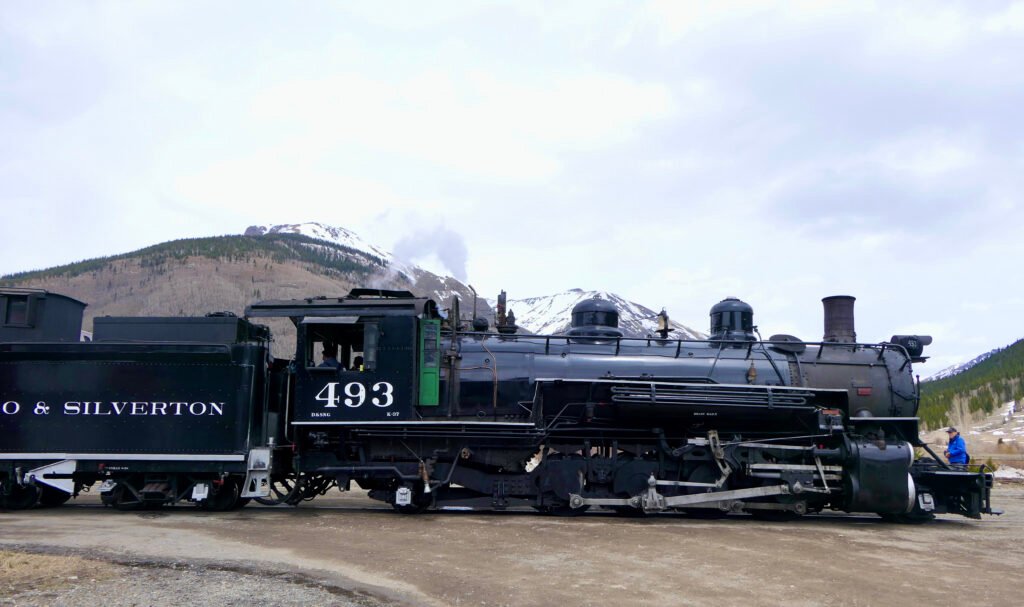
As it disappears on its 3.5 hr journey back to Durango, rain soaks the San Juan Mountains in the background, weeping at the visitors departure. That is until tomorrow, when the next haul of day trippers arrive and the shops in town can smile again. Silverton’s boom days ended years ago. Without the train and its summer tourists, you get the feeling only a Rocky Mountain ghost town would remain.

Highway 550 south, or San Juan skyway to Durango is peppered with scenic overlooks, as each view tries to compete with the next in some high altitude “best panorama of the year” contest. Admittedly the actual high point of the drive isn’t so much the 11,000 ft Molas Pass, more the stunning stretch of highway where the views of rolling country meadows backed by jagged peaks, split your attention between road and mountain range.

In Catholic doctrine, souls atone for past sins in purgatory before entering heaven. For centuries, purgatory was often regarded as an actual physical place. Well today we find it. The town of Purgatory is hiding in the San Juan Mountains 25 miles north of Durango. The name originated from some witty farmer who lived in the area way back. He adopted the name for a nearby creek, a tributary of the Rio de las Animas Perdidas (the River of Lost Souls), dubbed by Spanish explorers for a group who disappeared on the river during Durango’s early history. I wonder if they were all Catholics?……..Now it’s a ski resort of some renown, where no doubt lost souls are a fairly regular occurrence on the slopes or in the bars.

We roll into Durango as the late afternoon sun is slowly placing a golden silk sheet over the surrounding hills.  Our AirBnB accommodation is down a short dirt track, which for some unknown reason always suggests to me that at the end of the road some mysterious cabin in the woods might appear, straight out of a horror film. Indeed, a large wooden house now sits in front of us, with a barn style front door, the top half open just asking you to lean over and peep in to view the terror beyond. However, it’s a bit difficult to re-create a scene from some spooky movie when the place is called “Country Sunshine Bed + Breakfast”…………We like the place immediately, and our hosts Walter and Jodie are generous, kind and helpful. The dog seems to like us too, and we thank me for booking two nights here as we feel very comfortable.  

The Black Canyon of the Gunnison

Gunnison to Ouray, Colorado – 107 miles

You would think that the settlement of Gunnison would be relatively near the Black Canyon of the Gunnison, one of Colorado’s hidden gems. Although the Gunnison River starts from the headwaters above town, we take over an hour to drive the 60 miles to the Black Canyon National Park. Its location deters most tourists or as one wag suggested, who wants to drive five hours from Denver to look at a hole in the ground, which is a bit mean-spirited to talk about the poor old Black Canyon like that. It’s been around a long time and will still be here after the wag and all the rest of us have gone. It’s old, very old. Some of the oldest rocky and craggy spires in America dating back around 60 million years.

Lake Fork

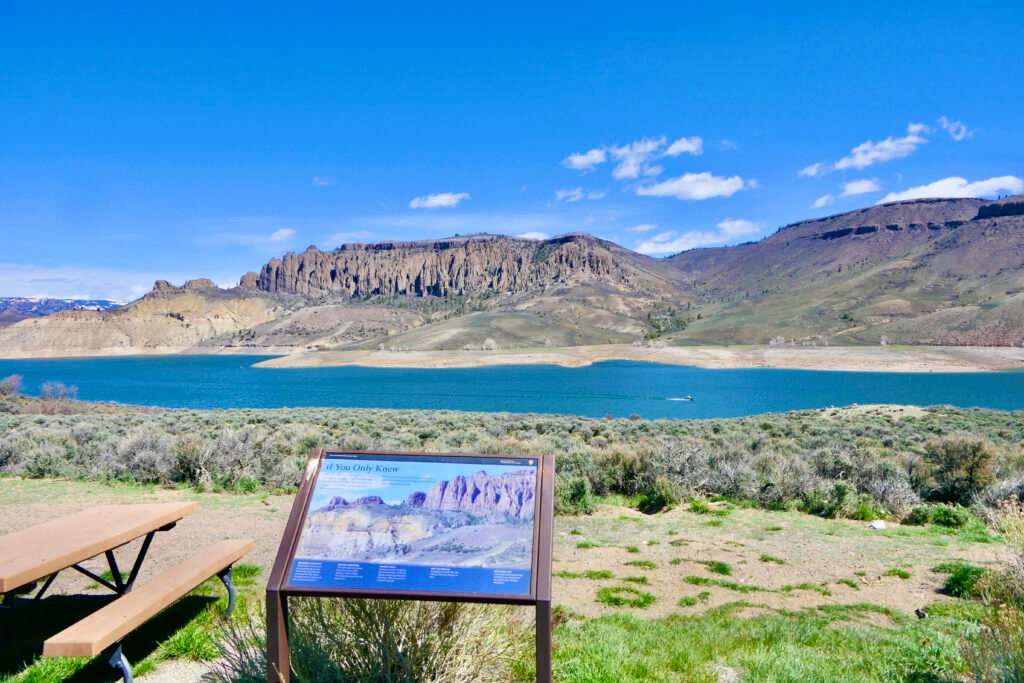
On the drive from the sparsely populated town of Gunnison, we encounter exotically named landmarks such as Sheep Knob, Poverty Mesa and Coffee Pot Hill, and spend the rest of the journey speculating about how they got their names, much to our childish amusement. We pause at Lake Fork, where the water looks surprisingly low but spectacularly blue. A couple of hawks dangle in the sky, searching for some unfortunate morsel that unknowingly will make itself available for lunch. We watch for a while, hypnotised by the serenity of aerial activity, before a truck hurtles past the layby, its backdraft shaking the car and subsequently me, into action. Never liked truck drivers, ever since I saw the movie “Duel” with Dennis Weaver.

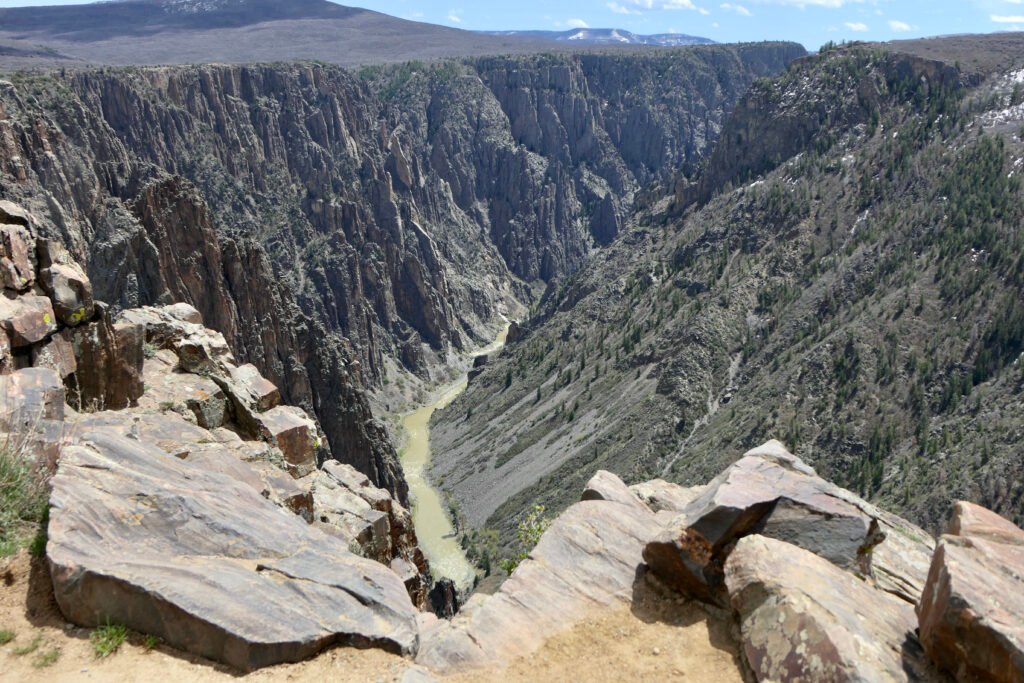
While the more famous Rocky Mountain National Park further north sees over 4 million visitors every year, the Black Canyon, being relatively out of the way, welcomes only around 300,000 annually, but we consider ourselves members of the lucky few. The park boasts natural wonders all around its 2,700 foot cliffs that plunge down to the Gunnison River. The brochure describes it as a small park with a big view, which just shows you that Americans still possess a sense of humour. Small is a somewhat relative word to describe this place compared to somewhere like the Grand Canyon. Gunnison is narrower, and because of this it’s more like a giant chasm, yet somehow manages to feel deeper than its neighbour down the road.

Black Canyon of the Gunnison

The Annual National Park Pass (now $250 from 1 January 2026 for overseas visitors) is still a bargain, especially if you are visiting more than a couple of parks. The ranger at the booth greets us warmly and asked where we’ve come from, obviously with instructions from above to survey the daily intake. I always try to be careful with my accent with Americans, so have learnt to pronounce it “Scatland” instead of Scotland. He looks at me quizzically, and I’m convinced he hasn’t a clue where we come from, but he exclaimed “that’s a long way”. Mind you, in his world, so is Denver! There are 18 Scotland’s in the USA, maybe he was thinking of one of them.  

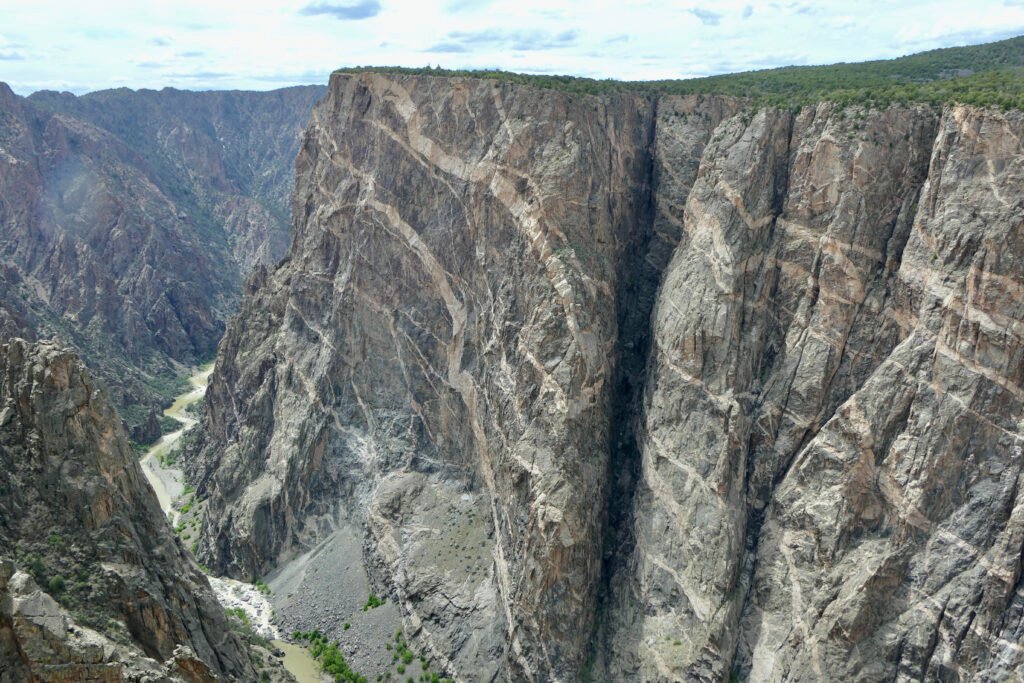
Painted Wall of the Black Canyon

The South Rim drive itself is short, at seven miles, but there are 12 viewpoints along the way with some of them requiring a short hike. The big four overlooks at Gunnison Point, Chasm View, Painted Wall, and Sunset View provide a sense of wonder at the scale of this magnificent place. Pulpit Rock if you have the time, makes it number five. There are no restaurants in the park, although you would think that after 60 million years at least a coffee shop would have been nice, but you can’t have everything. We didn’t come prepared with a picnic, and neither did we have what would become standard fayre for lunch on our journey – a Subway sandwich. We move on.

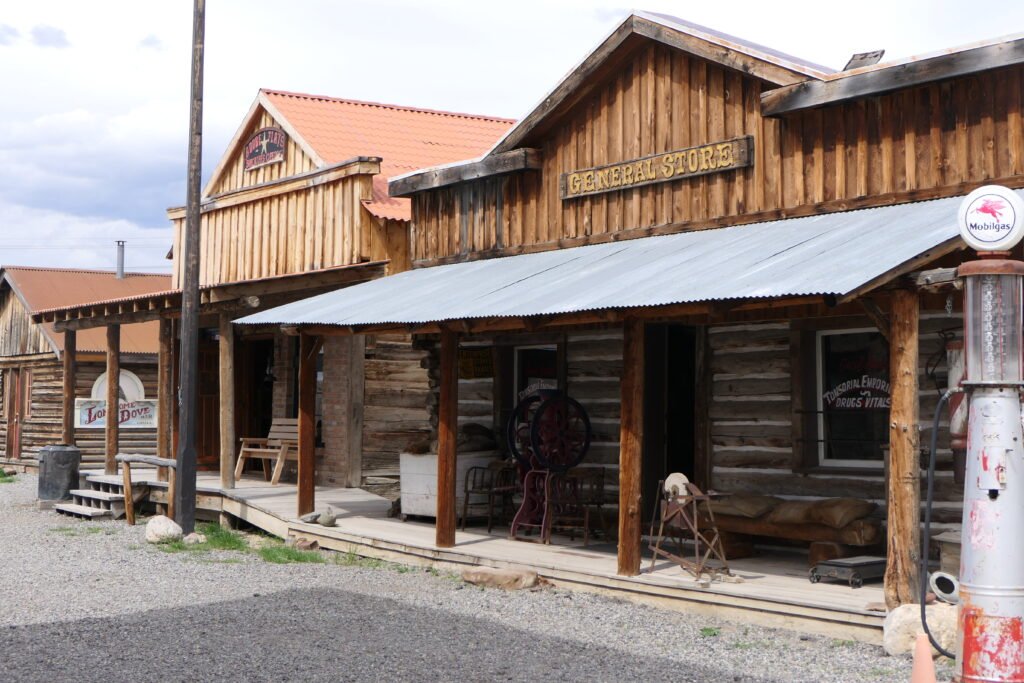
Travelling towards Montrose, we shoot past a remote outpost with a ragged sign advertising the “Museum of the Mountain West”. I realise I had listed it as one of the places to visit, so we turn round and find a parking spot. We are the only vehicle there which doesn’t bode well. I park in front of the office, step up to the boardwalk and have to bend down to open the shop door its so small. Its creakiness gives the place a reassuring authenticity, which is comforting. Like being in an old Western movie. 

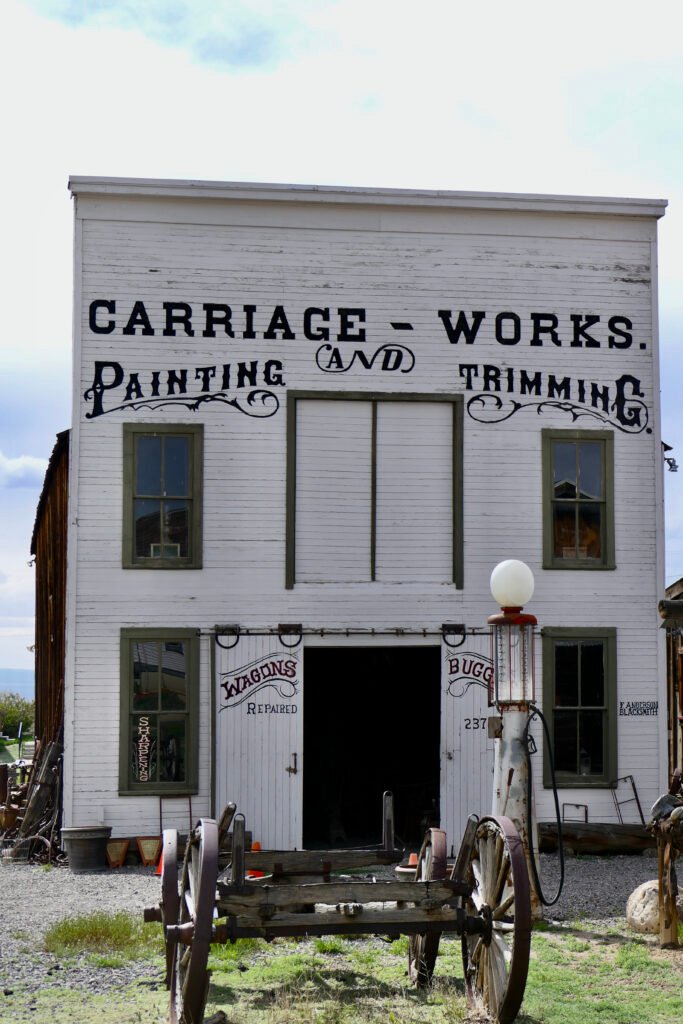
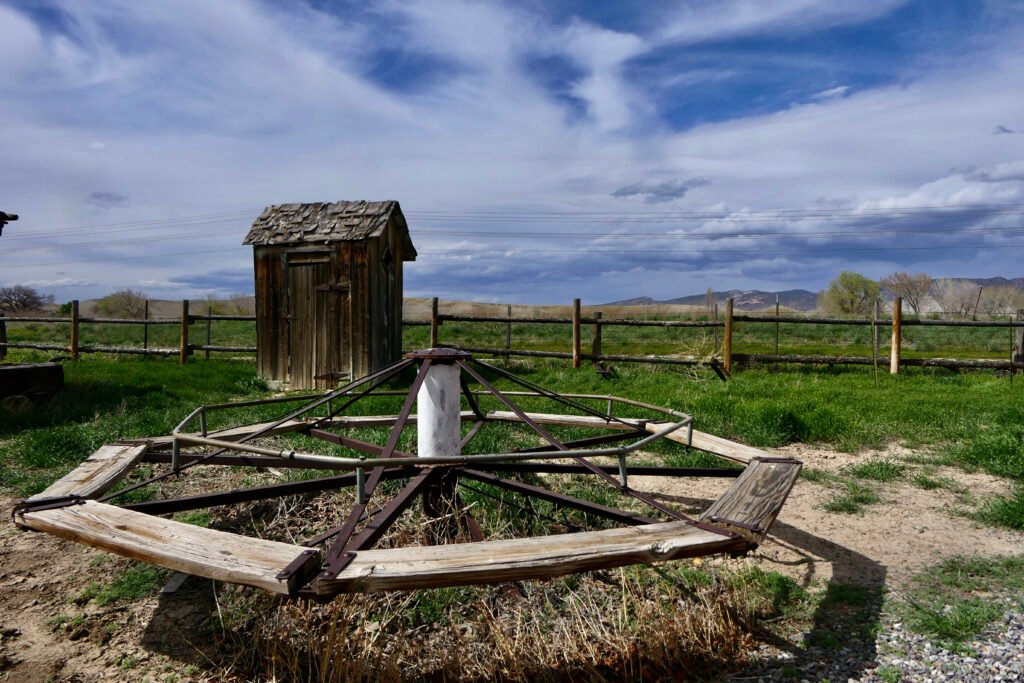
Two older ladies with big smiles welcome us with open arms and indeed, open tills, as I pay the $15-00 entrance fee. My initial thought is that it’s a steep price to look around half a dozen ramshackle buildings. How wrong could I be? This was another gem found in the wilds of Colorado. The buildings I had designated ramshackle in my first impression of the place, turn out to be little diamonds in their own right. The carriage works, still housing little carriages, the church still echoing God’s words in its old Western way, the school- house with tiny desks where the little people would have learnt more than a little. Behind each structure there is another building, then another. Twenty-eight in total. The blacksmith shop, seemingly abandoned, then the saloon looking pretty much as if it is still in full working order. Back behind the office there is a museum, with a fascinating indoor street adorned with little shops all crammed with artifacts. All 750,000 of them, all catalogued, and all in their right place and digitally recorded. It is quite amazing. A lot of love and attention has been poured into this place.

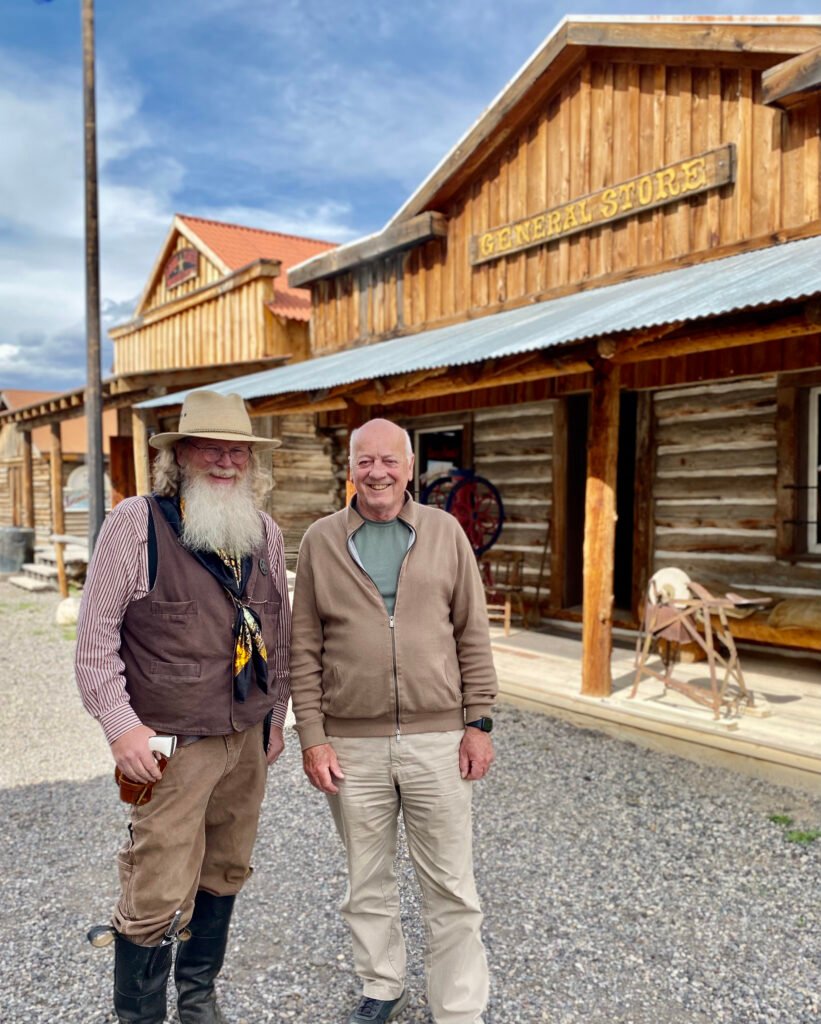
Then I meet Cory, the museum guide. A wonderful, generous old timer with a full white beard, dressed as a sheriff, who has been helping visitors at the museum for several years. We have a long chat walking through the complex, getting to know each other. He’s just a big kid at heart, with a capacity to express the joy he has in his job and adds to the attraction of this quirky place. I’m convinced he doubles up as Santa at Christmas. Thank you, Cory, it was a pleasure to meet you. For all the wonderful scenery that surrounds us, it is the people you meet that leave the lasting impression. 

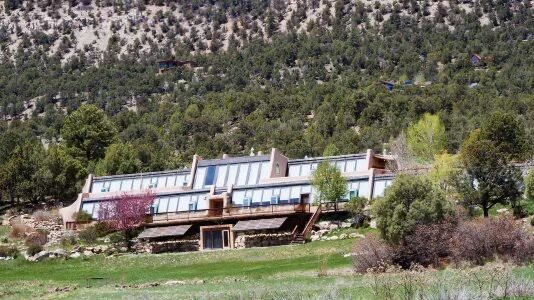
We drive on to the town of Ridgeway where John Wayne filmed “True Grit”, and to my surprise it is also the former home of Dennis Weaver who died in 2006 aged 81yrs from prostate cancer. Considering I was thinking about Weaver a couple of hours ago it feels a little spooky.

In the late 1980s, he built his new residence, which incorporated various recycled materials, such as old automobile tires and discarded cans. It also featured passive solar power and other ecotechnologies. Weaver called his home Earthship, where he and his family lived for over 14 years. 

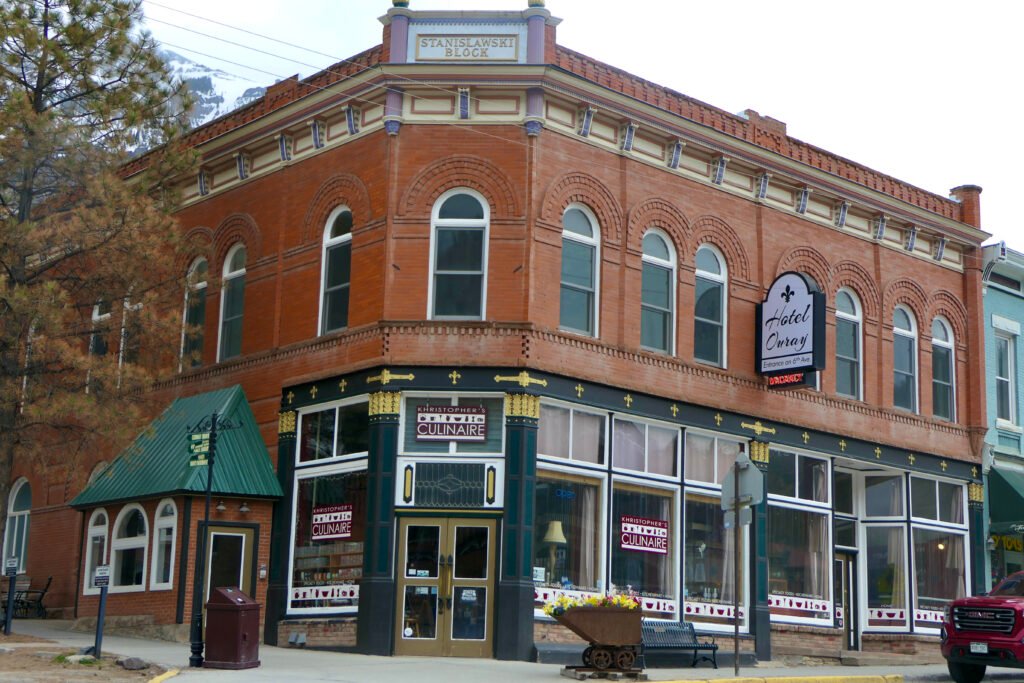
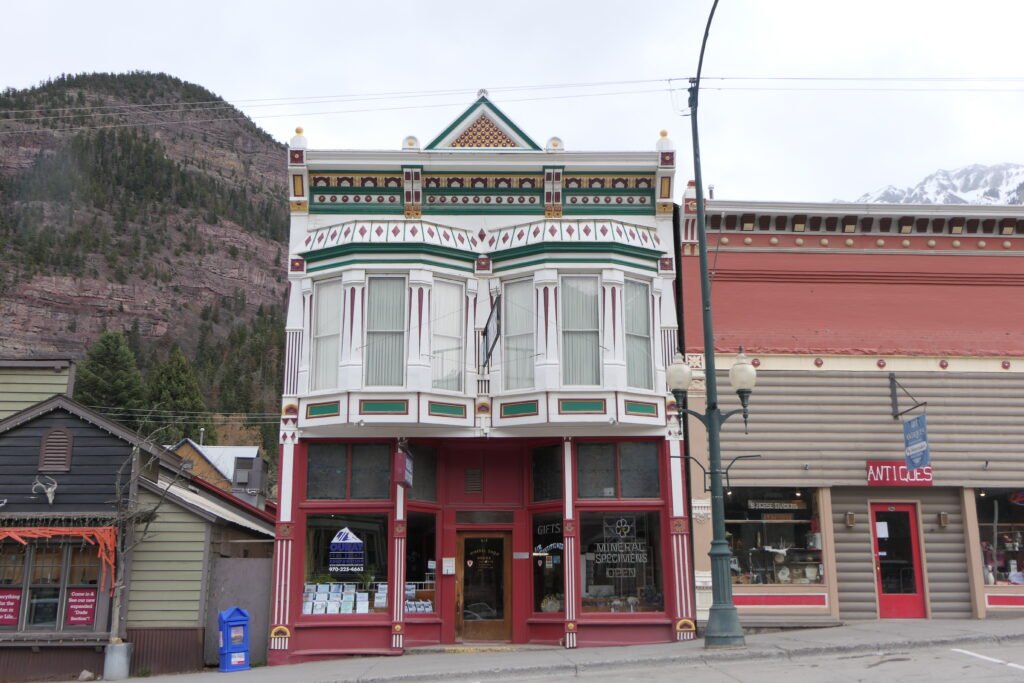
Sliding into Ouray on Route 50, the town sits at 7,792 ft in the San Juan Mountains and was named after Chief Ouray (meaning arrow) of the Ute tribe. American’s penchant for exaggeration is stretched once again as the town is known locally as the “Switzerland of America”. Admittedly high mountains rise almost directly above the town on three sides, but they look somewhat more intimidating than the charm of Europe’s alpine villages.

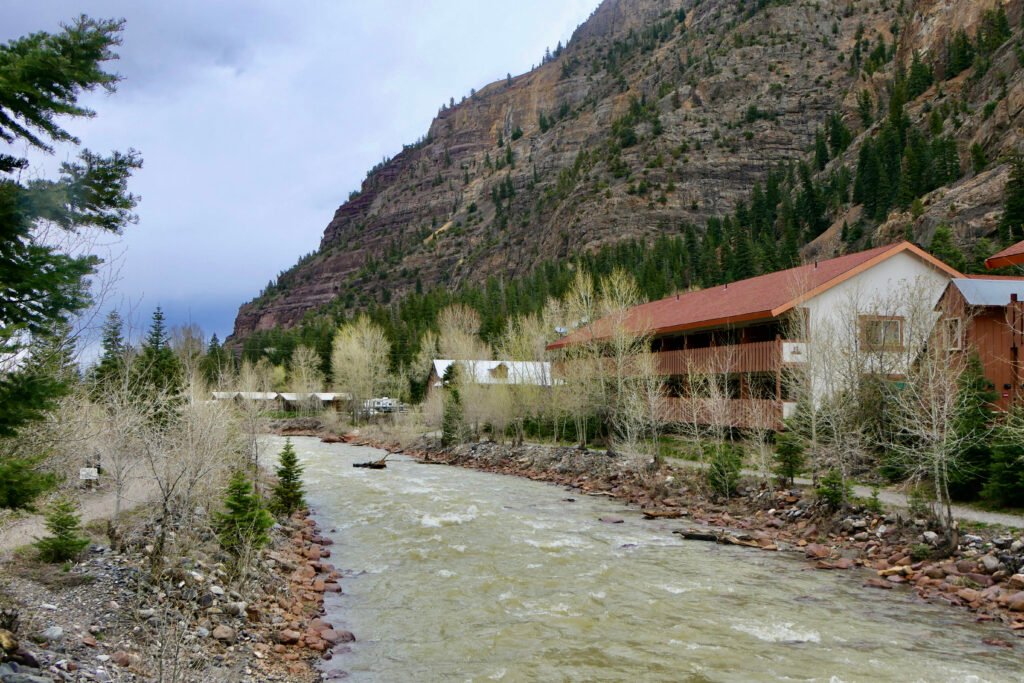
Uncompahge River, Ouray

The Hot Springs Hotel doesn’t actually offer hot springs, as they are located elsewhere in town, which is a bit of a trade description failure. Here the accommodation sits beside a freezing, snow-melted bubbling river chattering noisily down the valley. What the hotel does have though, is a rather incongruous stagecoach sitting in the middle of the car park on an island surrounded by greenery. Was this originally a stagecoach stop in days gone by, or did John Wayne simply misplace one during his various skirmishes into Indian country? We’ll probably never know. 

Further upstream from our large guestroom and even bigger balcony overlooking the river, is Box Canon Falls, one of the main attractions in town. That is, apart from the Ouray Brewery, the Ouray Liquor store, and the Ouray wine outlet. Which is not surprising, as this was a mining town, recognised by all the clapboard buildings in main street. We snuggle down in our room for the night with a few snacks and an Ouray sourced bottle of wine. Another great day.

Denver to Gunnison

The Hidden Gems Road

The fun starts at the car rental desk at Denver Airport. The cheerful lady agent lobs car keys in my direction a little too cheerfully. I pick them up from the floor and for some unknown reason I actually apologise for my incompetence at not being catcher of the year.

I head off to find our car and seconds later I’m back at the desk. “I think you’ve given me the wrong vehicle” I stutter humbly. She doesn’t even blink “Nope, that’s your car. Have a nice trip !”. Now, I’m not a car enthusiast but even I can tell the difference between a Mazda CX5 and Toyota 4 Runner. It’s about $15,000 dollars on most forecourts, so as I free-climb into the driver’s seat with difficulty, although pleased with my multiple upgrade, there is a nagging doubt in my mind about my sudden elevated status with the rental company. 

The eventual outcome of which, when I get home, I’m charged for two rental cars and it takes nearly three months to get resolved. However, that’s in the future as I tackle the various dashboard controls in front of me. I’m sure Apollo 13 didn’t have as many knobs and dials to deal with.

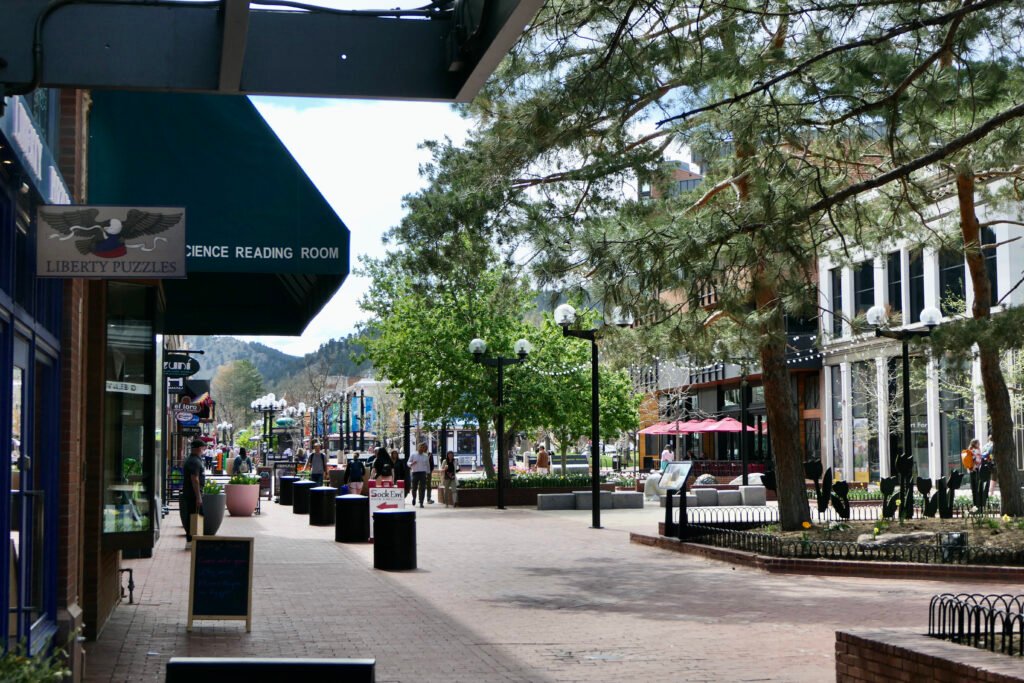
Boulder main street
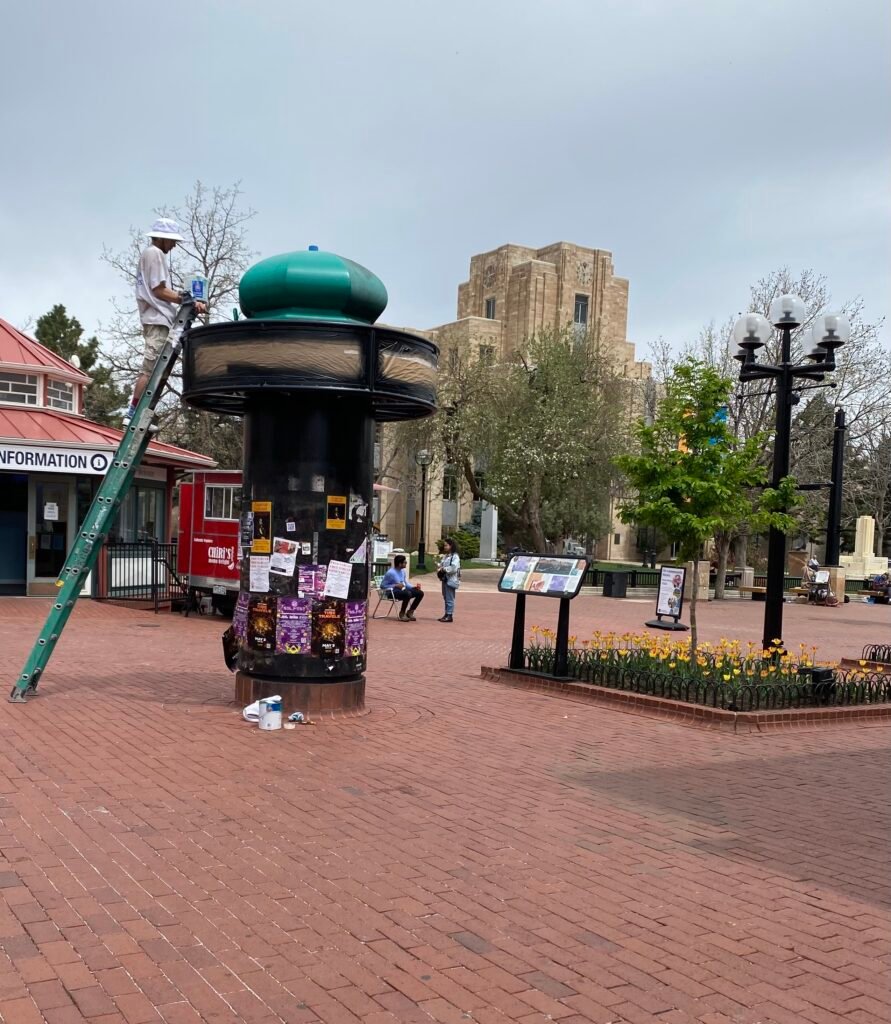
Boulder Main Street

Our overnight accommodation near Boulder is a Scottish themed pub and motel. My thinking had been we would ease our way into the American way of life before full immersion. It turns out to be more Scottish than our local pub – without the accents of course. At the adjacent table is Bartender Ron giving a talk to a young American couple on all things Scottish Whisky. Listening in, I learn a lot which I’m not ashamed off because I’m not a big fan of the “water of life”. Ron’s side-line seems to be charging people for a half hour lesson accompanied by a large map of Scotland which he struggles to hold upright. He is knowledgeable enough to know that John O’Groats is at the top, eventually grappling the board into position. I think many a Scotsman has had the same problem after a few malts, even without a map. Ron is a generous soul, giving much of his time to us, talking about his love for Scotland, all of which is made a lot more interesting by offering us a couple of Lagavulin Whiskies on the house. Easing into our road trip the Scottish way wasn’t such a bad idea after all!

I’ve always preferred Boulder to Denver. After all it is a University town, and less formal than its big brother down the road. There is nothing wrong with Denver of course, it can still take your breath away. That’s mainly due to the high altitude, but the mile-high city has many other attractions according to Colorado.com. I love their description of this adventurous city. “With 300 days of sunshine, diverse neighbourhoods, a thriving arts and culture scene, chef-driven dining………” and so on. Wait a minute. Chef-driven? Aren’t all restaurants around the world chef-driven? Don’t you just love American-speak. I appreciate it does suggest expensive, so Macdonalds might not quite reach that category, where the lad cooking a sausage and egg McMuffin is looking forlornly out of the window in the full knowledge that the spaces in the car park opposite are earning more per hour than he is. But chef-driven – really?

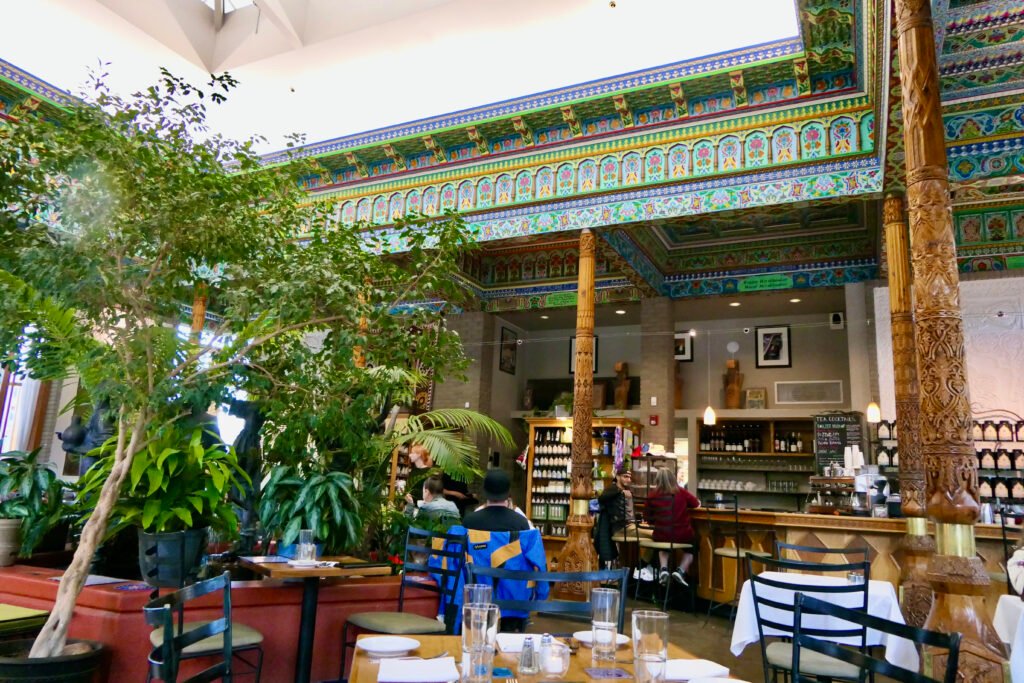
A walk round Boulder’s town centre reveals the Dushanbe Teahouse which is so out of place it attracts the curious, not just for its tea but also for its wonderful interior. Not too many Tajikstani residents are in evidence in Boulder, but apparently the Mayor of Dushanbe, which is the capital of Tajikstan visited in 1987 and chose to gift the city the Teahouse which was made by forty artisans who created the stunning decorative walls and ceiling. Which begs the question, what did Boulder gave Dushanbe in return? A boulder maybe?

Before we left the UK, we’d been worried about my partner’s ability to cope with driving the Rocky Mountain roads at high altitude, as she was impacted in her childhood by a lung condition. So much so that I had been in conversation with a specialist altitude doctor I’d found on the internet who lived in Ouray, Colorado in the heart of the Rockies. Like all good doctors he gave me a heap of information, and like all good doctors finished off by saying. “It can affect different people in different ways”.  That’s good. I’m now a mine of information and no further forward. Apparently, anything above 3,000 ft can cause problems for people, and since we were heading for a few 10,000ft mountain passes over the next few days this was a conundrum. To avoid me being partnerless by the time we got to other side of the country, we went in search of oxygen.

The inside of Dicks Sporting Goods Store is somewhat more breath-taking than our Teahouse. Not in an architectural sense, just that we have to trek miles of rails, racks, rudimentary camping equipment and a huge rash of outerwear, where it became almost impossible to find a 10 inch canister of air. However, a friendly server called Bill jumps up from behind the counter and comes to our rescue. A big husky guy, he shouts to John that he may be gone sometime. He reminds me of Scott of Antartica without the snowboots as he wanders off into the bowels of the store. He duly finds what we’re looking for and hands me over to his colleague Jack who takes my credit card, and we joke about the need for oxygen on thick carpets. I think he’d heard that one before. I’m curious but don’t have the heart to ask Bill, John and Jack, if owner Dick only employs people with four letters in their name. They were too nice and I’ve never bought air before as it’s always been plentiful and free but it might just be the best twenty dollars we’ve ever spent. 

Great Scotty’s Eatery

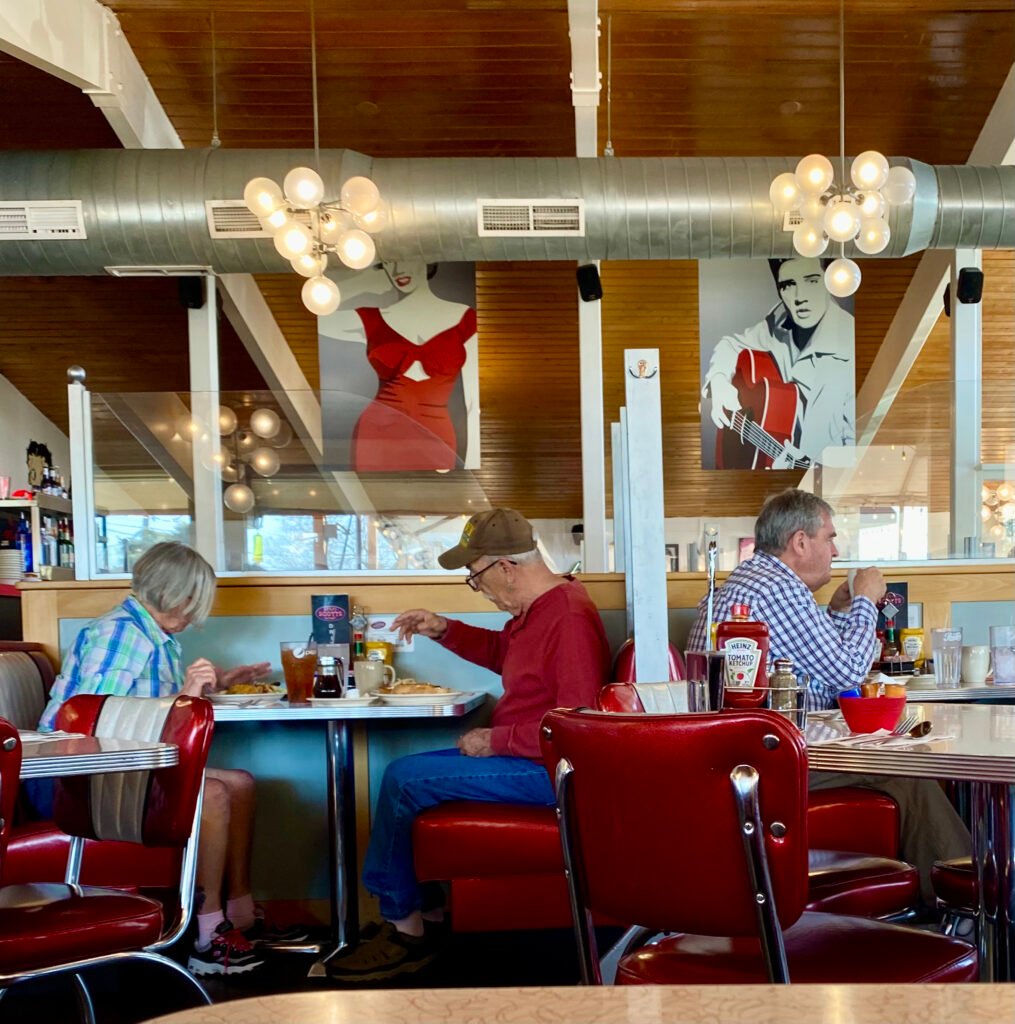
Leaving Boulder, “Great Scotty’s Eatery” attracts us for breakfast. Well, the name did. Despite sitting on Route 287, it is a typical Route 66 Diner, and although Scotty is nowhere to be seen, it is a great find. Four sides of French toast, some vegetable hash, four eggs and four rashers of bacon with unlimited coffee later, we’re on our way. That order wasn’t all for me I should point out as I would never have been able to climb back into the vehicle-of-not-my-choice. We’ve hardly gone a mile and I find an Autoshop outlet to buy a phone holder for the dashboard. Having just opened, I am surprised to see four old boys running around re-stocking the half-a-dozen aisles who look as though they’d hadn’t been home for weeks. They are all sporting ZZ Top-like beards and damn me if one isn’t called Luke and another called Ryan. Two more four letter names. Does Colorado have legislation banning new-born from having any more than four letters to their name?

With purchase in one hand, a bearded one shook my other hand. “Nice to do business with ya’, you come back and see us all soon now. My name’s Ryan Jack, and I’m here to help”. Good lord! Now it’s four-letter surnames! 

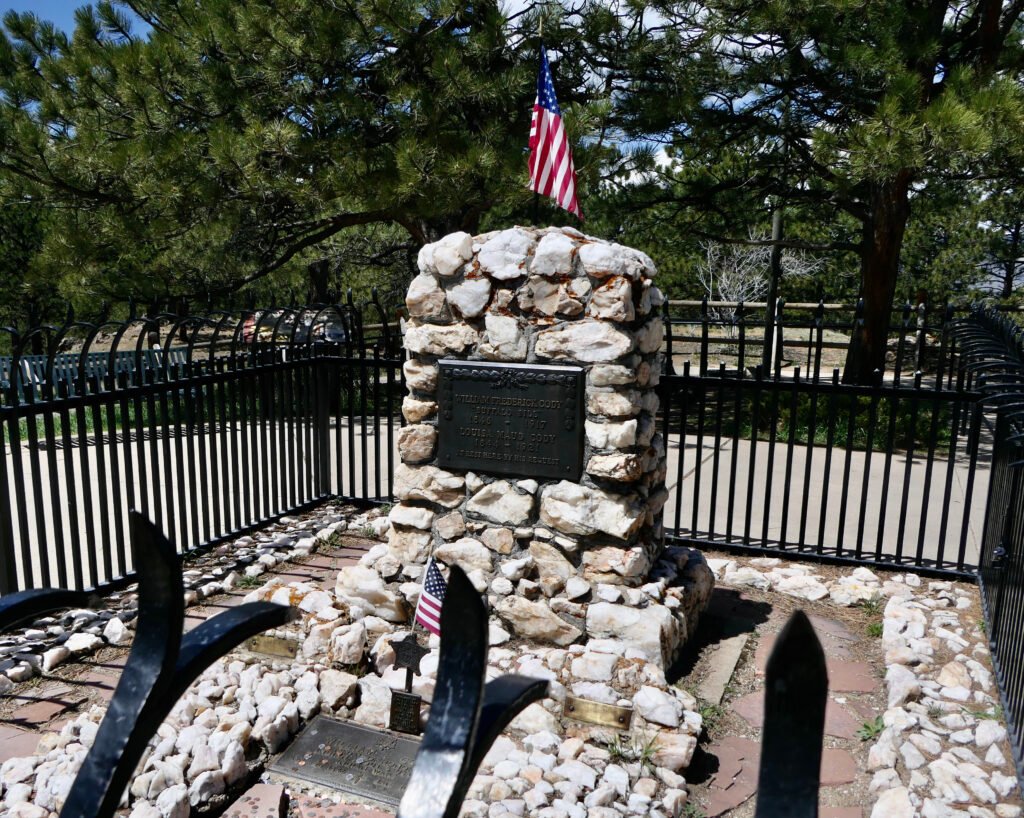
We manage 25 miles on the I93 before detouring just outside the town of Golden and head up Lookout Mountain in search of Buffalo Bill’s Grave and Museum. This place shouldn’t be missed as it is a fascinating insight into this legendary figure and the old cowboy days. Again, we find a Scottish connection, because in 1904 he took his Wild West show to the UK and visited various small towns around the country, including many around the city of my birth Glasgow, which in its own way is known as Scotland’s wild west, especially on Saturday nights, so he would have felt right at home. 

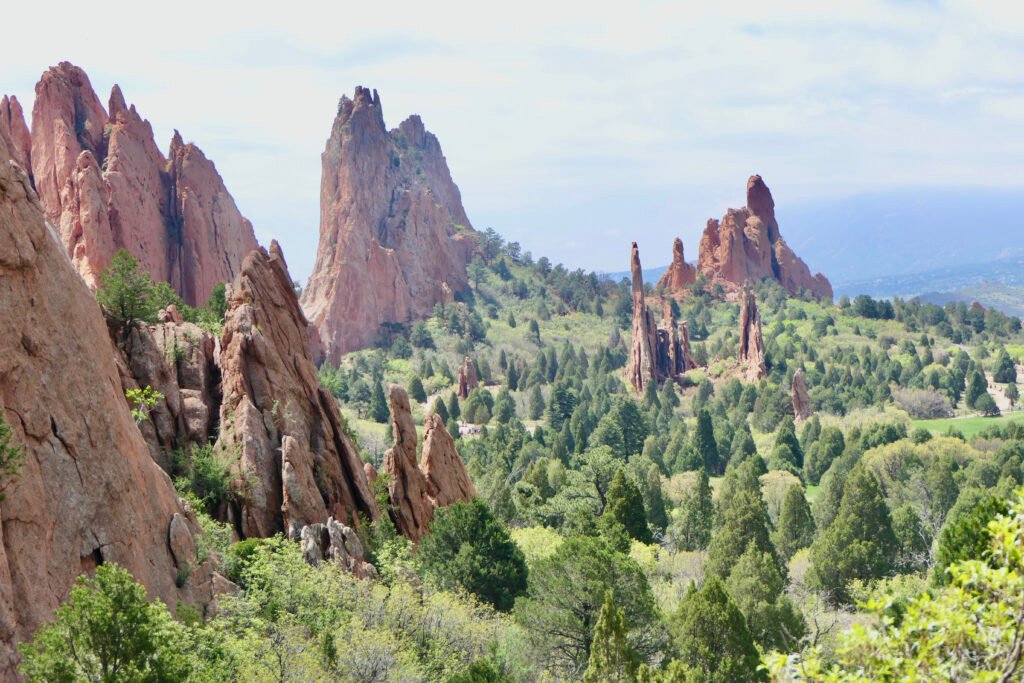
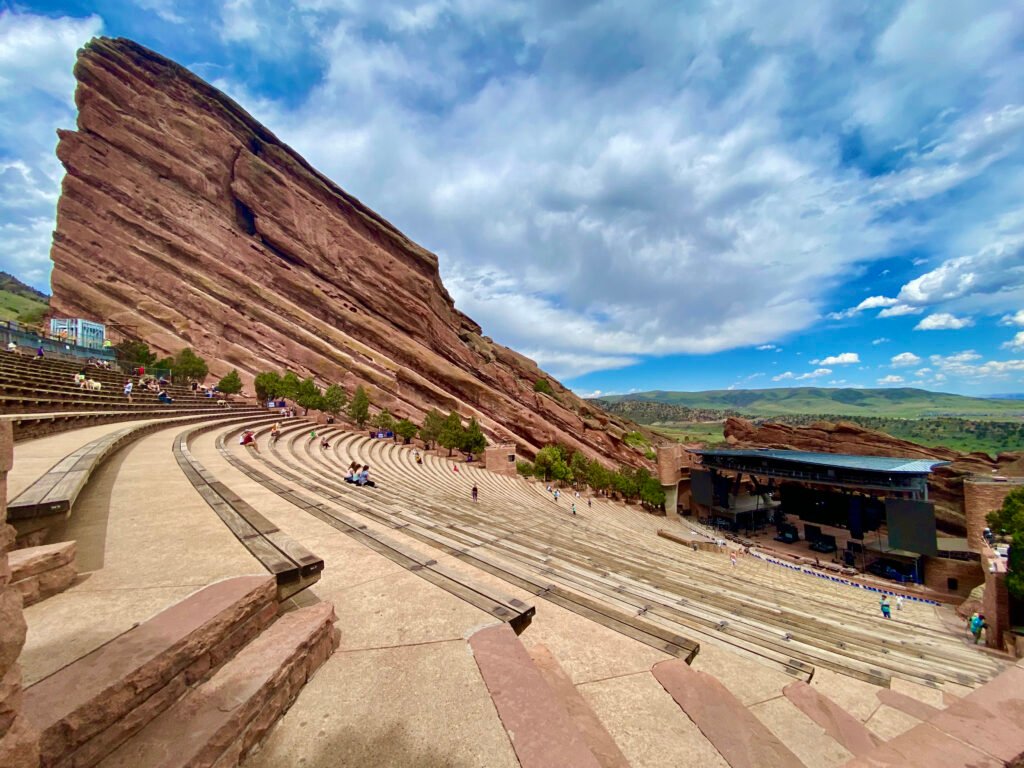
We’re soon stopping again a few miles down the road. This time to test the impeccable acoustics and naturally stunning marvel of the ochre sandstone at Red Rocks Amphitheatre. Higher than Niagara Falls the place echoes to the sound of hundreds of musicians who have performed here.

Red Rocks Ampitheatre

Towns and settlements pass by with imaginative names like Conifer, Will-o-the-Wisp, Shawnee and Fairplay, with captivating scenery everywhere we look. Fair play to Fairplay, the town has the added attraction of a brewery although apparently with only 750 residents to speak of, maintaining the bar and brewery seems to require a lot of passing trade. This in turn means there are a lot of drivers out there who have had a drink, so a little later as we edge out of Fairplay suitably fed, we treat every other road-user with suspicion for the next fifty miles!

Monarch Mountain Pass

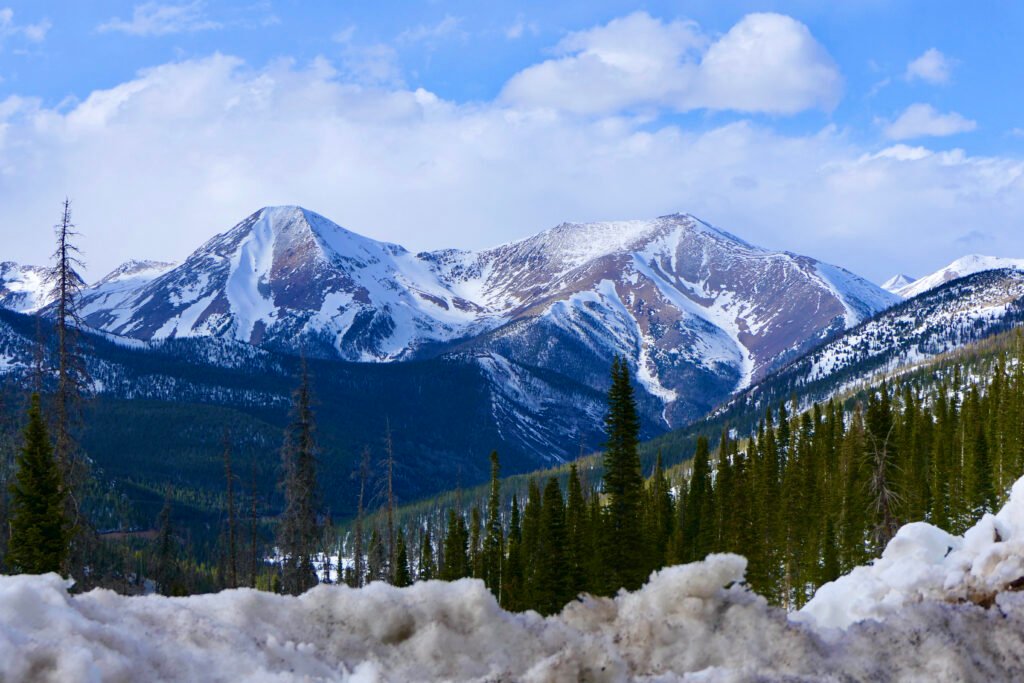
We’re heading for our destination Gunnison but have the little matter of negotiating the 11,313 foot Monarch Mountain Pass first, a winding, twisting steep climb over the Continental Divide, prone to poor weather even in spring. The original road was built in 1880 about two miles further north, and as we edge over the summit, we can’t help think about the resilence and ingenuity of those who created this striking mountain highway. I feel high on the wonder around us, although that might just be the elevation talking. The run down the mountain is slow and easy and as the sunshine covers the huge valley in front of us, distant rain clouds hang over the snow-covered Rockies ominously poised to unleash their watery cargo. Rain for some people, is a four-letter word, but for me it’s nature at its best, offering recovery, cleansing the hillsides and stimulating growth again. The water of life is not just whisky. Our canister of oxygen lies untouched the whole trip so maybe it wasn’t the best $20 I’ve spent. Doctor Altitude was right after all. It affects different people in different ways.

We roll into Gunnison and re-fuel. The young lad behind the counter is fascinated by my UK driver’s licence. “Never seen one, probably never will again !” he shouts at me over the roar of the coffee machine. He takes out his cell-phone and takes a photo of it. He is so enthralled I don’t have the heart to tell him that’s not a good thing to do. However, I don’t make an issue of it as he is so amused. Guilty pleasures. I figure it’s highly unlikely he is going to hack into the Licensing database in the UK. Although a little later I thought if he shows the licence to the local sheriff I’ll be on the next wanted list, because I definitely resemble a criminal in the photo.  

Gunnison

We check into the “Inn at Tomichi Village” – which on a scale of one to ten is a maybe. Room ok, breakfast nah, although it’s a pleasant enough place on the edge of town. The centre of Gunnison has a busy four-way crossroads, but go a 100 yards in each direction and you are almost out of town. However, gems can be found if you look hard enough and as we slide into a booth at the little Pizza Place, we are served by a delightful girl in tight shorts. Maybe Hooters chose not to open a place way out here and this is the Gunnison version, but at least the pizza is good! Tomorrow is the Black Canyon. 

Powered by WordPress & Theme by Anders Norén