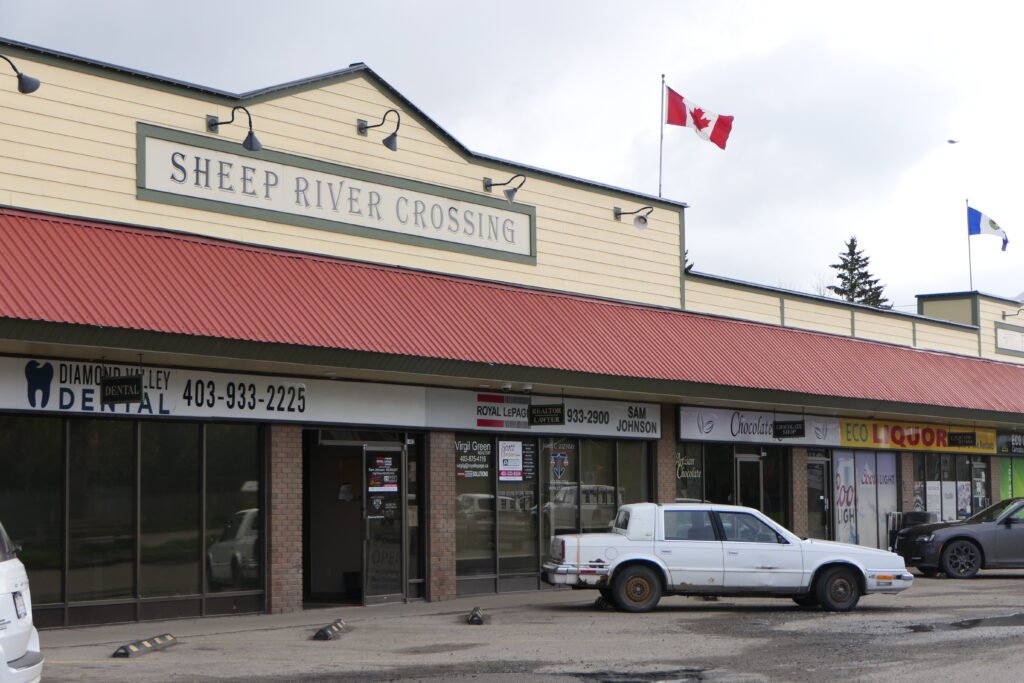
I like Calgary. It’s a nice town, but leaving is no great hardship considering the extraordinary sweep of plains and towering mountains that surround the city. I’m heading for a four day circular trip to Glacier National Park. Once on the road south, it’s not long before I enter Diamond Valley which is anything but diamond-like, and the few outlets at the intriguingly named Sheep River Crossing don’t enhance the area either. There is little sign of any sheep, and no crossing to distinguish either, which I take to be a judgement by most of the herd that this is a place to avoid. I guess they decided to cross somewhere else.
I scurry out of town to my next stop, the strangely named Okotoks Erratic lying just a short detour down Route 7. Nicknamed “The Rock that Ran”, it turns out to be a large piece of split quartzite rock sitting in the middle of a huge field.
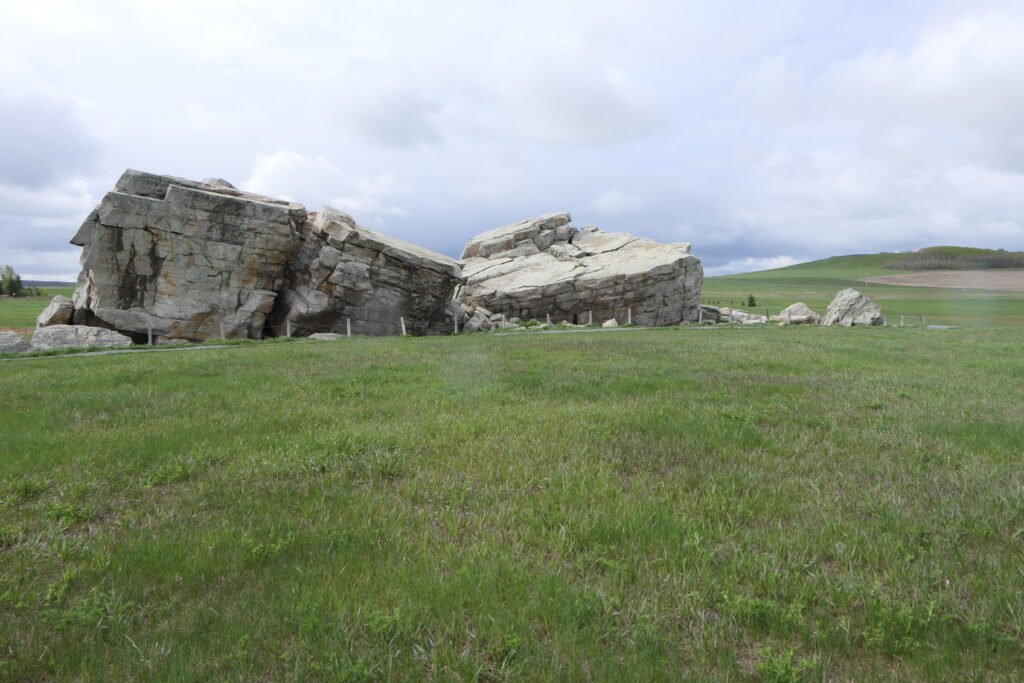
Clearly the Albertans have been taking lessons from their American neighbours about how to create a tourist attraction out of nothing. To be fair, there are two other people in the car park, but it turns out they’re sitting in their van eating what appears to be lunch with little interest in the rock sitting proudly on the grasslands in front of them. As I walk down the path towards the monolith, I learn from the various noticeboards about the great spiritual significance this rock has for the Blackfeet People. Legend tells of the story of Indian warrior Napi who sheltered by the rock and was allegedly chased by it. Not wanting to question the reliability of the story, but it does seem improbable that this 30 ton piece of mountain could have chased anyone – at least at any speed that is.
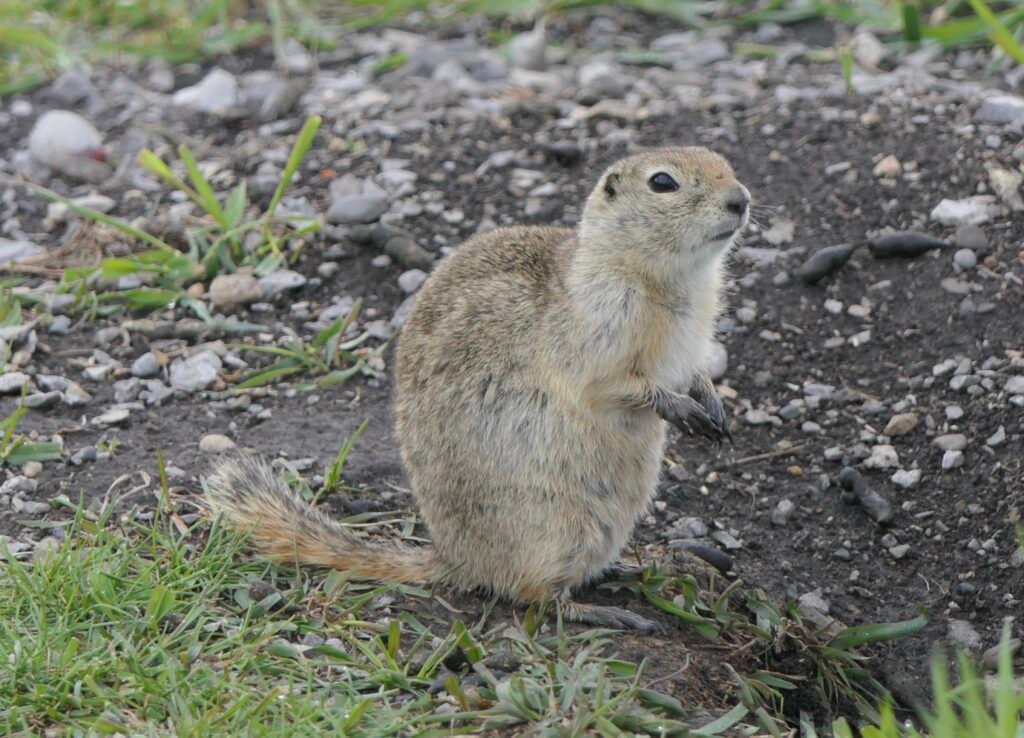
The rock is definitely interesting, but it is still only a rock, whereas the surrounding grasslands are fascinating because they are covered in prairie dog burrows, populated unsurprisingly, by hundreds of prairie dogs.
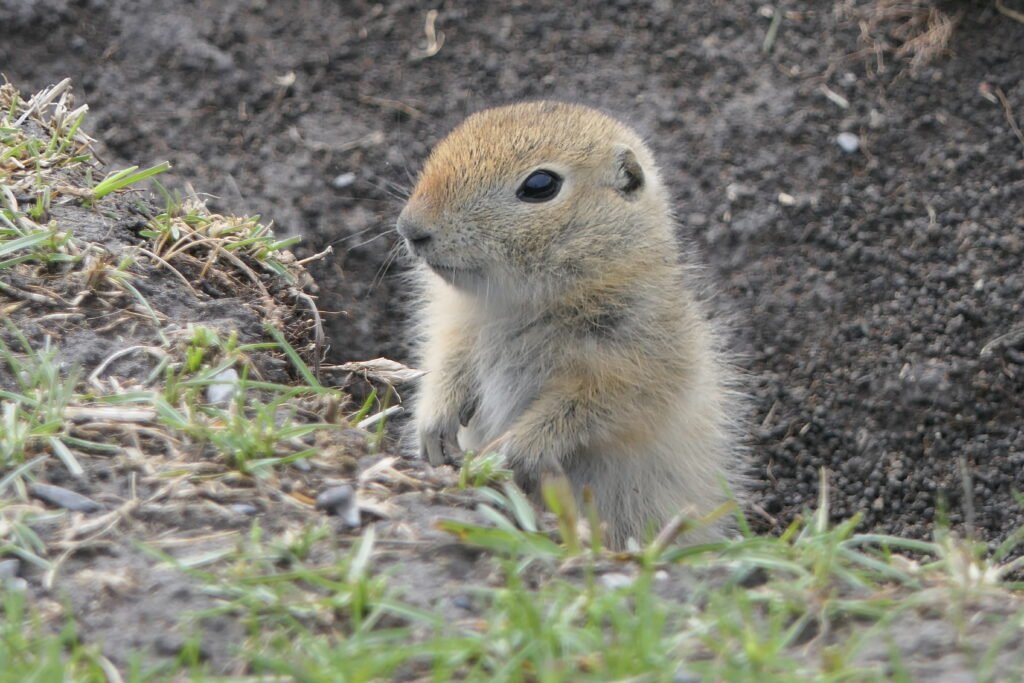
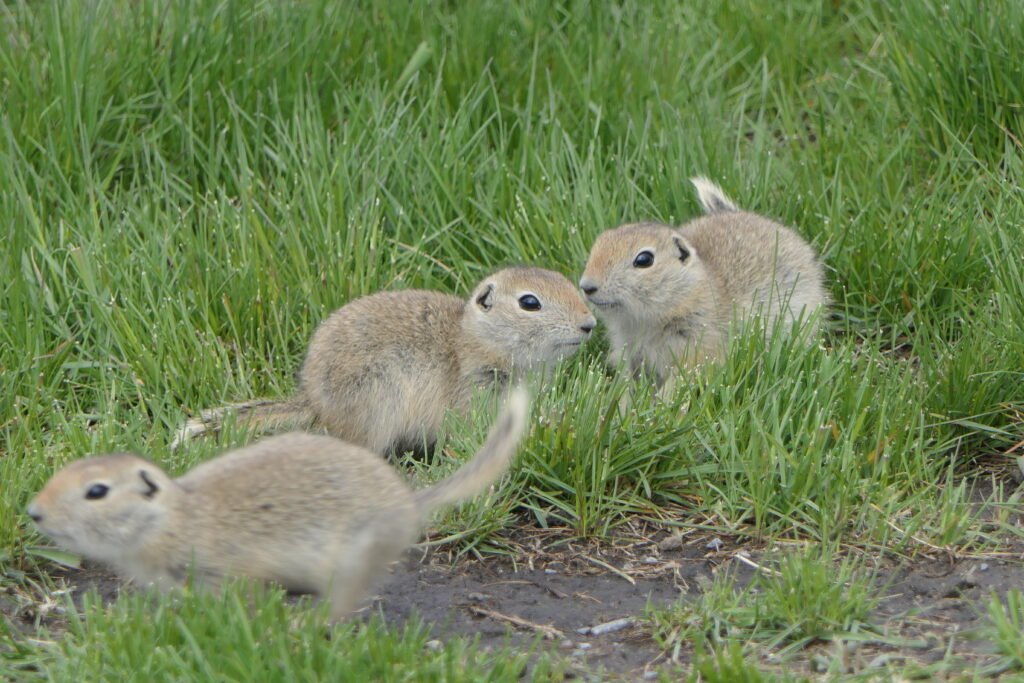
These sweet looking creatures are everywhere, popping up from their caves and then disappearing again. Apparently, these animals support at least 136 other species through their various activities. So basically, they are the Chicken McNuggets of the grasslands. With their complex underground dog towns, their entire annual mating season is apparently only an hour long. Males, apparently jump from group to group—but the females stick together for life – mimicking humans I suppose.
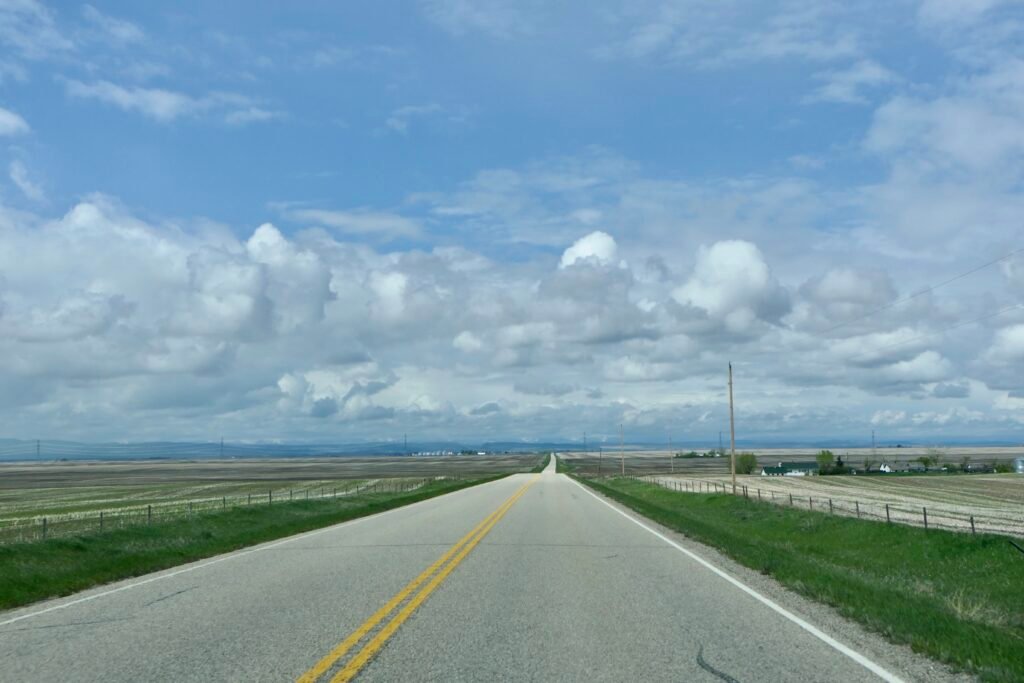
As I move further down the highway toward the US border, the detritus of a broken economy litter the landscape. Not in an ugly way because there is a kind of beauty to the ageing, rusting vehicles and farm equipment that lie embedded in the fields and homesteads that appear by the roadside. Gentle reminders that people once lived, worked and sweated the land around here. These artifacts are left as little monuments, so we do not forget their toils, otherwise what was it all for? I ache for the ghosts of the past to be able tell the stories that lie behind these long lost dreams.
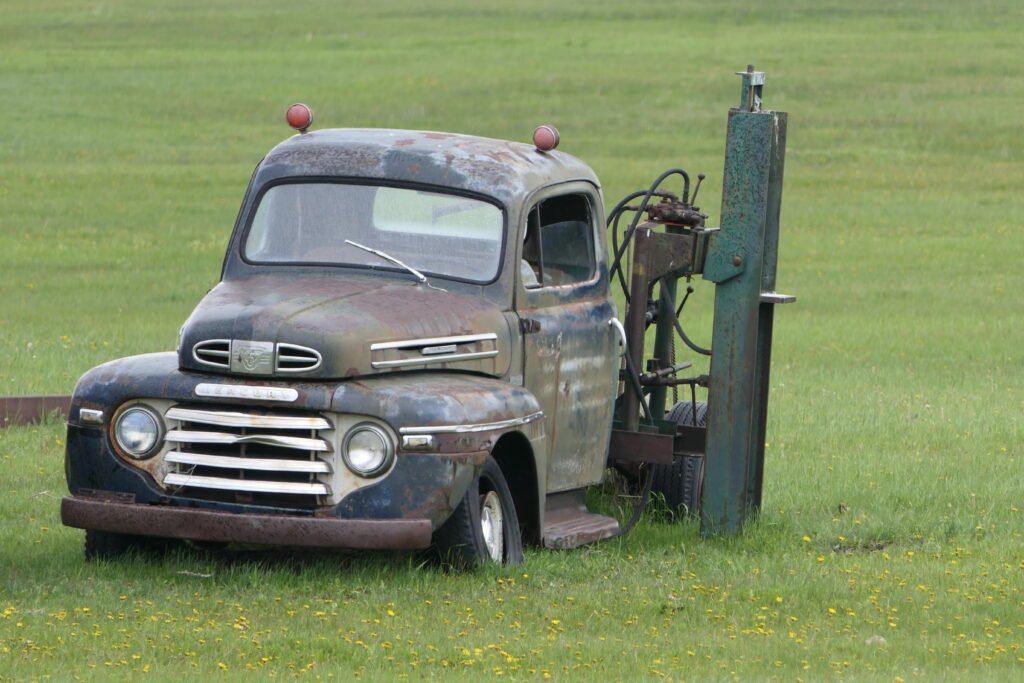
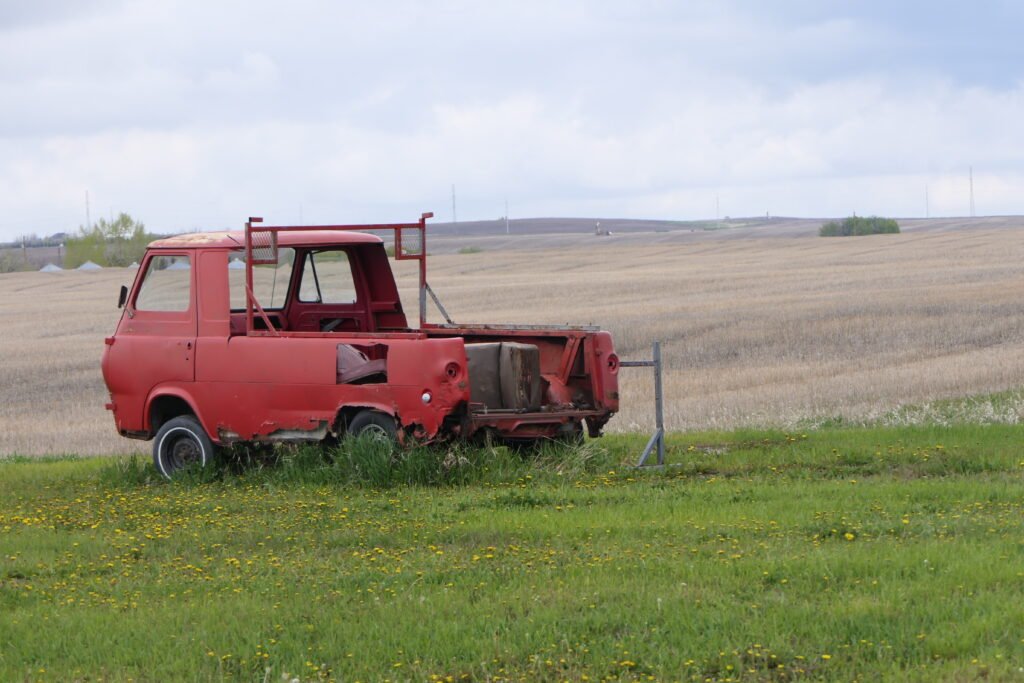
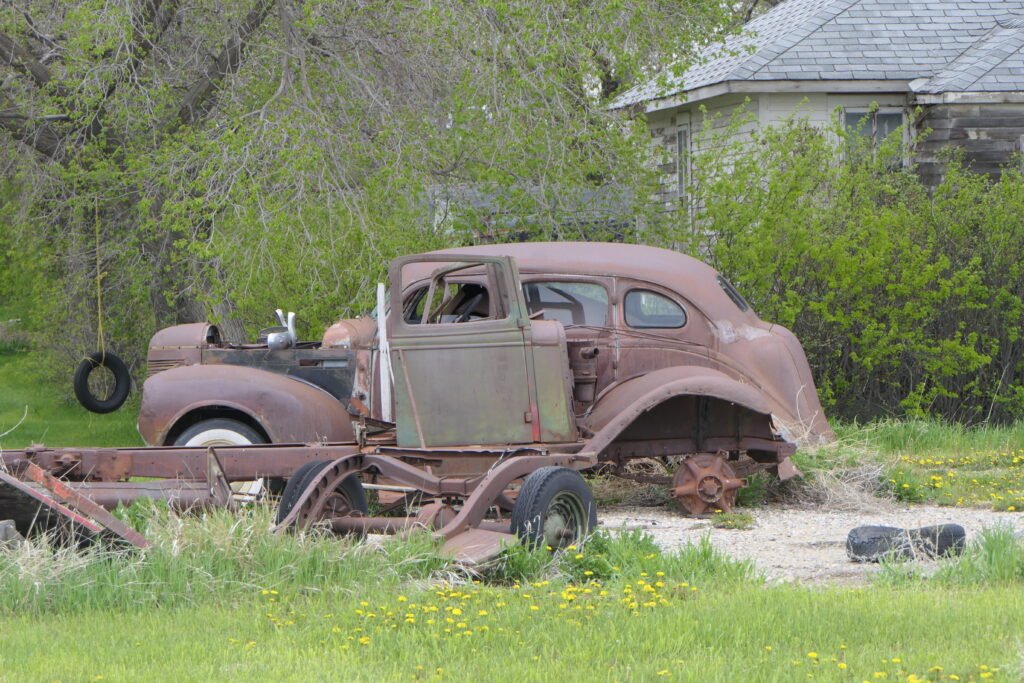
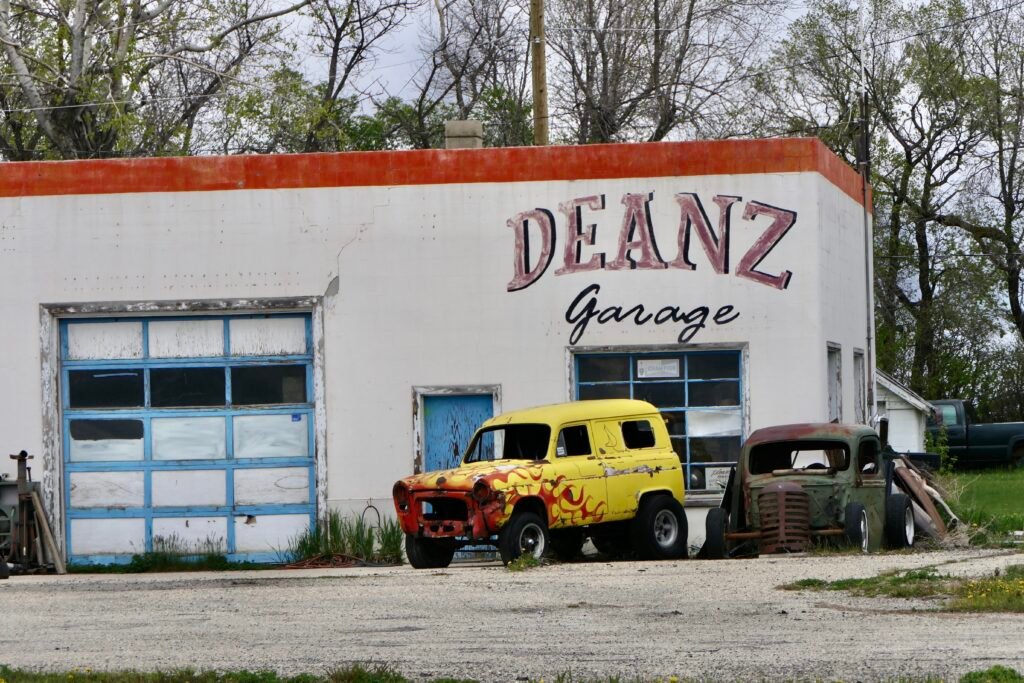
It’s another world out there……..
A few miles southbound on route 2, I take another detour at Nanton and travel eastwards to the alien sounding destination of Vulcan. Sadly, its name originated not from any thoughts of the universe, rather in 1910 a Canadian Pacific Railroad surveyor who had a fondness for Roman Mythology, named the town after the Roman god of fire.
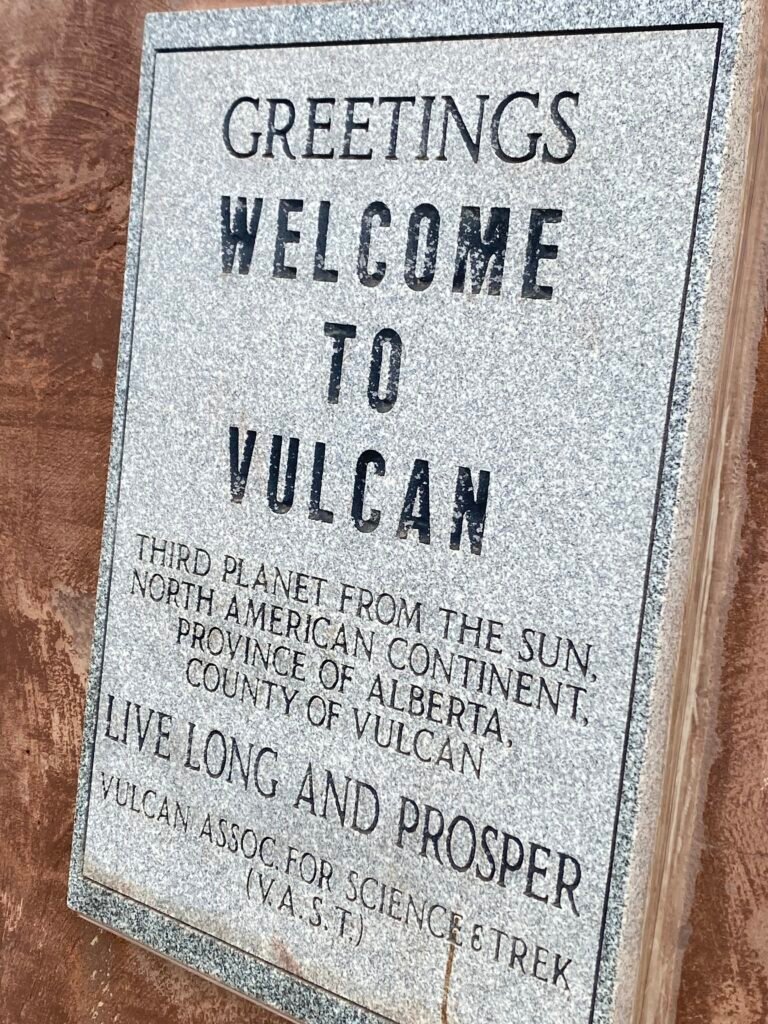
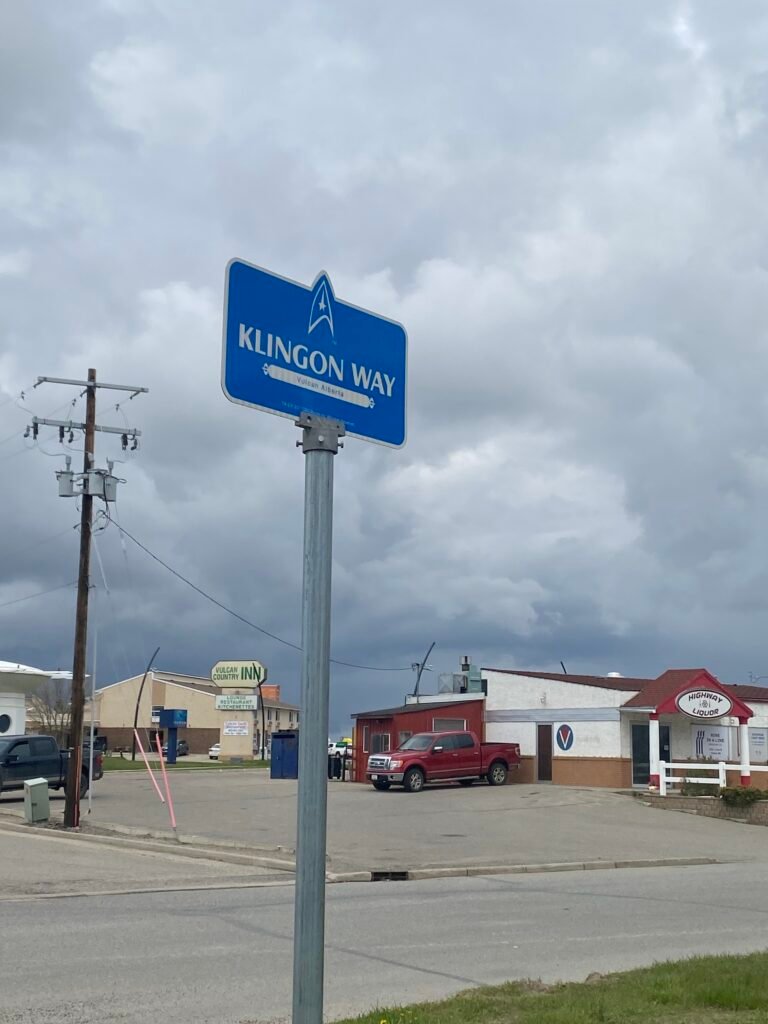
However, this sleepy town has not been resting on its laurels. Awakening its entrepreneurial spirit, in November 1995 the town created a space-themed visitor centre to tap into the growing curiosity surrounding the town’s name. The idea quickly grew into a group effort between the various local bodies and the wonderfully named V.A.S.T. (the Vulcan Association for Science and Trek). The Trek Station’s official grand opening was on October 23, 1998 and was designed to look like a landed spaceship.
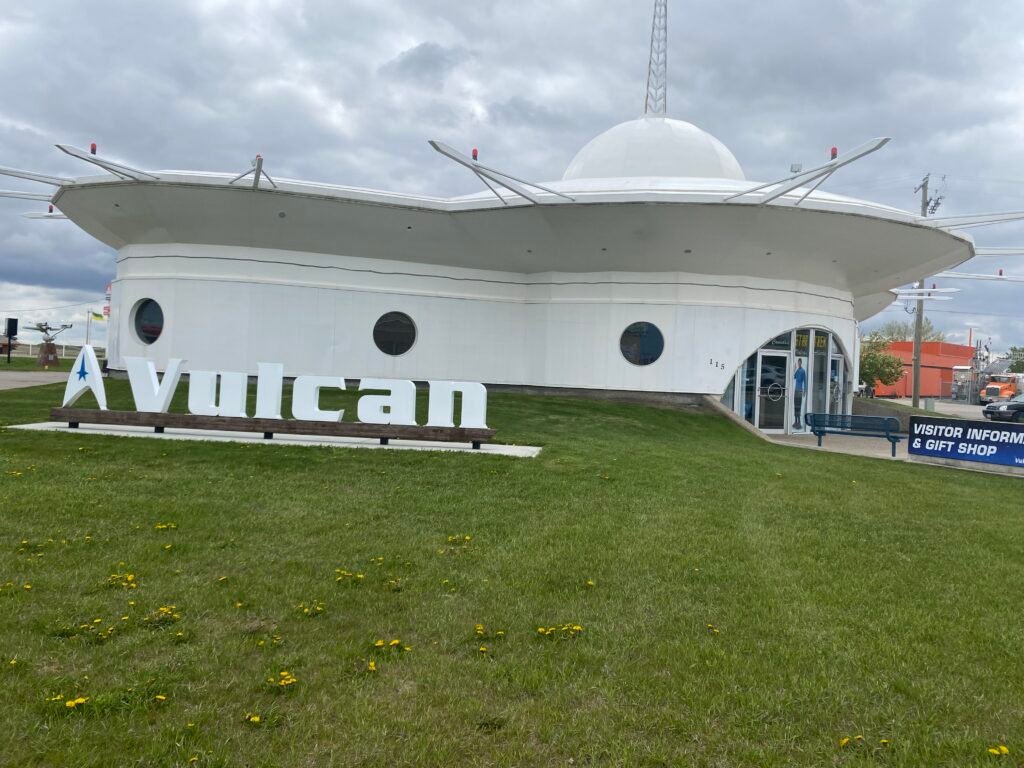
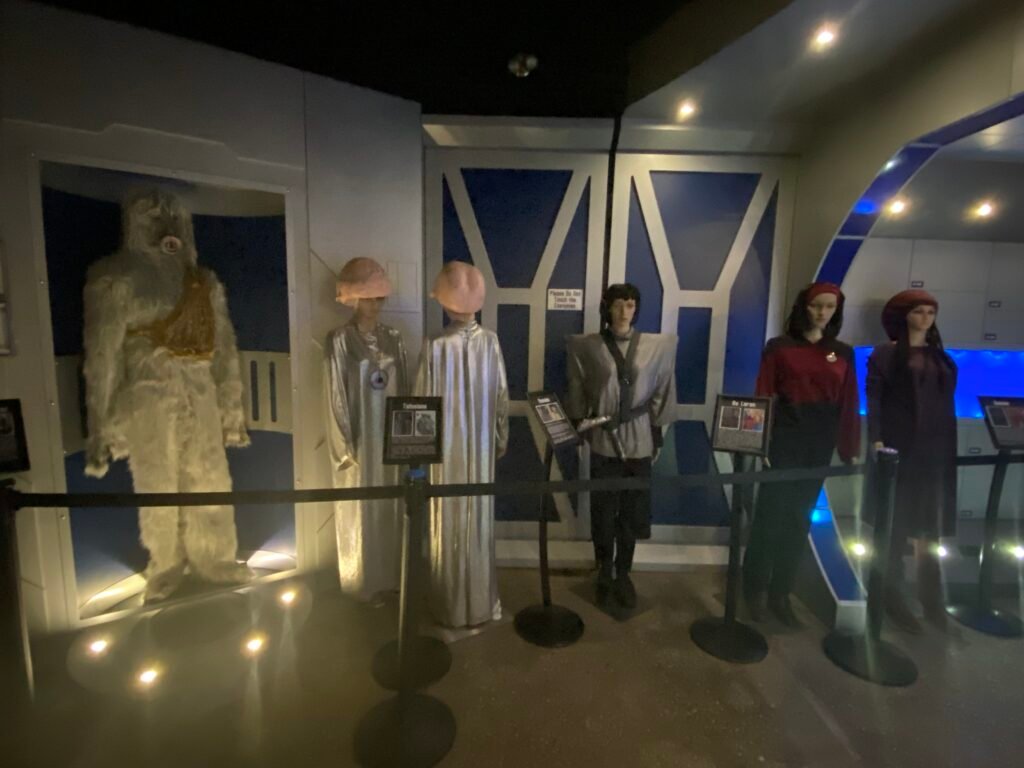
Apparently, thousands of people from all over the world and beyond, make the “Trek” to Vulcan to visit this unique attraction. However, some far travelled aliens (foreigners) might feel somewhat let down when they visit from a galaxy far, far away. Entry to the “museum” is by way of a donation, and I drop in five dollars thinking that is a fair price. Not even close. The dollar bills go into a slot which operates an electric door. The door opens and I step into what can only be described as a large closet stuffed with mannikin’s. I say stuffed but I think I only count ten Star Trek characters, but the place feels full. They are paraded in a small semi-circle before another door opens and I am transported immediately back to the visitor centre reception I’d left only seconds ago. I personally don’t feel cheated as it had already been on my route, but I pity the poor souls arriving from out of state expecting a Star Trek extravaganza.
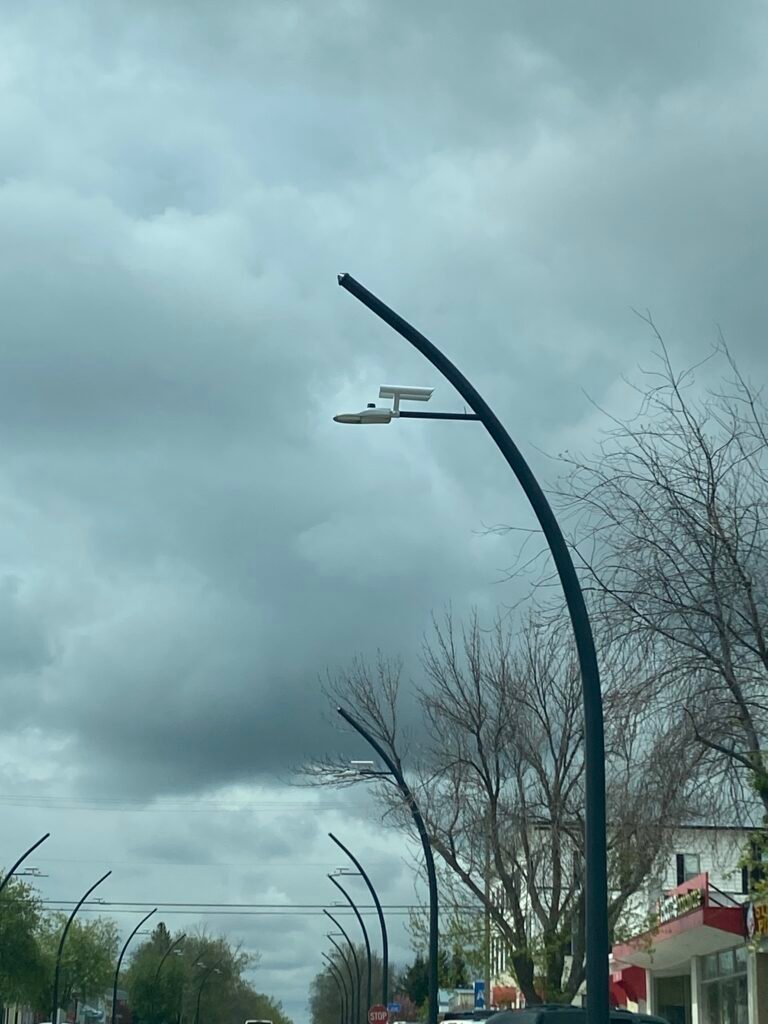
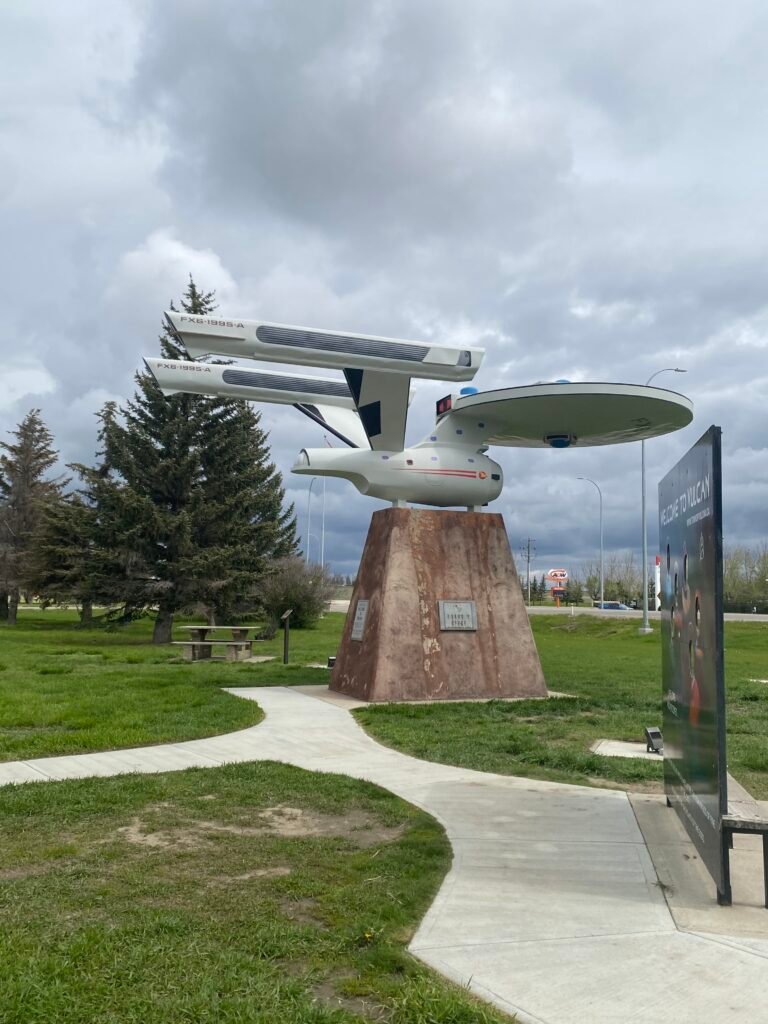
However, the large replica of the Starship Enterprise sitting high on a plinth outside the visitor centre does make up for the lack of substance inside. What really makes me smile though, is all the street-lights along the centre of town are made of mini-Starships. Now that’s definitely a reason for visiting. Vulcan, may the force continue to be with you.
Fort Macleod and Buffalo Jumping
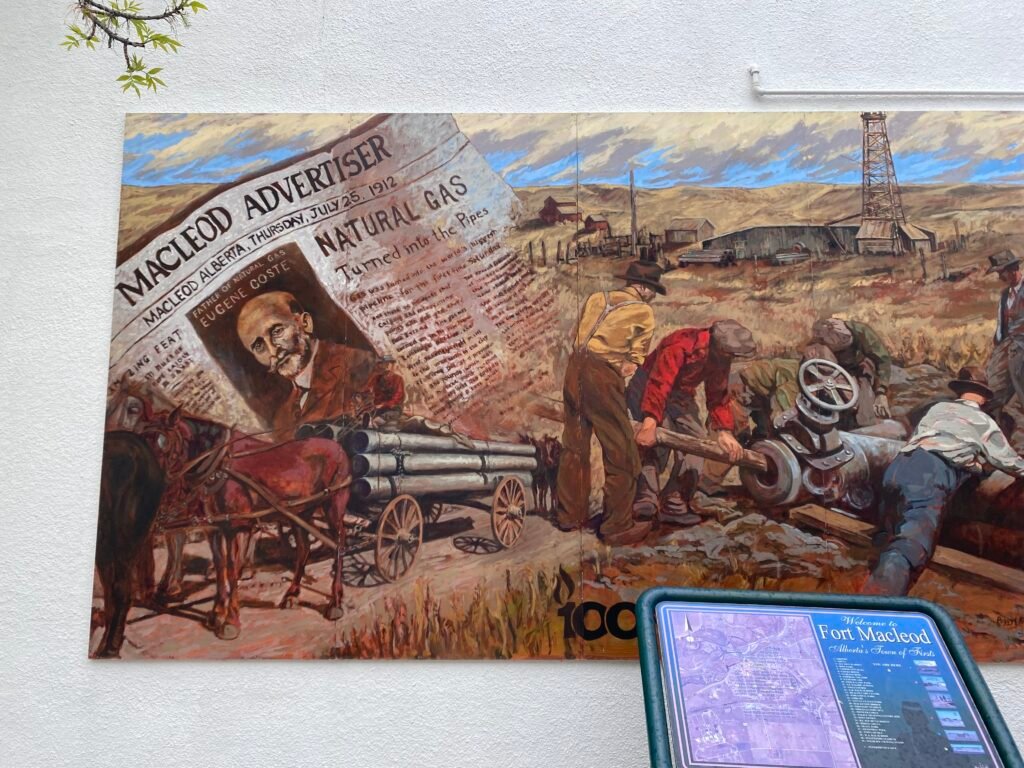
I leave that galaxy and move on, passing through Staveley and Claresholm without even noticing, possibly because there isn’t anything to distinguish these settlements, before reaching my namesake, Fort Macleod, just in time for a late lunch. The fort was named in honour of the then Commissioner of the North-West Mounted Police, Colonel James MacLeod who was born in my homeland in Drynoch in the Isle of Skye, Scotland in 1836. Founded as the Municipality of the Town of Macleod in 1892, the name was officially changed to the already commonly used Fort Macleod in 1952. Another Scots boy done good !
I choose, quite naturally, to lunch in Macleods Restaurant behind Main Street, and then somewhat regret that decision as soon as I walk in. It is dark and dingy, with only a couple of old timers getting their daily sustenance – probably gravy and grits. I order Spaghetti Bolognese and it turns out to be very, very good. Once again, the MacLeods save the day…….
Later, I walk down the deserted main street as the silence is only broken by the muffled roar of huge trucks trundling up and down the two highways that lie on either side of town. The shops look closed but as I pass them, through the dusty windows I can see lights inside. I walk past the lawyers, the accountants and the beautiful, elegant old Empire Theatre.
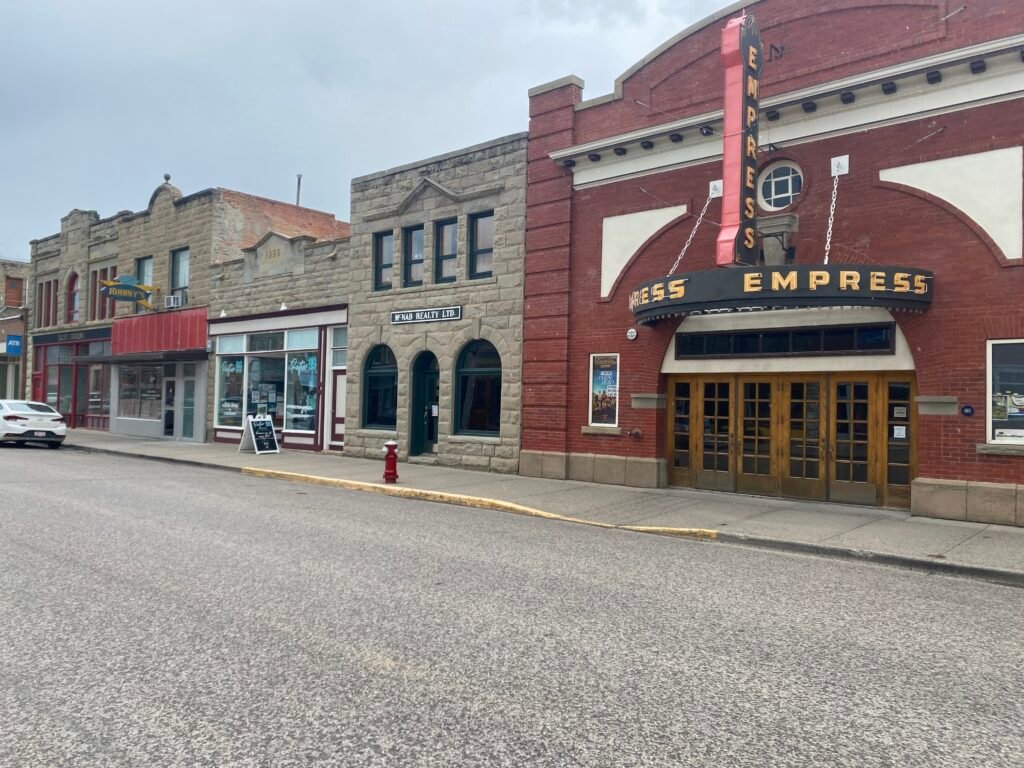
Somehow, I get the impression that people are peering out from behind their curtains wondering who the stranger is walking slowly through their town. Maybe if I had a kilt on, they wouldn’t be so shy. Two people appear from nowhere and walks towards me. They promptly cross the street, so now I’m feeling paranoid until I realise they’ve just gone into Subway for lunch.
Fort Macleod claims it has 3,297 residents and growing according to the last census. Apart from my friends in the restaurant I’ve only seen two. Maybe it’s siesta time, although we are some distance from the Mexican border.
Apparently 19 movies have been filmed in Fort Macleod although I only recognise a few of them. Ghostbusters, Interstellar, Brokeback Mountain and In Cold Blood. More notably it’s been a location for the TV series – The Last of Us. Its other claim to fame is that Joni Mitchell the singer, was born here in 1943.
At the east of town down an alleyway, I cross the main highway and find myself at the actual Fort Macleod. Rebuilt somewhat from those heady days of the 1800’s, when after a gruelling two-month, 1,300 km trek across the prairie from Dufferin, Manitoba, Colonel James F. Macleod and his contingent of North-West Mounted Police arrived here on the banks of the Oldman River.
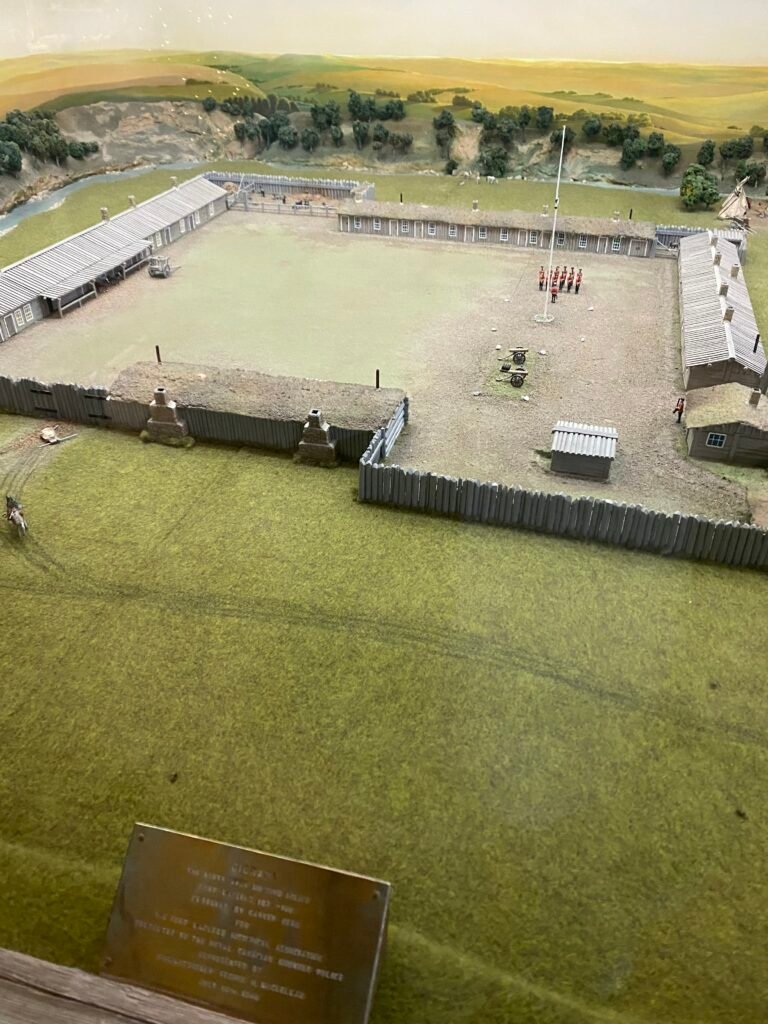
The North-West Mounted Police were sent to the prairie with the purpose of stomping out the illegal liquor trade, which was wreaking immeasurable harm on the Blackfoot people of the area. Macleod and his men raced against the oncoming frost to construct a fort that would house them through the winter, effectively establishing what would one day become a thriving community, if you can call a town of 3,297 residents thriving.
.
Fort Macleod has more surprises in store. As I turn into the car park of what looks like a huge warehouse, it turns out to be the home of Bomber Command Museum of Canada, where the building is in fact a huge treasure trove of military aircraft and memorabilia.
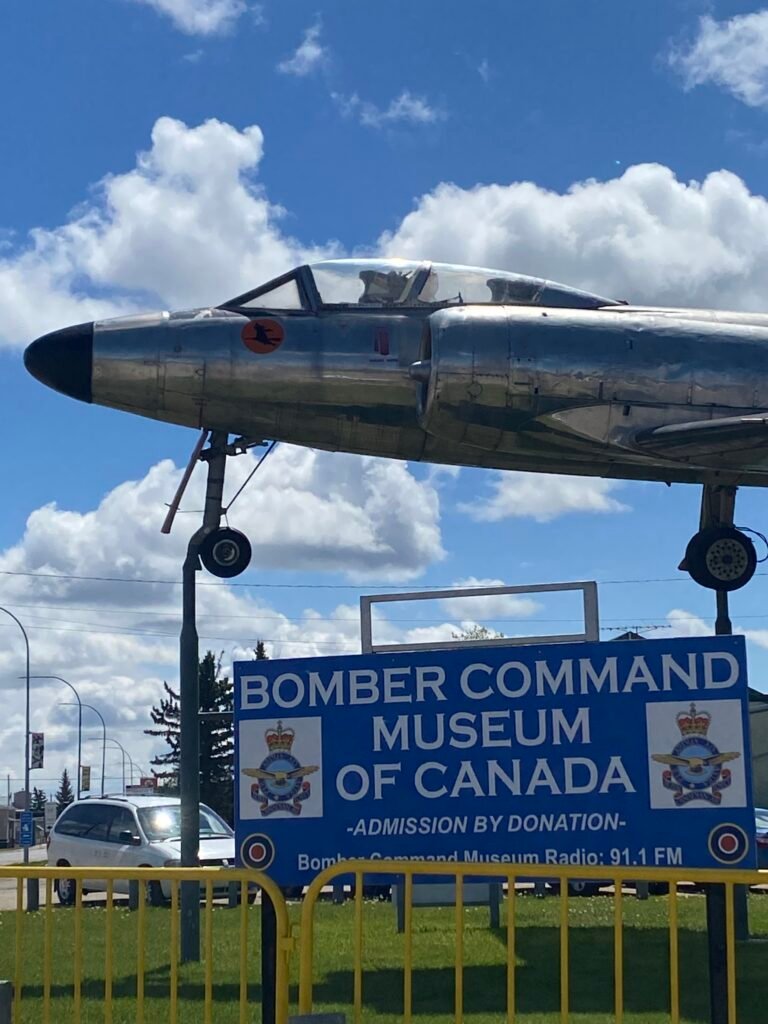
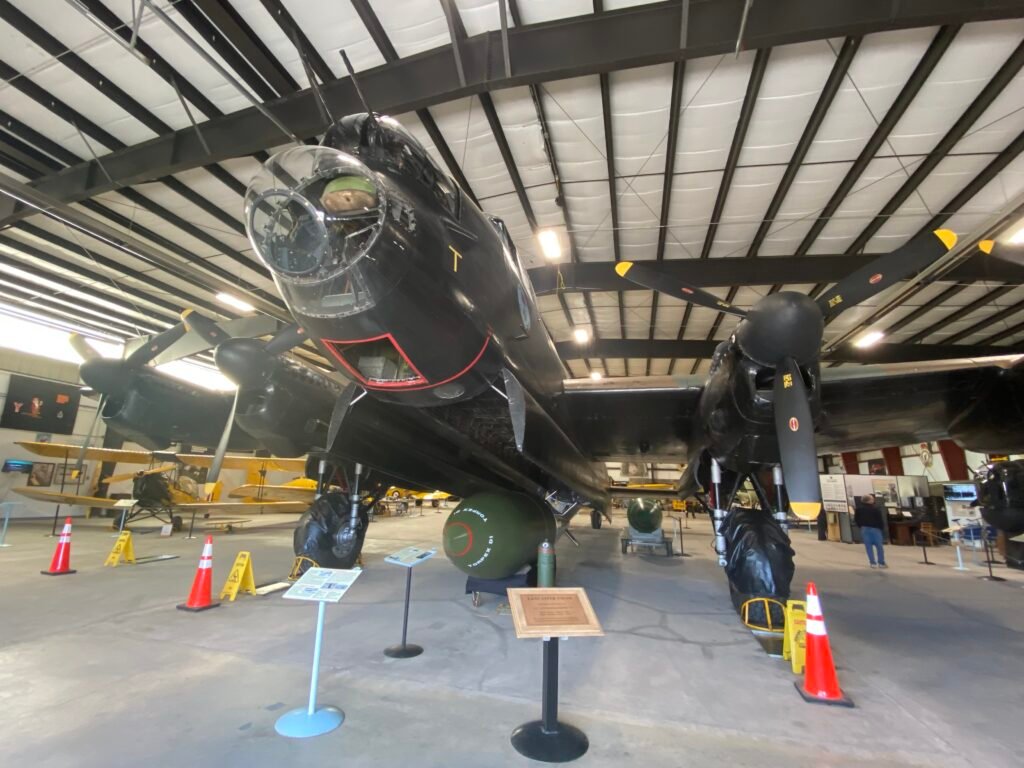
So good is it, I spend over two hours here, marvelling at a restored Lancaster bomber in all its glory. I happen to make a comment to a fellow gawper called Frank, who it turns out, is a Westjet pilot on a trip to see the museum and he shares so many facts and figures with me, I can’t keep up.
We wander among the warplanes and the not-so-war planes as I listen to his great stories about some of these bygone relics. I suddenly realise I am way behind schedule, so I say goodbye to my new best friend, and he disappears into a distant engine repair room. He obviously felt I wasn’t a big enough best friend to offer me a discount on Westjet.
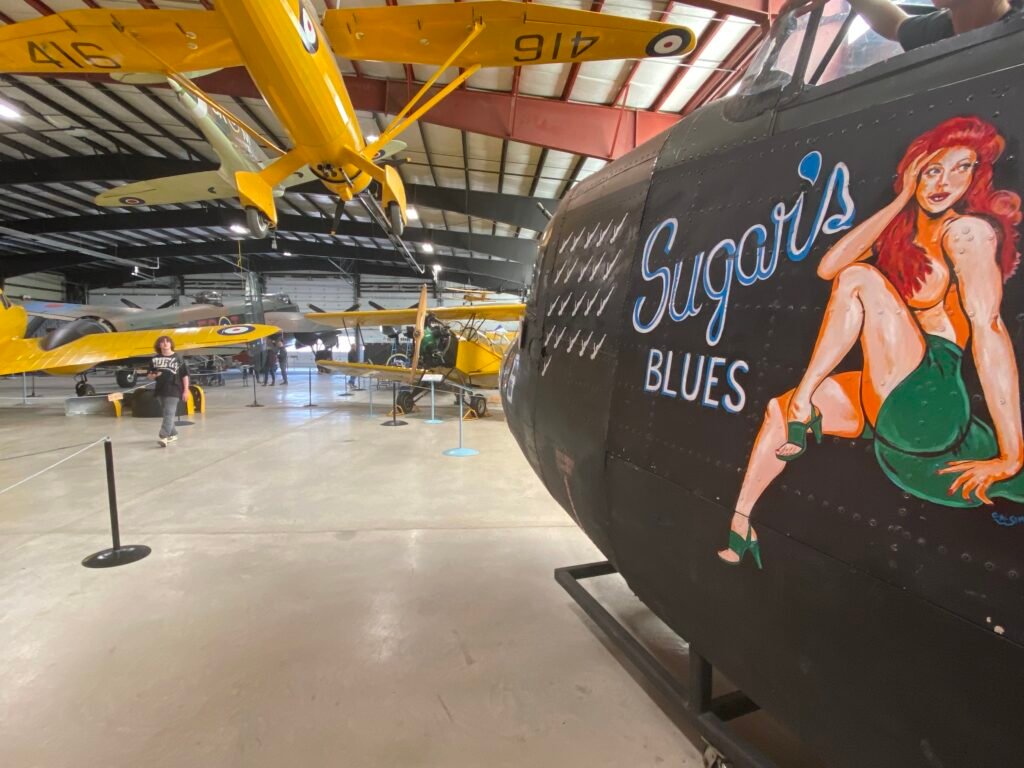
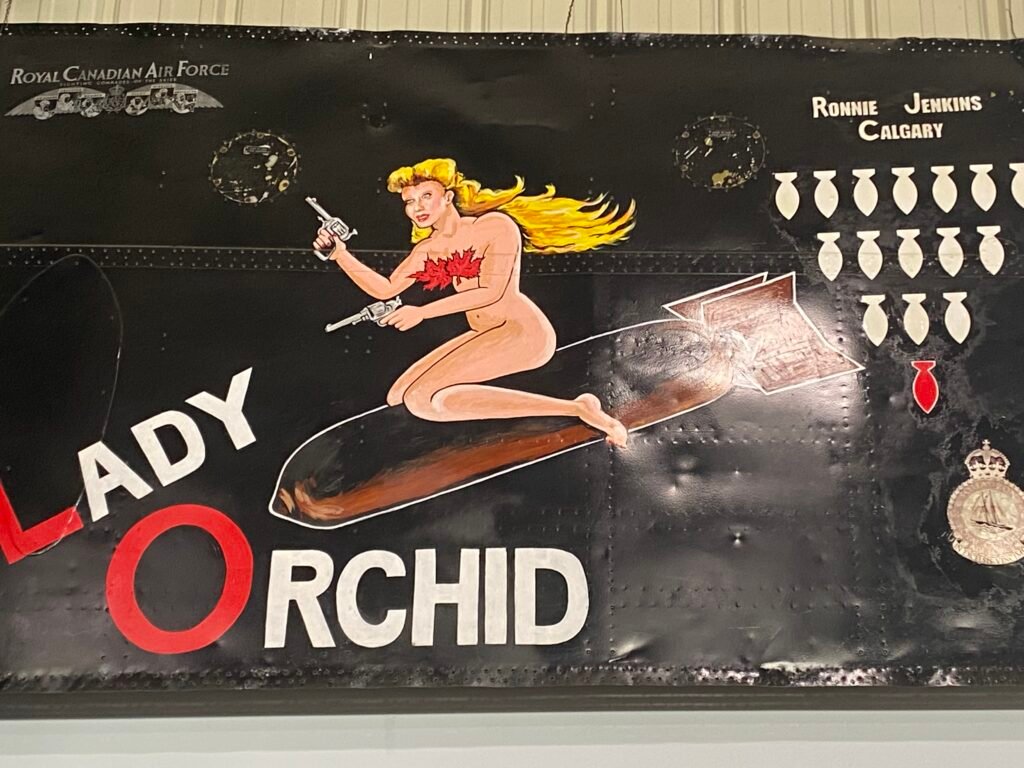
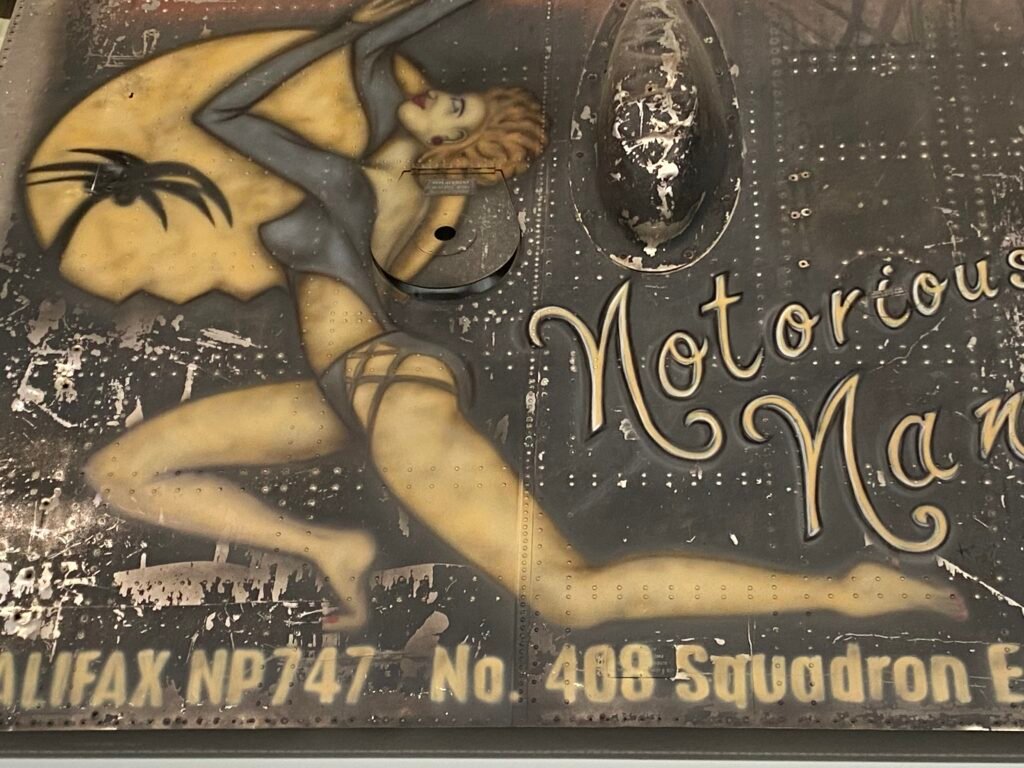
I tear myself away from this diamond in Diamond country and head out to the hinterland and my next destination of Head-Smashed-in-Buffalo-Jump World Heritage Site. This remarkable museum is built into the cliffside from where you get a real sense of the vastness of this country as the Rockies stretch majestically into the distance towards the west, and the sweep of the Great Plains is laid out for hundreds of miles to the east.
Head-Smashed-In Buffalo Jump is the best-preserved example of communal hunting techniques that the Plains people engaged in, thanks to the massive herds of bison that existed in North America for over five thousand years.
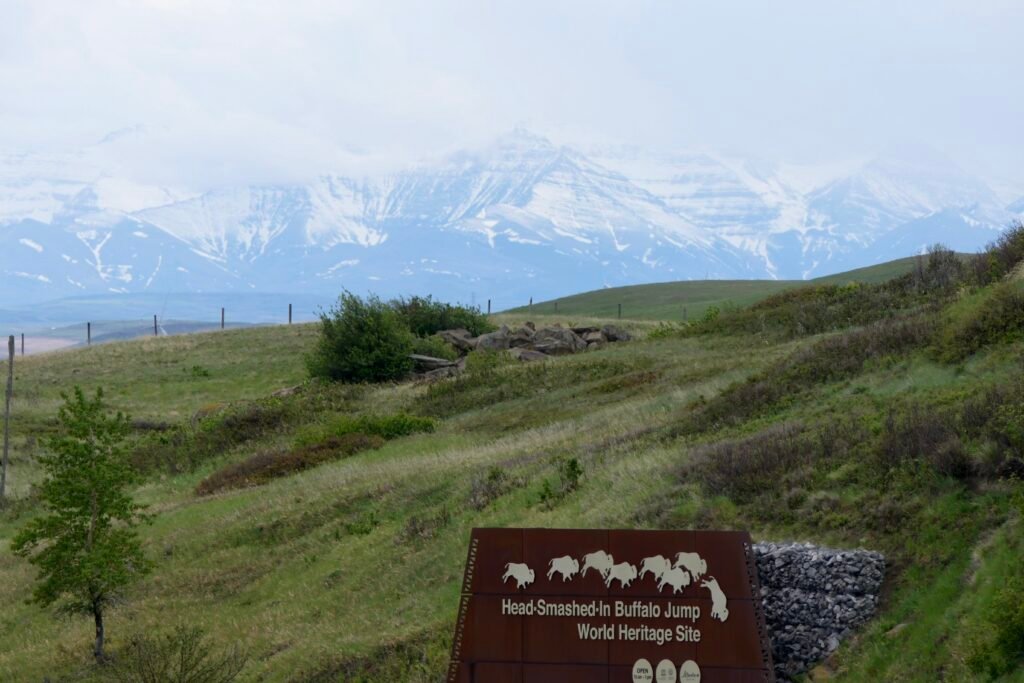
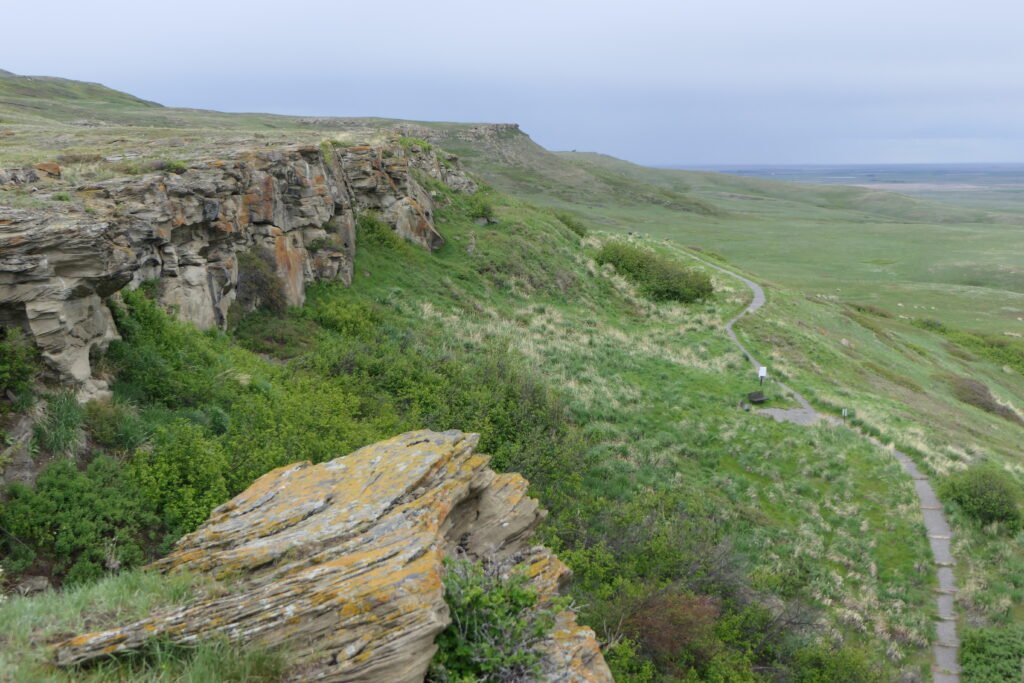
When the Europeans arrived, they came with guns and ammunition which led to the bison being hunted almost to extinction. The museum is a stunning example of how a museum should be, which maybe is the wrong adjective to use when the subject matter is about killing bison by landing them on their heads.
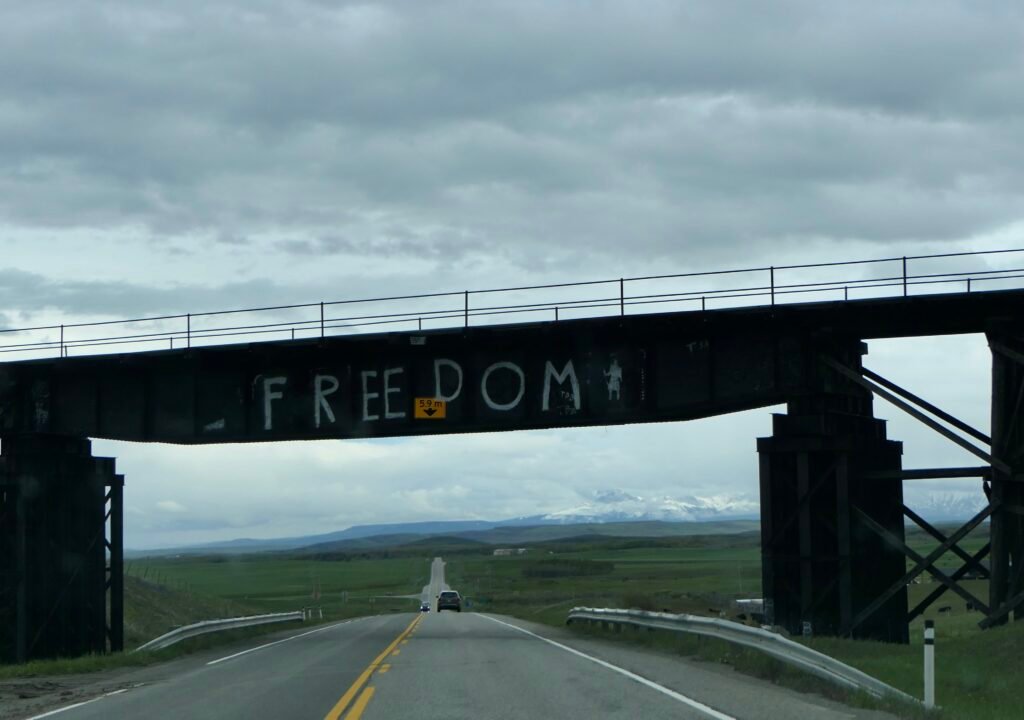
As I head south again towards Glacier National Park, I come across a rail bridge over the road where the graffiti letters spell “Freedom” accompanied by a little hand-painted white kilted warrior Braveheart beside it. I almost feel like I’m back home…..
Waterton, Glacier International Peace Park
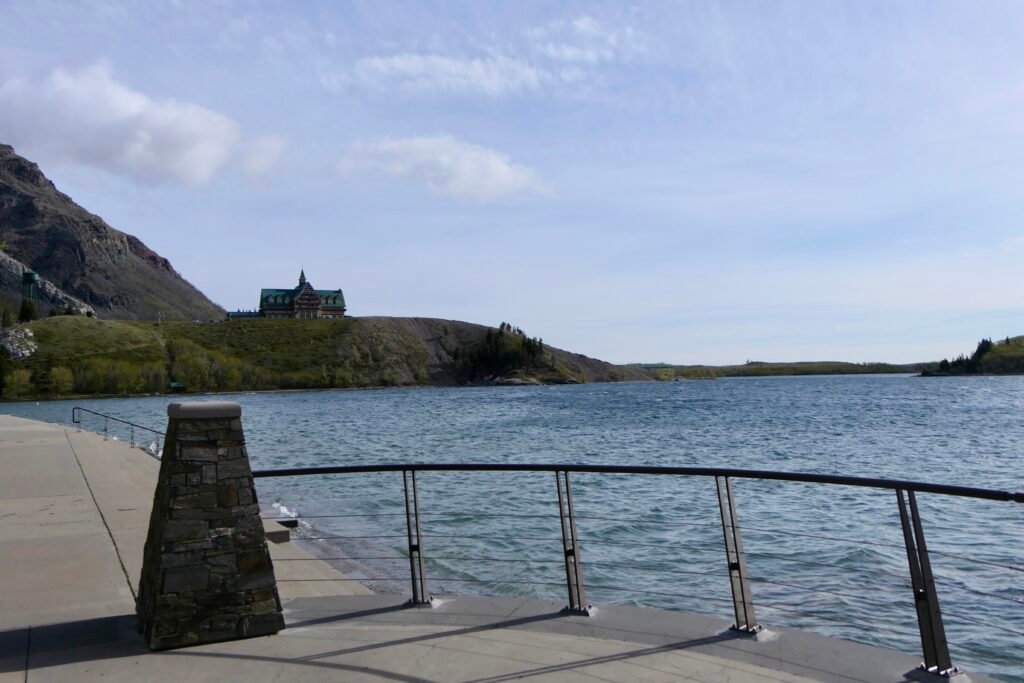
I leave the main highway and take the road to Waterton entering Glacier National Park. The first building I see is the extraordinary Prince of Wales Hotel, a huge alpine-like structure on a promontory overlooking the lake.
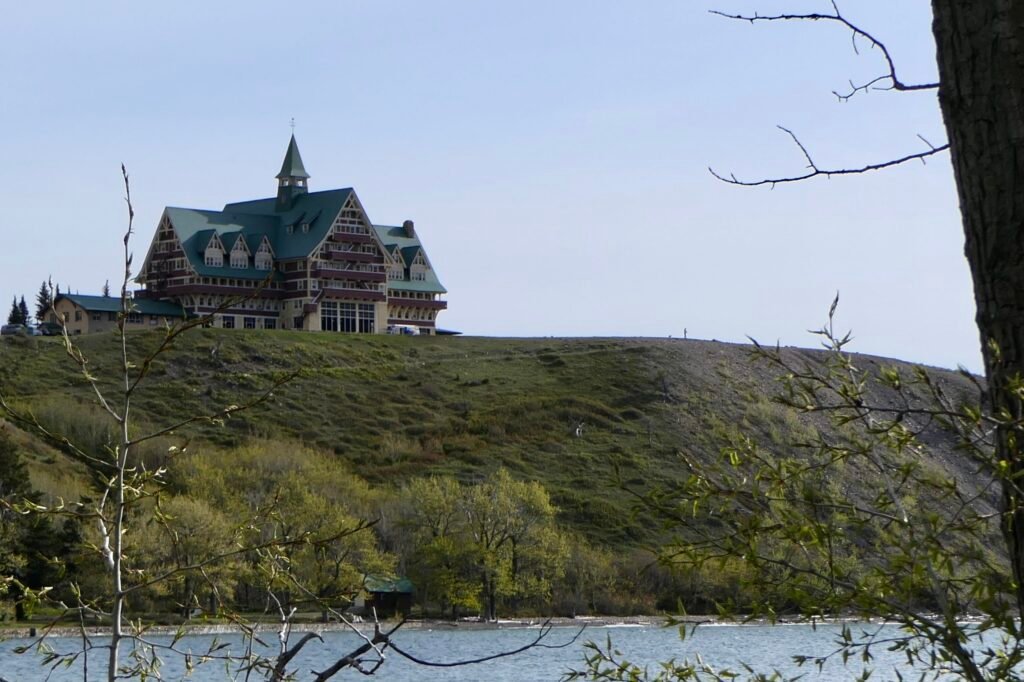
My own accommodation for the night is Kilmory Lodge in Waterton, which while being just a little less luxurious, nonetheless has the same spectacular views and is the perfect spot for relaxing in the bar and restaurant. My window looks onto the Prince of Wales Hotel just to keep me in my place and not to get above my station.
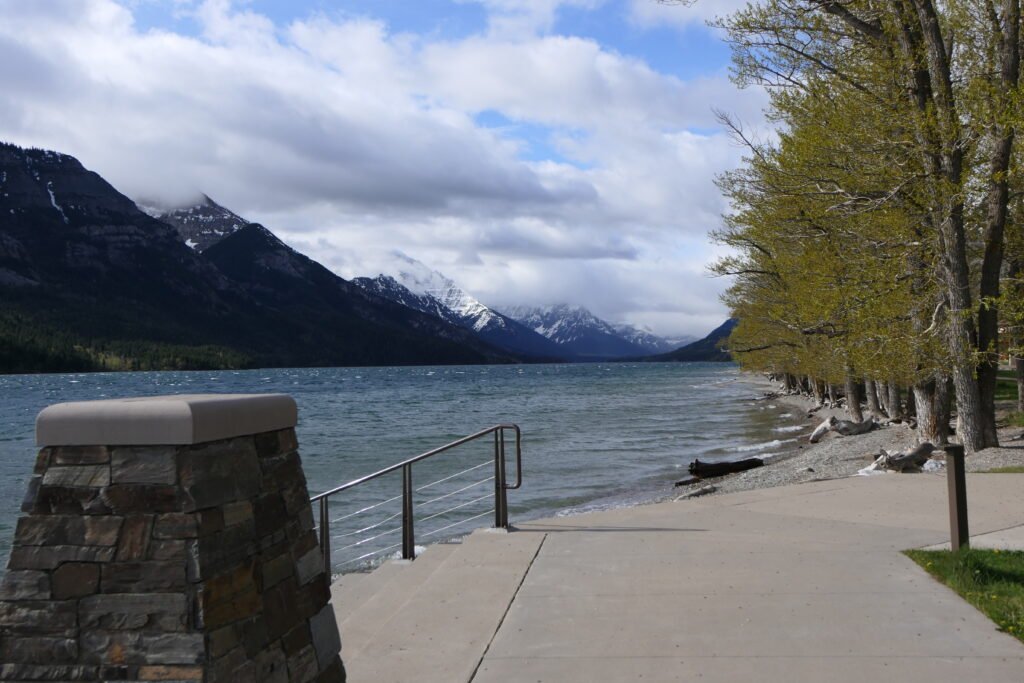
I take a walk around town, but it’s a holiday so everything is shut. I say everything but there are a couple of bars open and one restaurant. This is a quiet place and reminds me very much of the Lochs of Scotland. The choppy waters, the brisk wind, the snow topped mountains, the mobile ice-cream van……
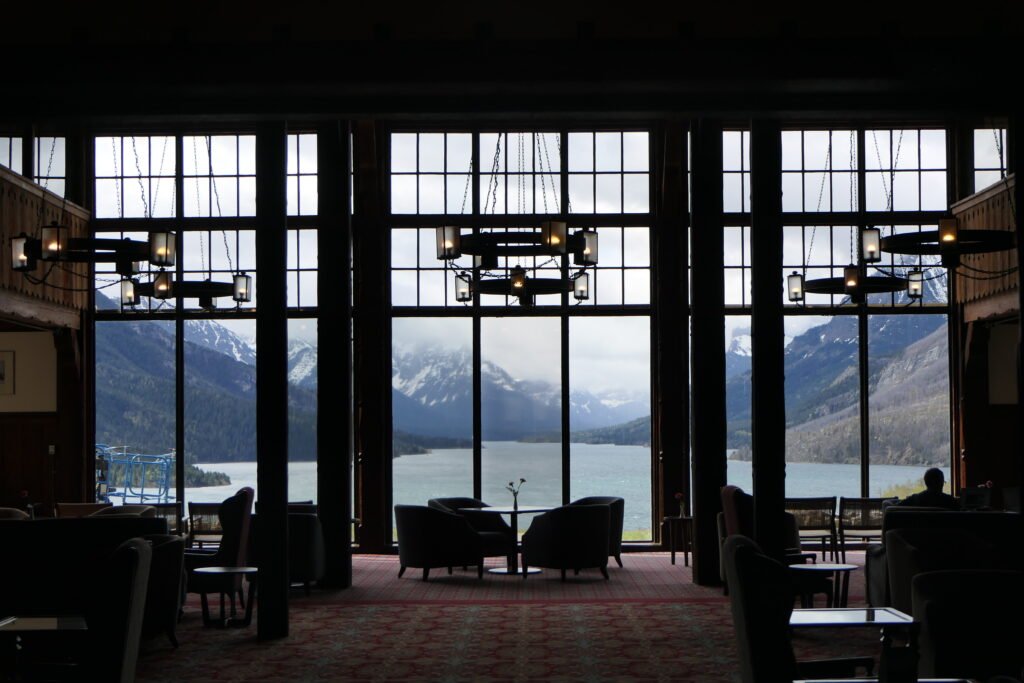
Visiting the now familiar hotel on the hill, it can be seen from every vantage point in town. It’s hard to take a photo without it being in the frame. There are numerous hotels round the world named after various Prince of Wales but none I imagine have scenery surrounding them quite like this one. With water on three sides, it sits proudly like a king surveying his kingdom. The entrance hall and lounge to the hotel is breath-taking as you gaze through the huge floor to ceiling windows in the reception area, all the way along the length of Waterton Lake to the monster 10,500 foot Mt Cleveland in the distance. Snow topped mountains line the length of the lake in front of the hotel, disappearing into the far distance.
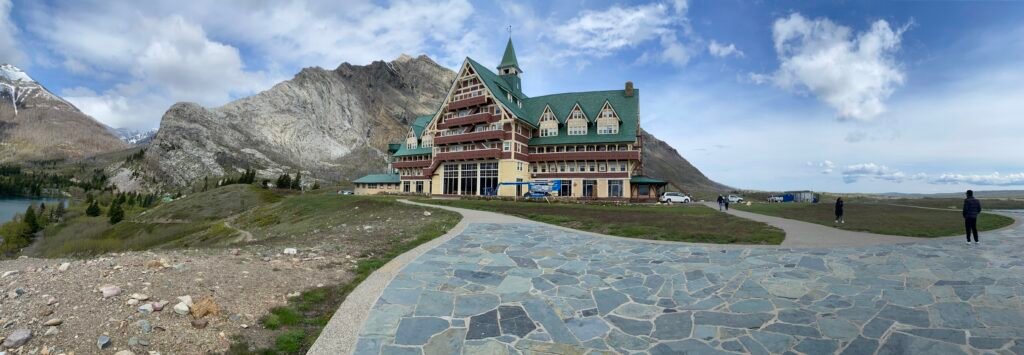
As I pass by, I wonder to myself if the Prince of Wales gets free rooms in any of these hotels. I think it’s the least they could do after pinching his title. The hotel lays claim to having the oldest working elevator in North America. A survivor from the golden age of railway construction in Canada the hotel was built in 1927 by the Great Northern Railway company and quickly became an oasis for thirsty, deprived Americans from just over border in the US, where prohibition was still enforced. Canada was a prohibition free zone as they would call it today, which is basically why the rail company didn’t build the hotel next to a railroad but situated it miles away in a beauty spot where visitors might like to stay awhile and therefore drink more. A “Last Flight Out” moment.
The road from Calgary is peppered with fascinating stops and diversions, and Waterton provides the perfect end to a great drive.
Mileage – 225