
Naples isn’t the obvious airport of choice when deciding on a road trip through Puglia. Bari or Brindisi are somewhat more convenient, but there is method in my madness. Renting a car one way from east to west is ruinously expensive, and besides we hadn’t seen Naples in a while. After a couple of thousand kilometres around Puglia, our plan was to finish with four days of peace and quiet on the island of Ischia. We got the island, just not the peace and quiet, but more of that later.
Stavro, our taxi driver, meets us at Naples Airport. Kind and helpful he is an encouraging introduction to the city, though I conveniently forget that just because an Italian taxi driver is nice, that doesn’t always convert to driving skills. Luckily it is late at night, and we get to ‘Casa Valeria’ unscathed, apart from sitting on each other’s laps in turn as we sway from side to side negotiating the complexities of the Naples road network. We haven’t been so close, that often, for some time.
Our hostess Valeria, turns out to be gloriously crazy, in the nicest way. She has a style that could be at the very least considered enthusiastic, edging towards hyper. We have a comfortable room for the next two nights at the back of her apartment, although breakfast the following morning doesn’t quite live up to Valeria’s effusive personality. Even the accompanying hand actions don’t improve the offering, but you can’t help but love her. I’m sure it’s a marketing ploy just so we can give her place five stars, and God loves a tryer. So why shouldn’t Trip Advisor?
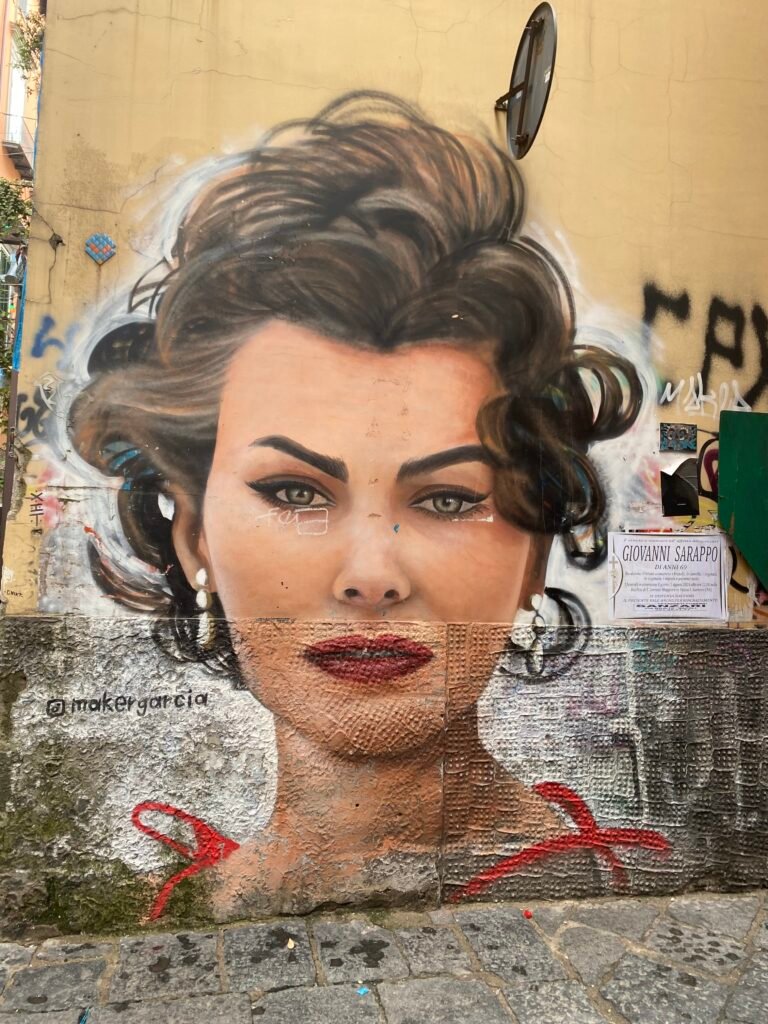
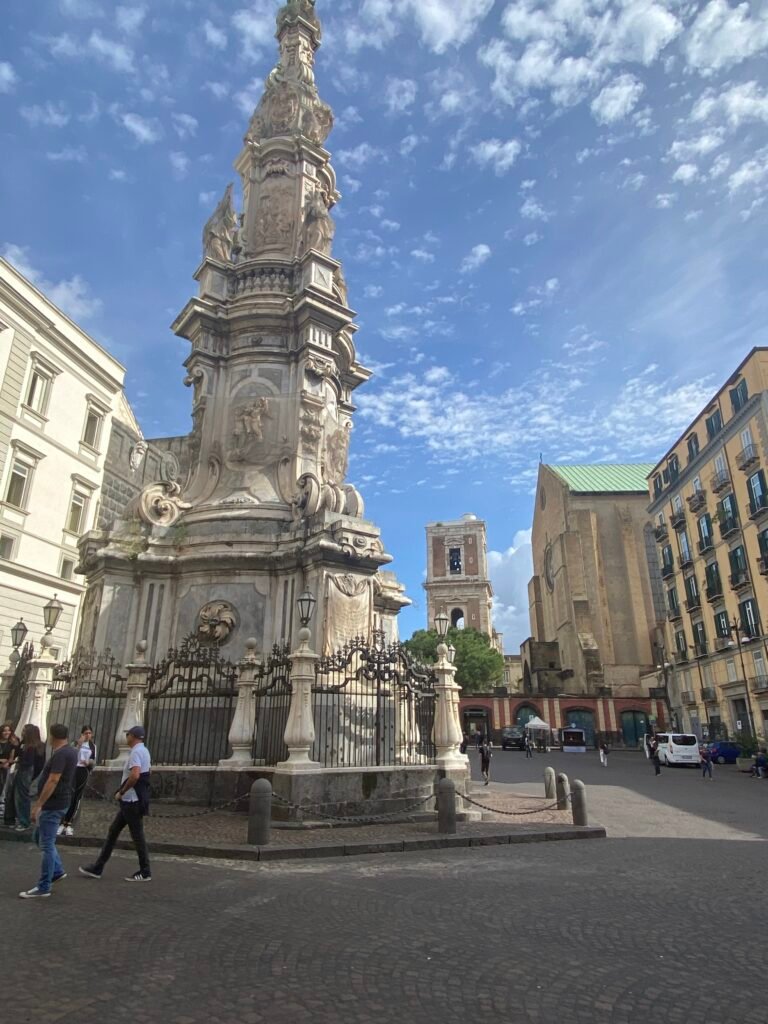
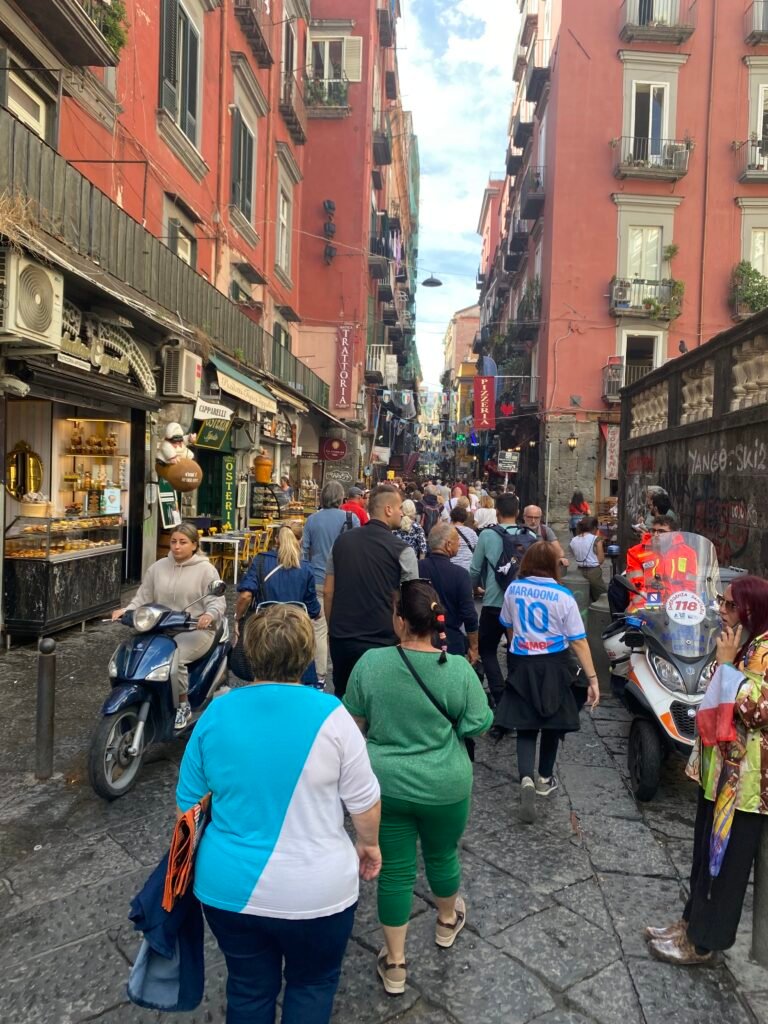
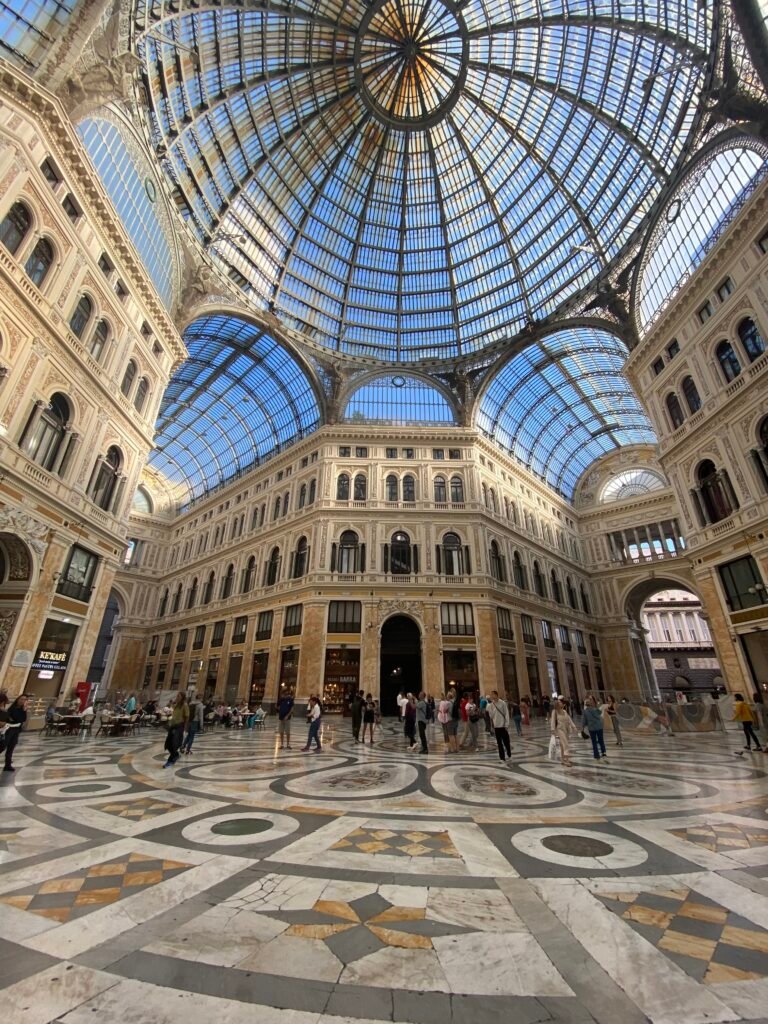
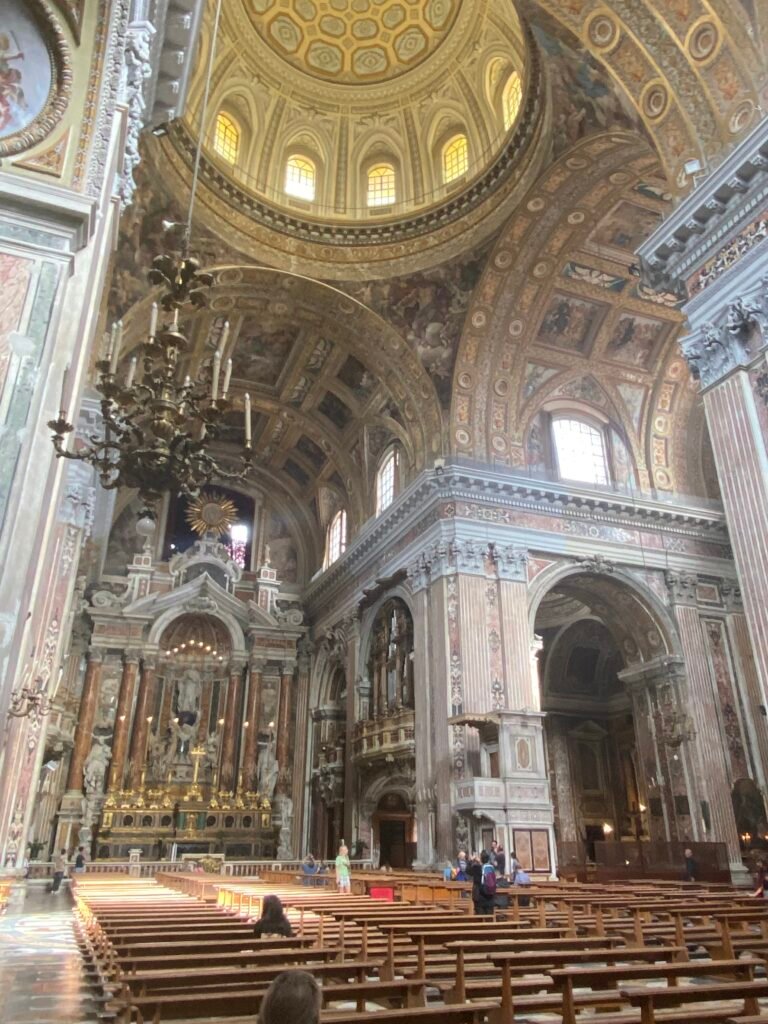
With so many coffee stops and eating places in Naples, we don’t really need breakfast. The apartment is in the upscale and leafy Vomero district on a hilltop dotted with gelaterias, alfresco cafes and refined restaurants, so we set out for a full day’s walk. This turns into a 12 hour day into a joyfully chaotic immersion, with too many people, but if you embrace the vibe, it’s an uplifting and fascinating experience. A funicular ride down to the old town, a trip underground to see Naples below the streets, a few coffee stops enroute, a dozen churches or so and the obligatory “I’ll just pop in here for a minute to have a look” shopping opportunities. Luckily my partner is more interested in street life in the actual street rather than the enticements that sit behind the façade of the numerous retail dens of iniquity.
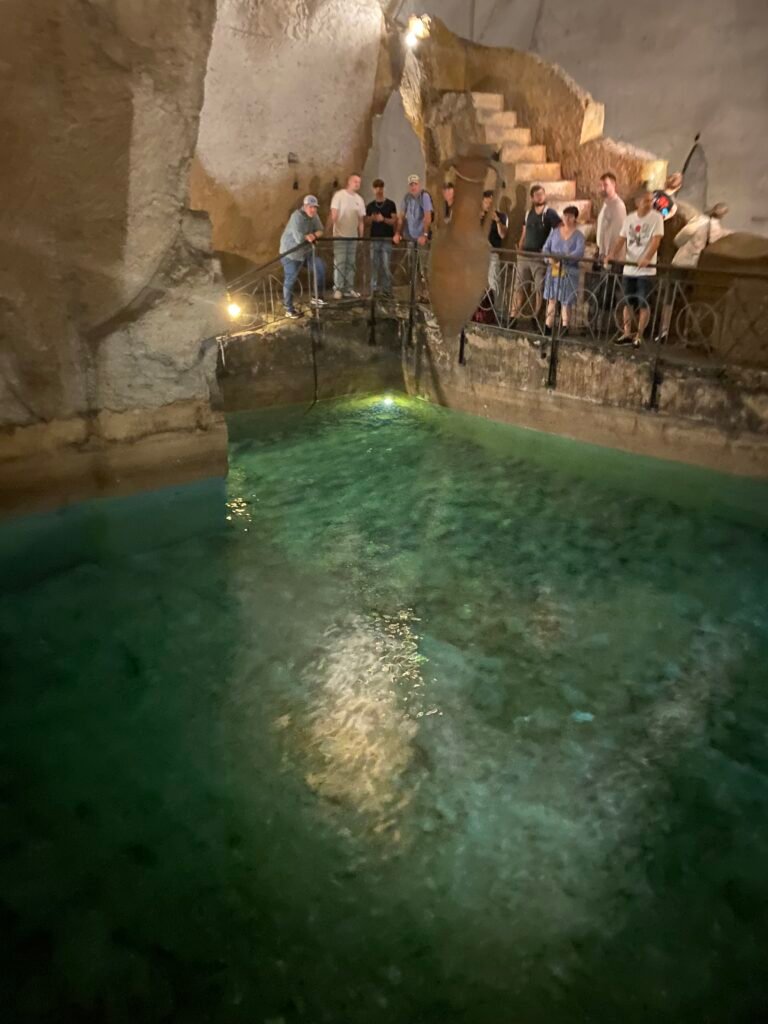
Underground Naples offers an hour and more of fascinating look at the sheer scale of the construction and imagination of the people who created this subterranean world many thousands of years ago. The ingenuity in building this complex, situated some 40 metres below the streets is astonishing, makes it one of the top tourist attractions in Naples. However, even that after all those years they still can’t fix the potholes that pepper the roads round the city! Progress is slow!
We miss out on the catacombs further to the north, and since we had both visited Vesuvius and Pompei previously, they aren’t on our schedule. Despite a cool evening breeze during the long walk along the promenade by the bay, we are able to eat alfresco at Sobrillo’s which, although only pasta and pizza, is an insight into how good the food is going to be on this trip.
The following morning, we have our ‘simple’ breakfast in the company of fellow guests, Carmen and her friend, visiting from Foggia which is on our route east tomorrow. They don’t offer a lot of encouragement to visit the town, so I strike it from my mental itinerary.
We take a taxi to Naples train station to pick up our car for the trip, but as usual, despite being an Avis Preferred Member, the process takes 25 mins. We get our car with 65,000 miles on the clock, decorated with so many dents and scratches it looks as though it’s been attacked by a bear. I’m assured by the agent that there are no bears in this part of Italy before he insists that I take photos of all the scratches that are not on the damaged list in the rental agreement and it will all be ok in the end. Really? – so it’s my job to tell you what you didn’t notice the last time the car was returned? Ah well, it must be the Italian way. You do your job, and I’ll do your job as well. We both shrug our shoulders and move on.
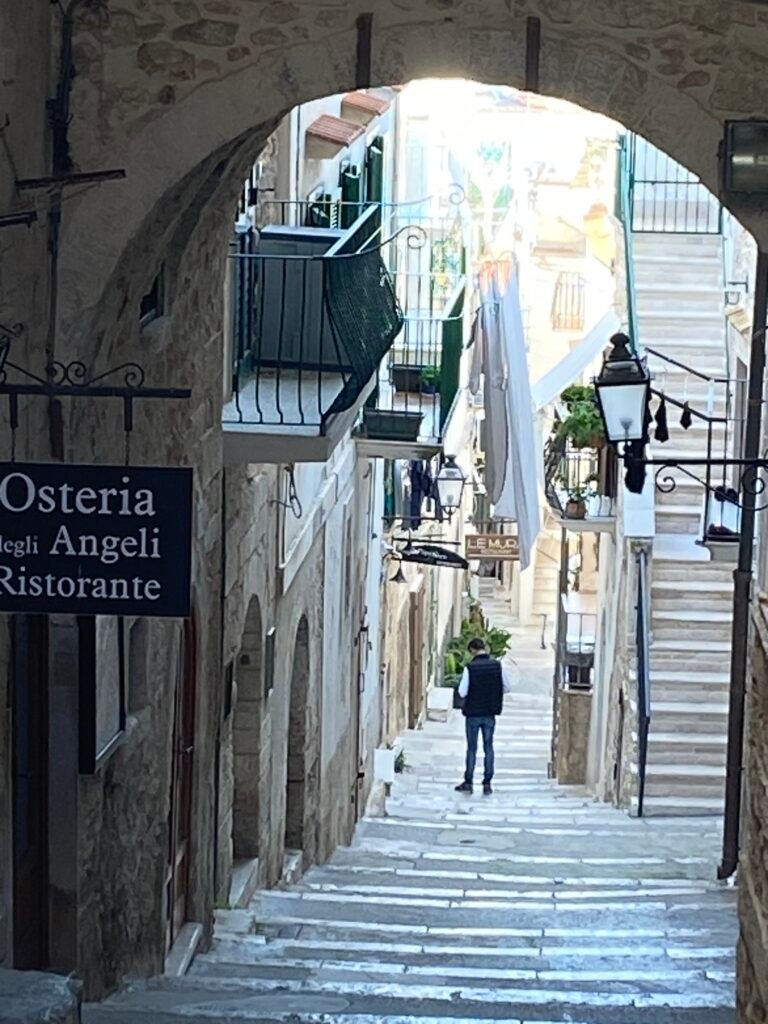
We head out on the road, and I’m back in my happy place behind the wheel, taking in the scenery while keeping a third eye on the madcap activities of the local motorists as they hurtle down the autoroute assuming the laws of physics are merely a suggestion. A couple of hours later, Foggia is on the horizon, so we take a gamble to drop in, basically because its lunchtime. We don’t even get into the centre before we are distracted by an attractive looking deli in the suburbs. We gamble again, mainly because there is on-street parking and the one thing I know about Italy is that once you find a parking space – take it, they are like gold dust. ‘Oro Café’ turns out to be a little gem, with friendly staff and great food – our first of many serendipitous discoveries.
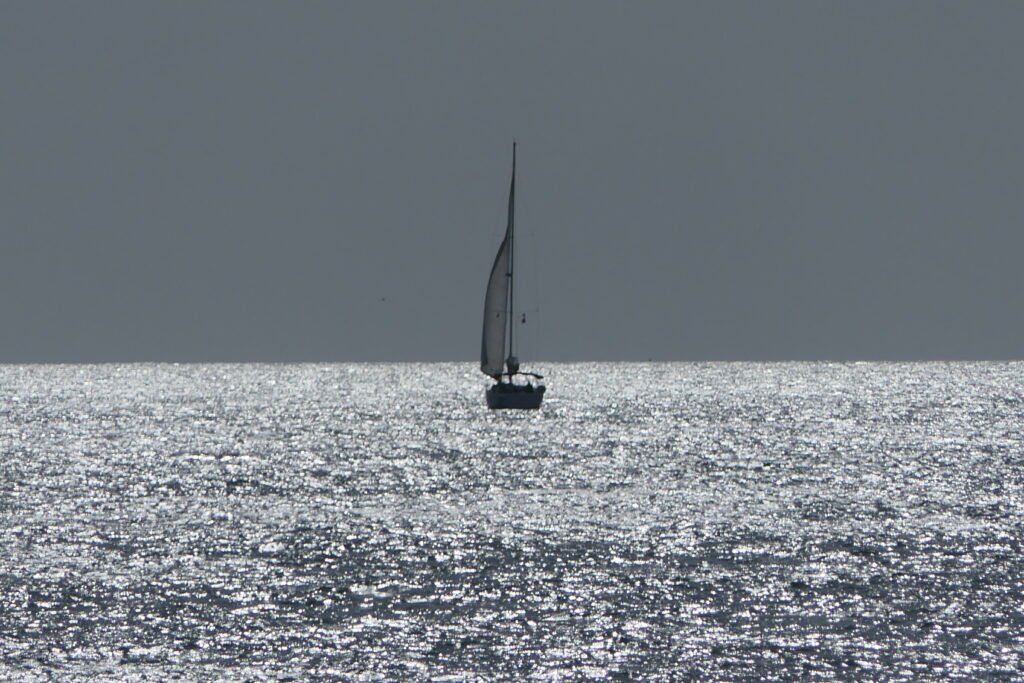
Back on the road we take the scenic route through the Gargano National Park to the pretty village of Peschici, via San Savero and Lago di Varano. We have little time in the town, but most bars and shops are closed anyway as it is late afternoon but we wander through the old narrow streets, then sit for a while with a beer in the square in the only bar open, watching the world go by. Or at least the villagers. The courtesy in Italy of providing nuts and crisps with every beer is a custom I like, and more countries should encourage it. We leave later than planned and it’s starting to get dark as we head to our overnight accommodation in Vieste. It’s only 20 kms away, but it takes nearly an hour along coastal cliffs, through pine filled woodlands and head-spinning twists and turns in the road.
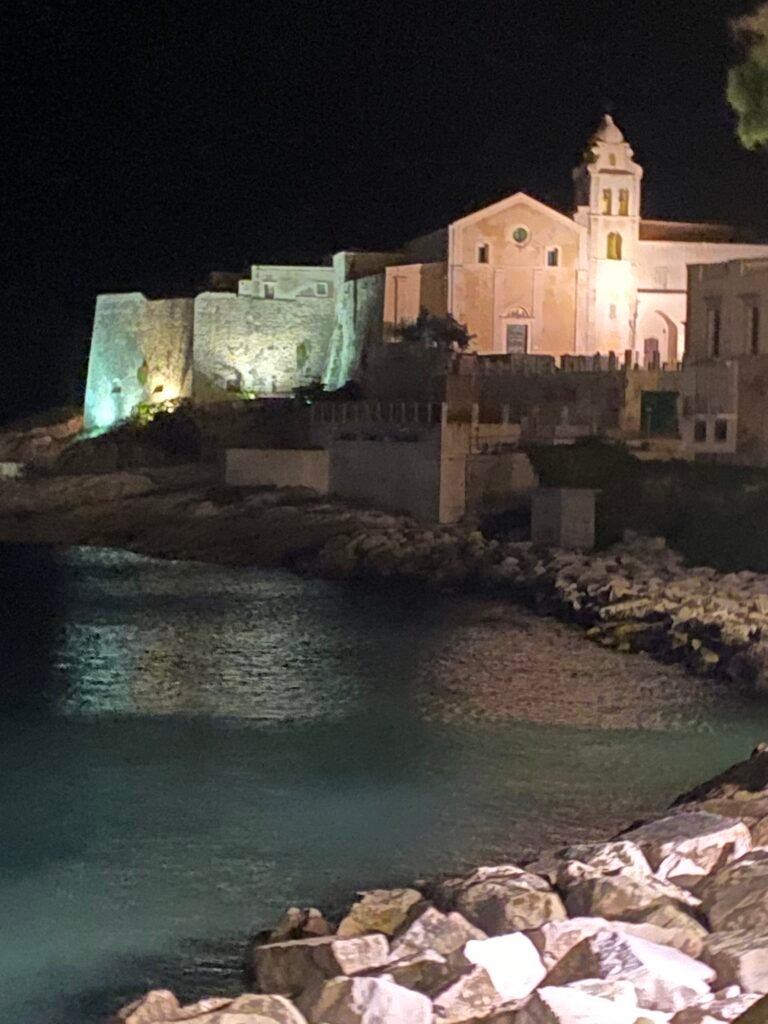
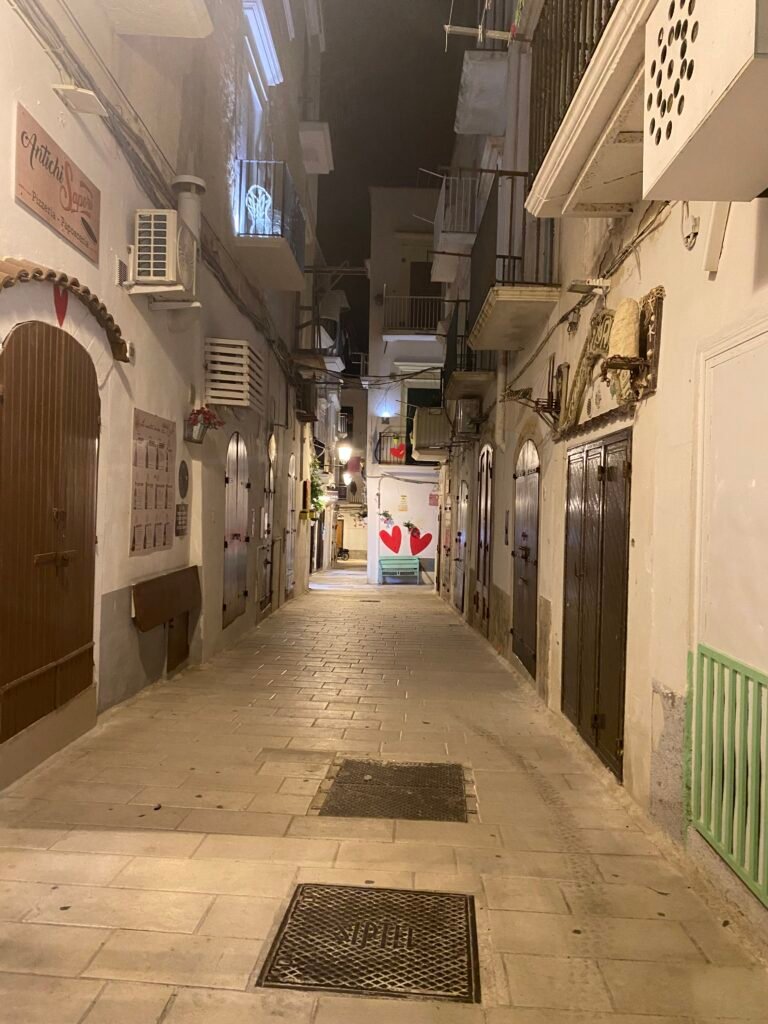
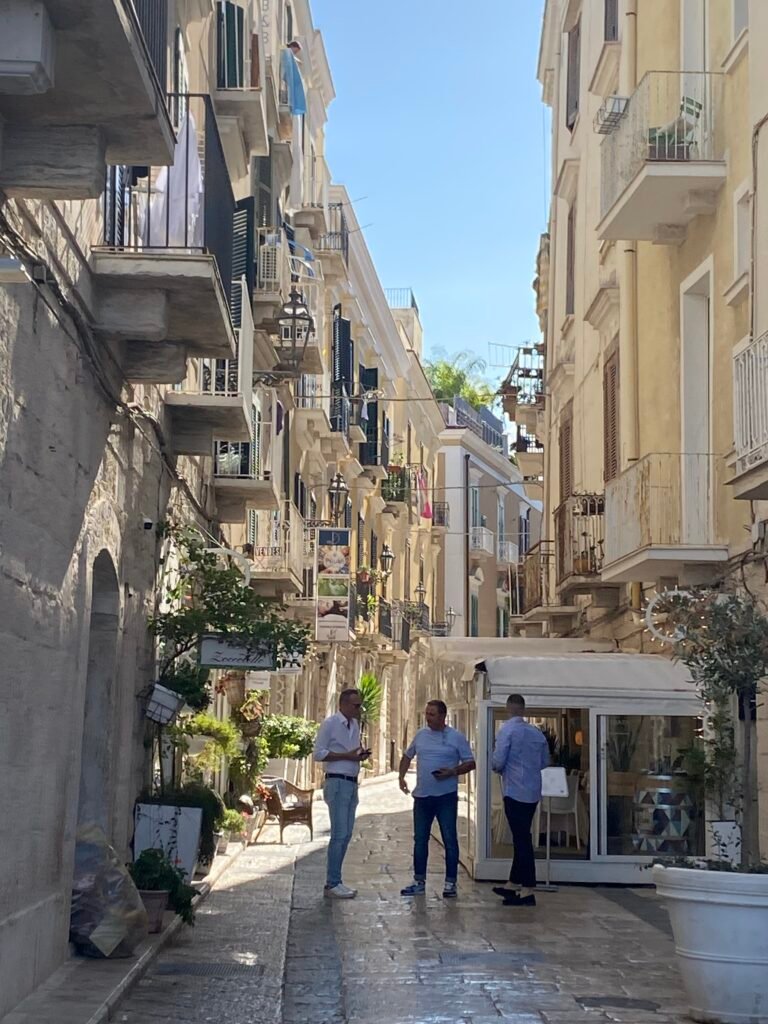
Trying to find booked accommodation in Puglia’s little coastal towns is like trying to finish a jigsaw. You seemingly have all the pieces but when you get there, that one last piece is missing, either lost in translation or simply to test your resolve to see if you are a worthy guest. The streets and alleyways of these beautiful villages, like Vieste in the north, Trani and Monopoli further down the coast and Lecce in the south, test your navigational skills, especially when Google maps tries to squeeze your very normal-sized vehicle through an ever decreasing gap between buildings, as if extracting more juice from the grapes to make the very wine you’re going to drink later that evening to assist your recovery. However, it’s all worth the effort. Away from the coast the scenery might not be the most stunning, but the coastal routes, the villages, the people and the food most definitely are.
The instructions from our accommodation for parking in Vieste, a pedestrian only cliffside town, seem concise enough, so we park in a large space with a big P at the entrance. Only one other car is here. It turns out the correct parking is another big P twenty yards further up the hill towards the castle with the exact same sign, but out of sight. I only find this out when we check in. Our room at ‘Dimora del Dragone’ turns out to be a beautiful property with a large terrace overlooking this ancient village and beyond out to sea. A delicious Puglian potato pie at a little restaurant in the alleyway next door in the warm evening air soon brings the good times back. The wine also helps.
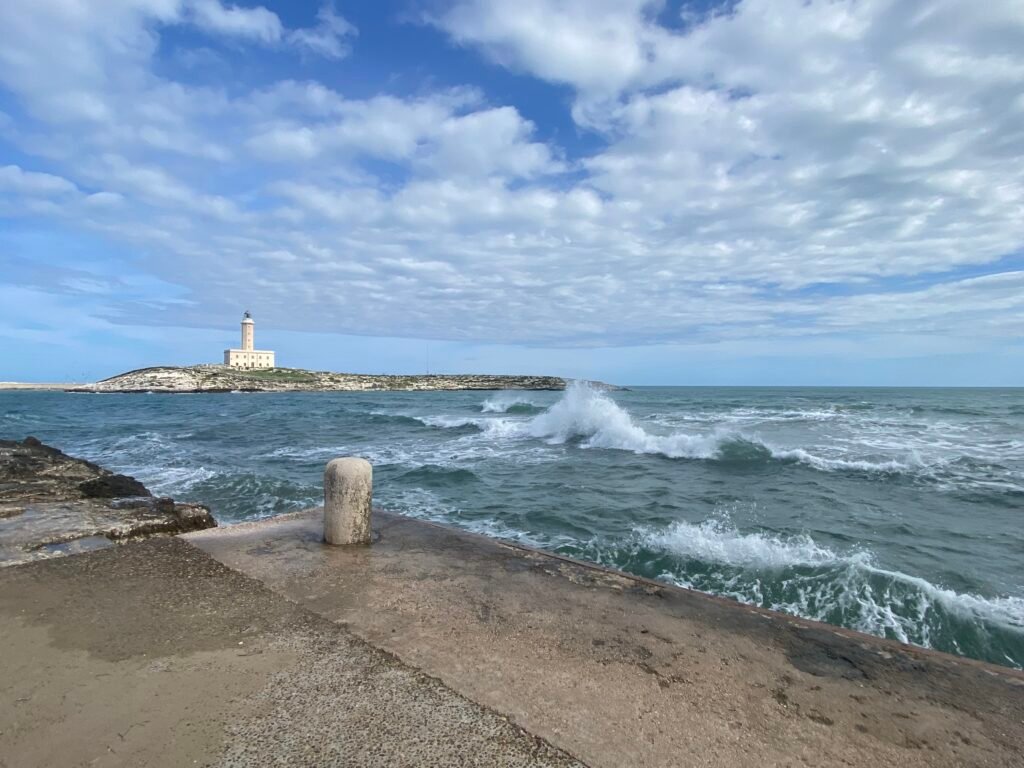
Vieste isn’t the easiest of places to reach from afar, but it’s worthwhile if you care to stay for a couple of nights. With miles of limestone cliffs and hidden beaches all along the coast it’s a very attractive town with little alleyways hiding some lovely restaurants and tiny unique shops. In the outlet beneath our apartment, a smiling octogenarian is making leather belts on his machine, giving an old-fashioned feel to everyday life. And then there are steps. Lots of steps. I watch several ageing residents climb relentlessly towards their chosen destination. I realise they adopt a particular method, with a slight side to side motion, keeping their rhythm of one step in front of the other and seem to disappear faster than expected. It’s October and many places are closed but we find a café open beside the harbour, order wine and eat delicious bruschetta, while watching a man fall off his boat onto the harbourside. I felt I could have been a local hero had he fallen into the water, but luckily the wine stops me reacting with too much haste.
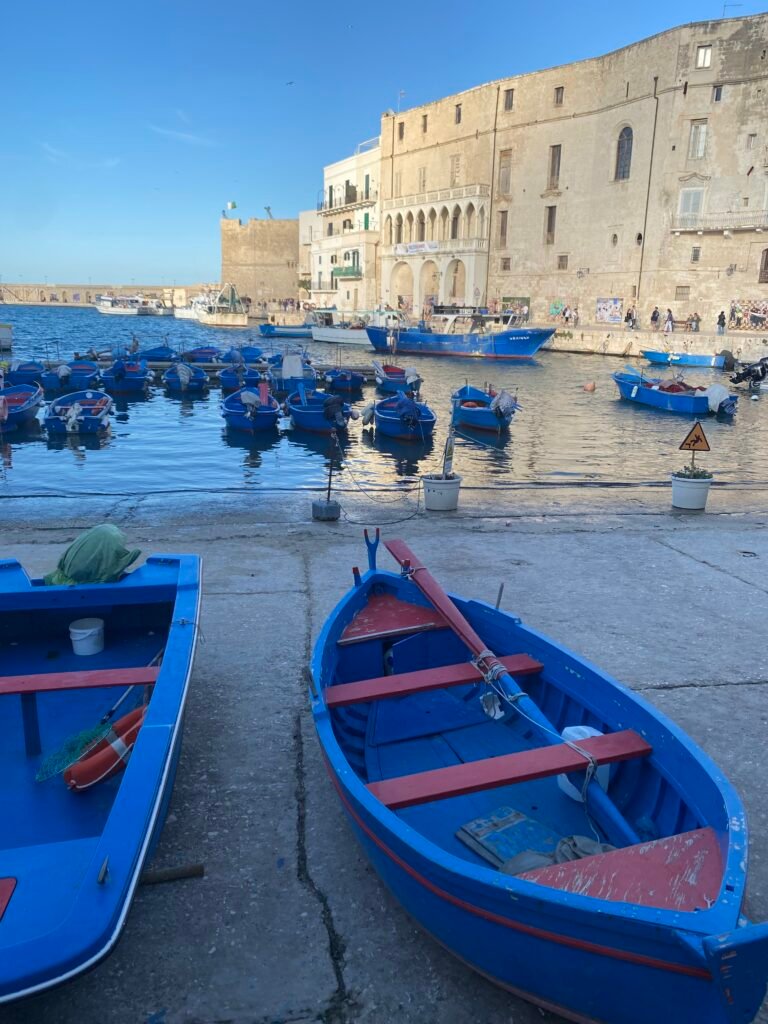
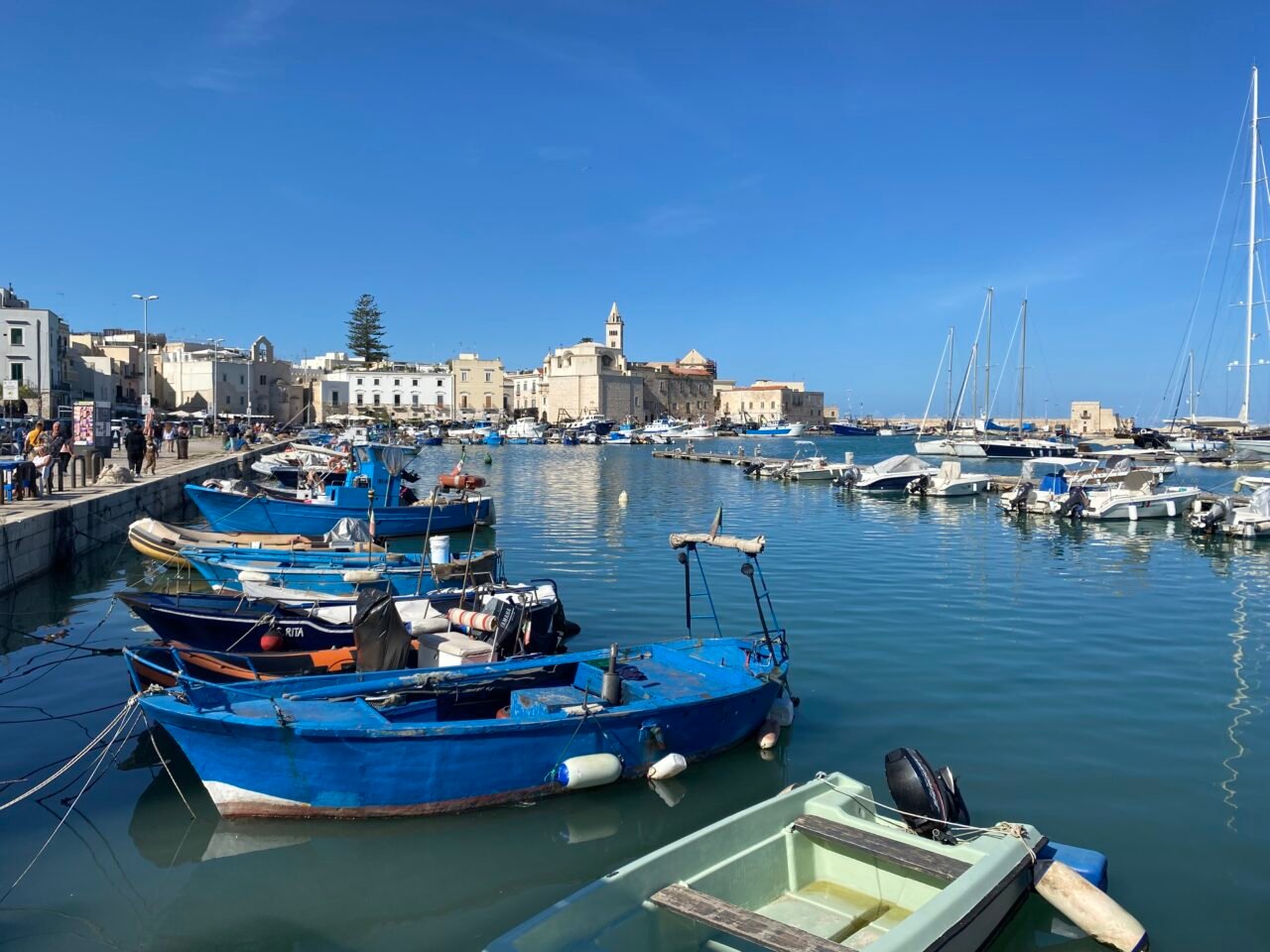
As we work our way down the coastline, we stop in Trani, a delightful little historic harbour town, and once again food beckons. We lunch on octopus, mussels and rice. Not our normal diet but when in Trani, be a Trani, although that could be taken the wrong way, so perhaps we’ll leave it there. By this time, we are recognising how good even the simplest of food is here in Puglia.
Monopoli the town, not the board game, is next on the list, and is really just a bigger version of Trani and just as attractive. It would be easy to spend some considerable time here, but we have a long run today – mainly because our chosen accommodation can only take us for the next two nights, and the reason for making all this effort turns out to be one of our better decisions.
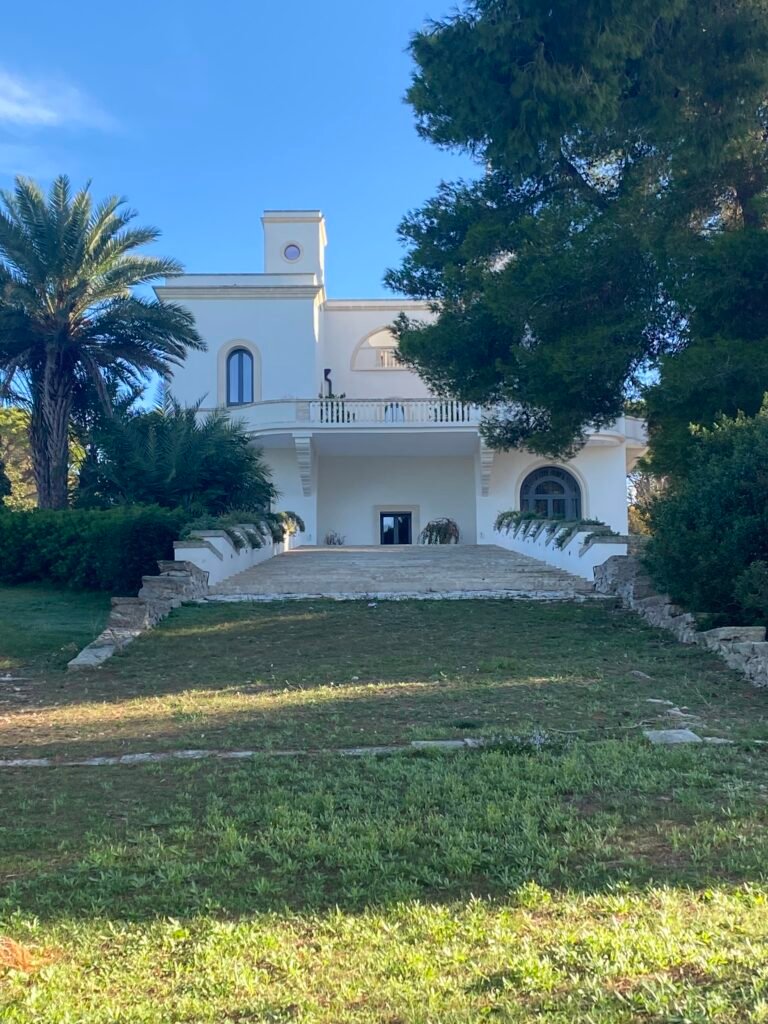
Before we left the UK we had pinpointed ‘Sa Suites’, just outside Trepuzzi, as our chosen place for sleeping tonight. Set amid a plethora of abandoned little olive farms, it’s an incongruous place to locate a hotel. Well, it’s not a hotel really, nor is it, by definition a Bed and Breakfast. It could be classed as an Inn, but Inn’s will never be as classy as the 8 roomed ‘Sa Suites’. It is an extraordinary place. Olive groves and lemon trees are in abundance on an estate that boasts a floodlit tennis court, large outdoor swimming pool and views over the surrounding area. The rooms are stunning, with huge beds and outstanding fittings. The diverse art scattered round the walls of this large building look magnificent in a seemingly effortless way. Owners Rick and Anja take us through their persistent and remarkable journey in converting this building to the magnificent oasis it now represents, and which only opened in 2023 a few miles from the historic town of Lecce.
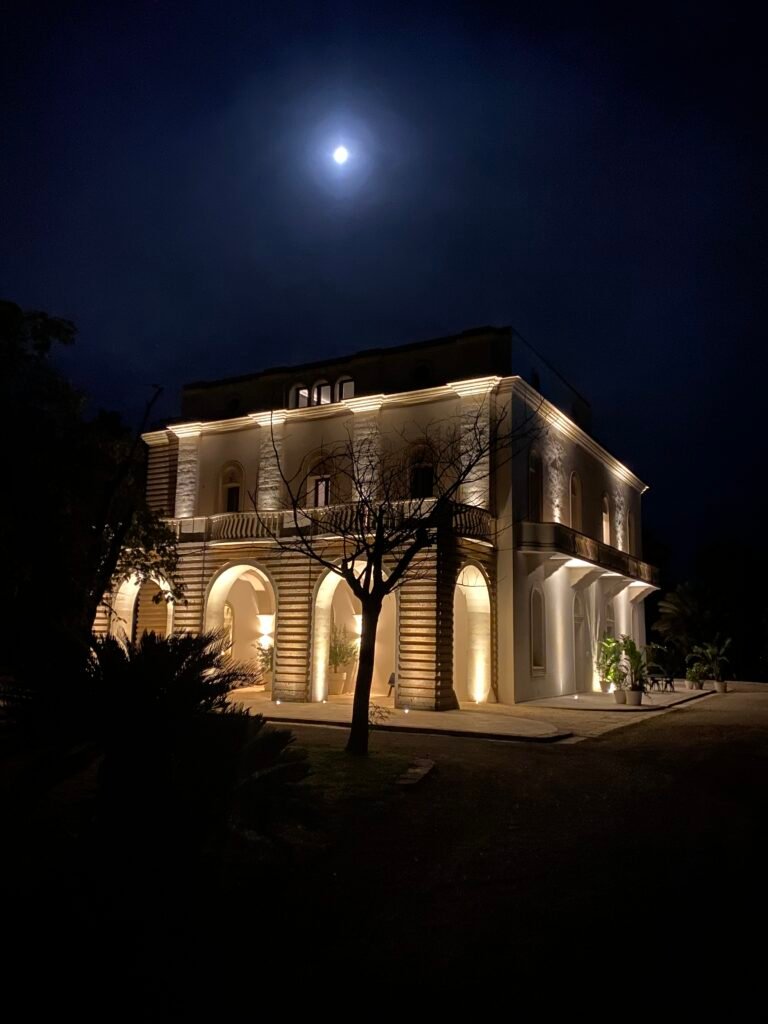
We arrive a bit late at the property and are now being asked if we would like to eat just as the other four guests are sitting down for dinner. I say no because I don’t want them to go to any trouble, but that is the last thing on their mind as they desperately want to please us. So, a beautiful dinner appears not twenty minutes later, and we devour it quickly. The terraces and balconies attached to each room bathed in the autumn sunshine defy you to leave this place of quiet solitude. Rick and Anja know a few things about food and especially how to serve up breakfast the following day. It’s a feast of Puglian cheeses, cold meats, pastries and fresh fruit. Personally, if I owned this place, I wouldn’t want anyone to stay here and just keep it for myself. It’s that good. But they need to recoup their outlay which must run into millions, so I guess they have to suffer people like us aspiring to luxury living but only having two nights to spare. In the great scheme of things, it wasn’t expensive.
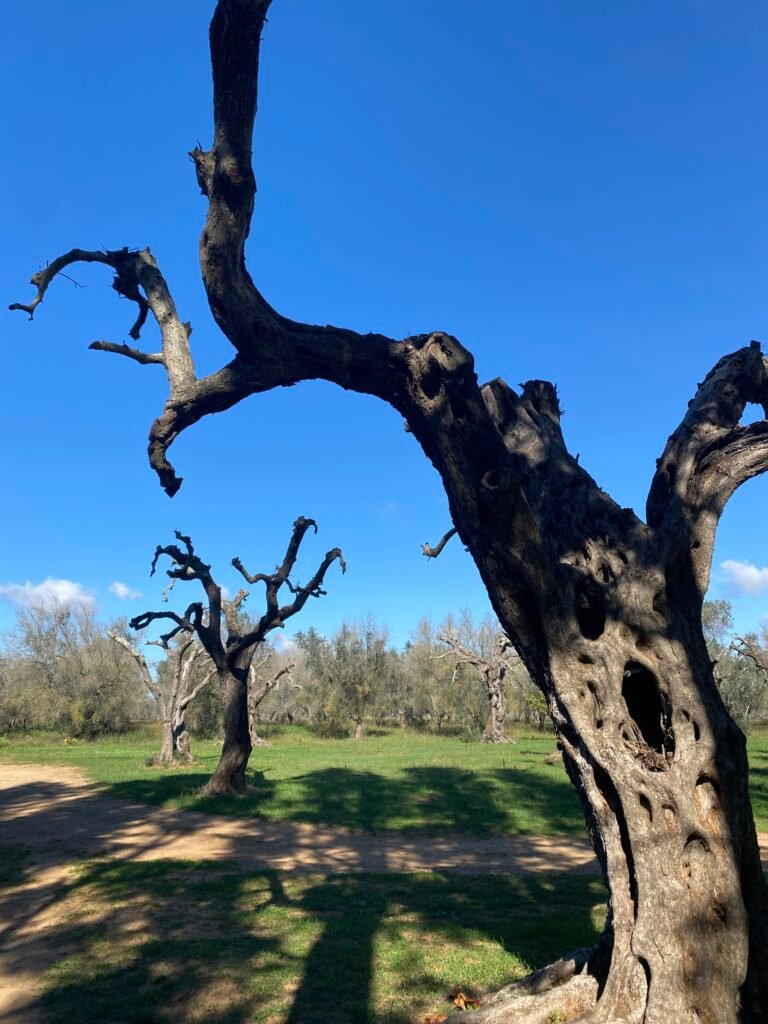
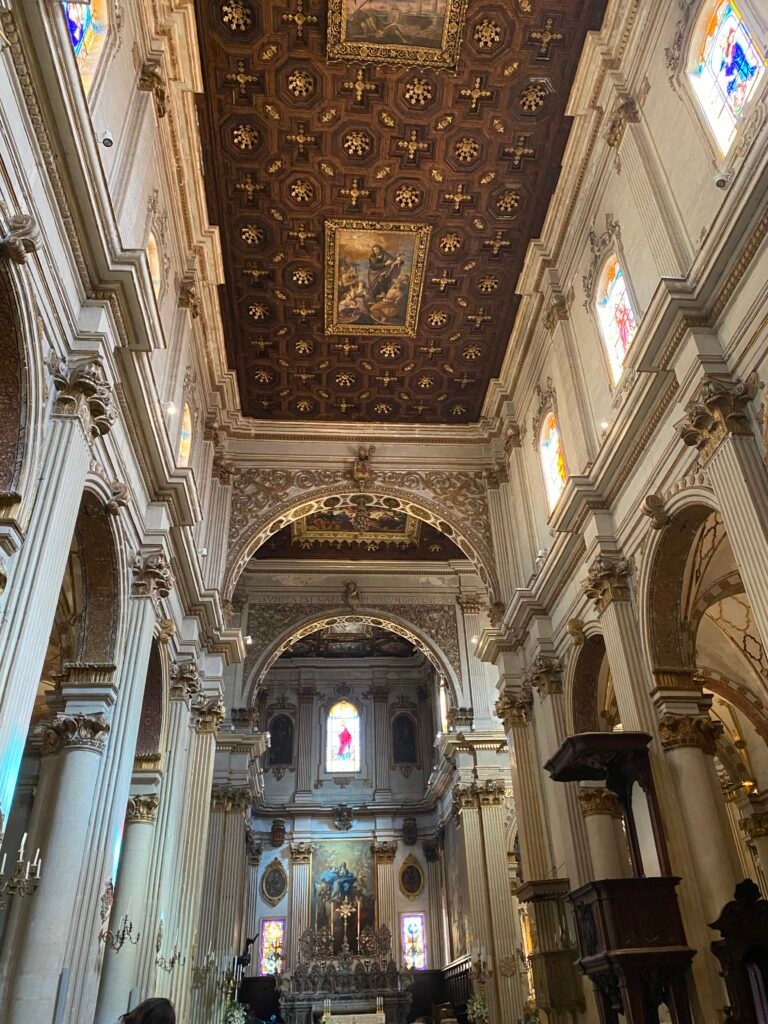
Lecce is a beautiful, if busy town with a stunning and extensive historic district. The Romans have a lot to answer for, and that includes Lecce. With a story that goes back to the 3rd century BC, the town known as the Florence of the South has added many countless treasures to its culture and architecture over the years. However, what its hasn’t added is car parks. It is probably the worst place to find a parking space, not only in the whole of Italy, but probably in the entire Roman Empire.
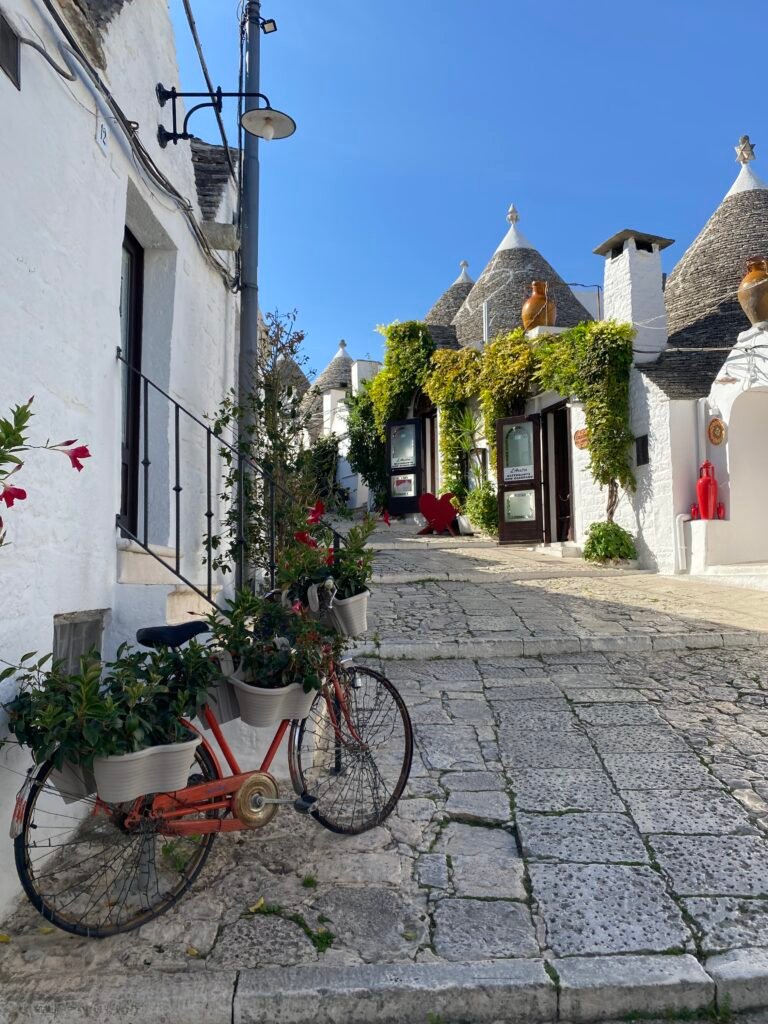
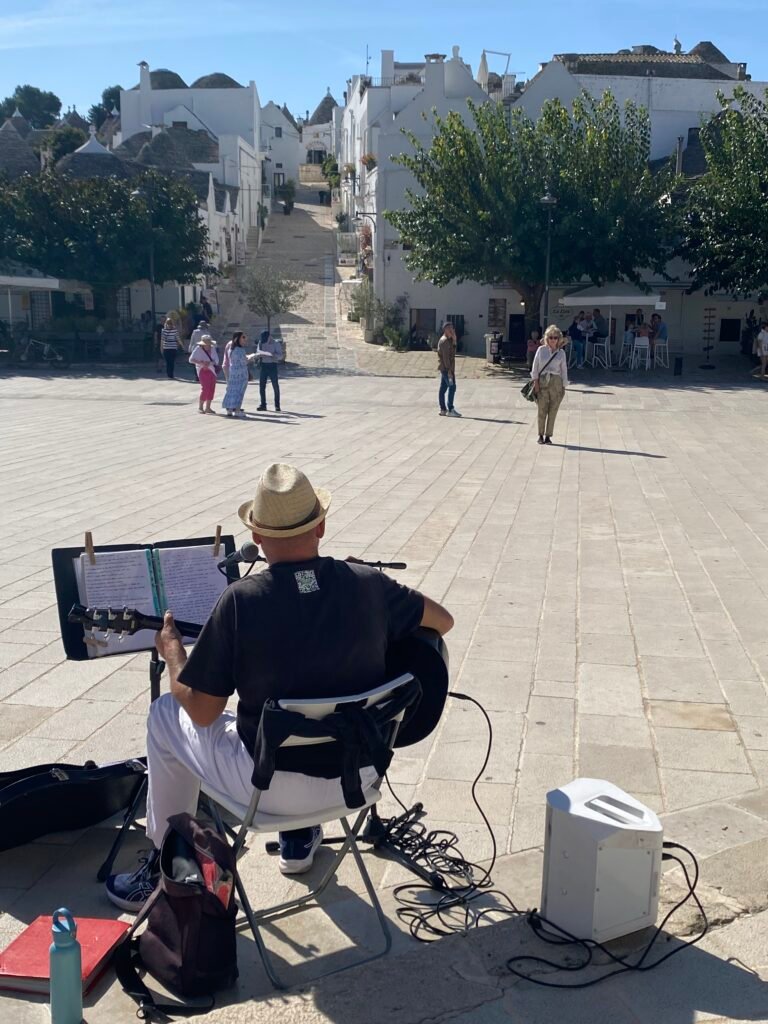
After two days of utter luxury, we reluctantly leave Trepuzzi and the wonderful ‘Sa Suites’. Admittedly it’s not for everyone but it’s now firmly on my list of favourite accommodation. We drive for only an hour to the touristy town of Alberobello, home of the Trulli’s. Put like that it sounds like an ancient disease passed down from generation to generation. He’s got a dose of the Trulli’s. You can immediately see the attraction in these toytown streets of conical shaped dwarf houses. I do have a thought that this is where the Hobbit came from, as they provide the perfect residence for one so small. Residents do live in them, or rather people do. How many are residents and how many are for rentals is debatable. Booking.com and Air BnB websites are full of them but too many visitors passing the door wouldn’t be to my liking. However, there is no denying it is pretty, and the most visited destination in Puglia. Our accommodation is somewhat dull in comparison, but clean and only fifty yards from the action. Trulli close if you will. I spot a restaurant which seems like the most sophisticated in town conveniently set amidst the little houses. Disappointingly, the only table left is in a corner facing two walls. They’re very attractive walls but walls none the less. Gianni the waiter arrives, and our wall view is forgotten. He learns we are from Glasgow in Scotland and unbelievably we find out he worked in ‘Est Est Est’, a well- known Glasgow eatery for 25 years. Of all the places in all the world ………well you know the rest. The dinner and wine turn out to be somewhat better than his former restaurant back home.
In the morning, after a healthy breakfast in the village at the aptly named ‘Cosi’ we drive an hour or so to Matera, the stone city.
I love Matera. It is an extraordinary town with a very old historic district, as well as a newer historic area, or historic 2 – the sequel, I guess. We splash out, and join a small guided tour with some very quiet people, and one loud American who wanders off at every opportunity. His two colleagues pay attention at least. Gaetan our guide is clearly passionate about his hometown, and rattles off facts and figures like a machine gun. Trust me he says, for the hundredth time as he drops another little gem of information. He is great fun up to a point. You could never go on a pub crawl with him as he would start telling you about how many bricks it took to build them, or how, underneath the stone floor is another house, and another, then another. The two hours go quickly but he is very keen to show us the animal bones acting as supports for roofs of the little homes that seem tiny but stretch back into deep caves. I won’t forget Matera. It made a big impression.
As I succumb to the vagaries of old age, most things I used to complain about pass me by without troubling my thought process. However, one form of exasperation that continues to annoy me still, is other drivers. Particularly Italian drivers, and more specifically, Italian drivers on Autoroutes in Italy. I can then break it down further into the mere madmen who defy logic by pulling out inches in front of you, or the lunatic, clearly desperate to get to the asylum by hugging your rear bumper as we are both doing 80 mph, where getting a pubic hair between the two of us would be a miracle. The temptation to switch one’s rear sidelights on is almost too much to bear. I don’t want to kill him, just rattle his head a bit until he comes to his senses, and he understands I’m no pushover.
From Matera we’re heading for some sophistication on the Amalfi coast. Consternation might be a better word. It may be October but the change in pace and chaos increases exponentially in this part of the world. We’re basing ourselves for two nights in Pontone, directly above Amalfi, not so much as the crow flies, more like as the goat climbs. We’re in the nosebleed area of the coast, and while spectacular, the weather is not playing our game, so it’s difficult to see much of the sea between the two peaks in the distance below. If we thought Puglia was bad for drivers, then Amalfi is gold medal country. The famous hairpin bends are an art in driving skills. Surely there is an extra test you can take to get an Amalfi Coast Approved licence. The following day, the weather improves, and we head up to Ravello, a mere 3.7 km away. However, it takes us half an hour after a combination of long traffic lights and drivers who try to outsmart those same lights and then meet a vehicle coming the opposite direction.
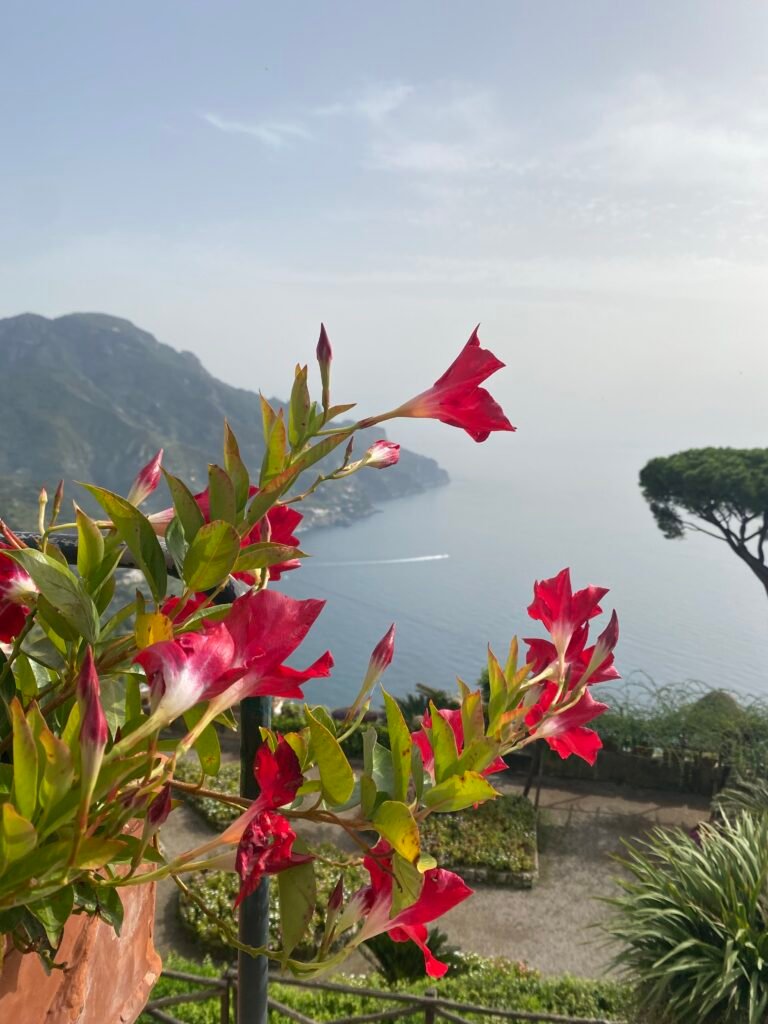
Ravello is a revelation. Not so much for the pretty square and surrounds, but it turns out that the famous Villa Rufolo and Gardens were saved and renovated by a Scotsman called Neville Reid. He suffered from “afflictions of the chest” so in 1851 decided the air in Italy was much better for the soul. Little did he know that millions of Scots would follow him, not so much for afflictions of the chest, but more for the sun, the sea and cheaper holidays. Reid spent years and a family fortune to renovate and create the extensive and stunning gardens overlooking the Adriatic.
After an ice cream it’s back to Pontone. There are only two restaurants in the village that are open. In fact, there only two restaurants in town in total. We ate in San ‘Giovanni’s’ last night, which was great but tonight is the turn of ‘Antico Borgo’ which after a poll of all the diners, the result suggests that this is the better of the two. The poll consisted of two diners. Same as the number of restaurants which is only fair.
Well, the previous 24hrs have been interesting. Last night the gods were angry and offered up a smorgasbord of thunder, lightning, and torrential rain on an epic scale, followed by a partly flooded apartment, a car shunt from behind, a parking fine, a mobile phone left on top of our vehicle in a car park for two hours, and a one-legged pigeon who took a fancy to my nuts. No wonder I’ve not had time to write.
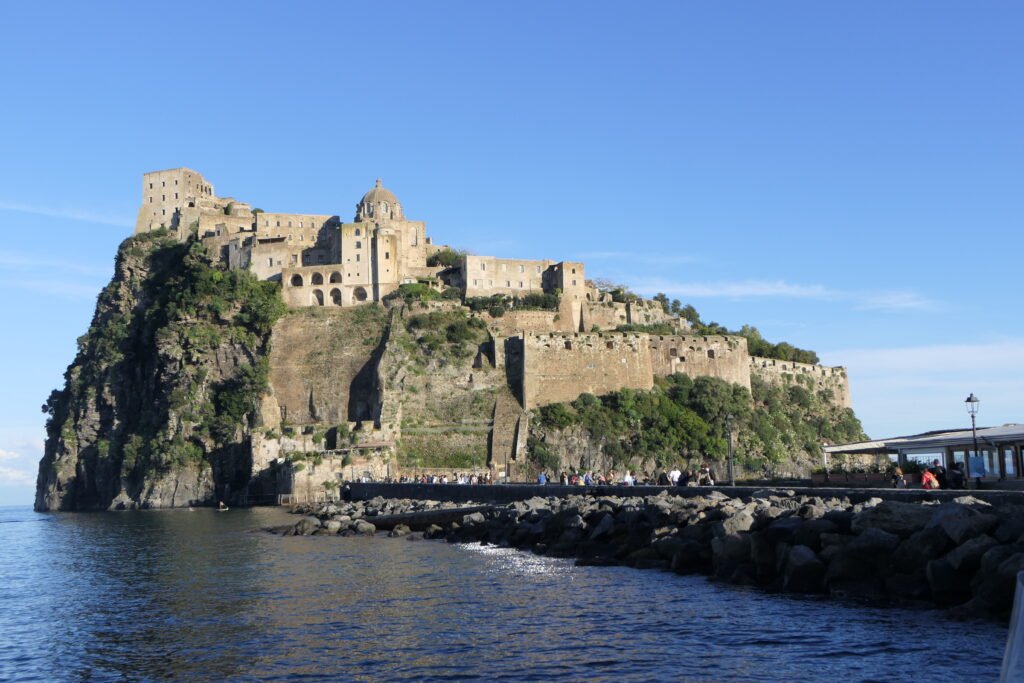
Over a hundred lightning strikes and hours of thunderclaps gives me a new appreciation of the grey, dull skies of the UK. Bad weather is different here, but quite exciting in a kind of masochistic way. It keeps you awake but also you are somehow disappointed if another roll of thunder doesn’t assault your senses within the next five minutes. Our flooded apartment requires the help of the owners to get mops and brushes out, but with a shrug of the shoulders it seems as though this isn’t any great drama. Life should be so easy-going !
Luckily the car shunt from behind, although turning our necks round like a scene from the Exorcist, didn’t seem to do any physical damage to the car either. Standing in the road trying to discuss a solution with the two older Italian occupants of the attack car who couldn’t speak a word of English is challenging. Gesticulating between the four of us must have looked like street theatre to the many passing drivers. Our new colleagues were reasonable, so we parted maybe not the best of friends, but amicably.
Our one-footed pigeon is the most persistent and bold feathered friend you could imagine. We only had crisps and nut’s and so told him the salt content wasn’t good for him. Of course, he only understands Italian, so he isn’t deterred.
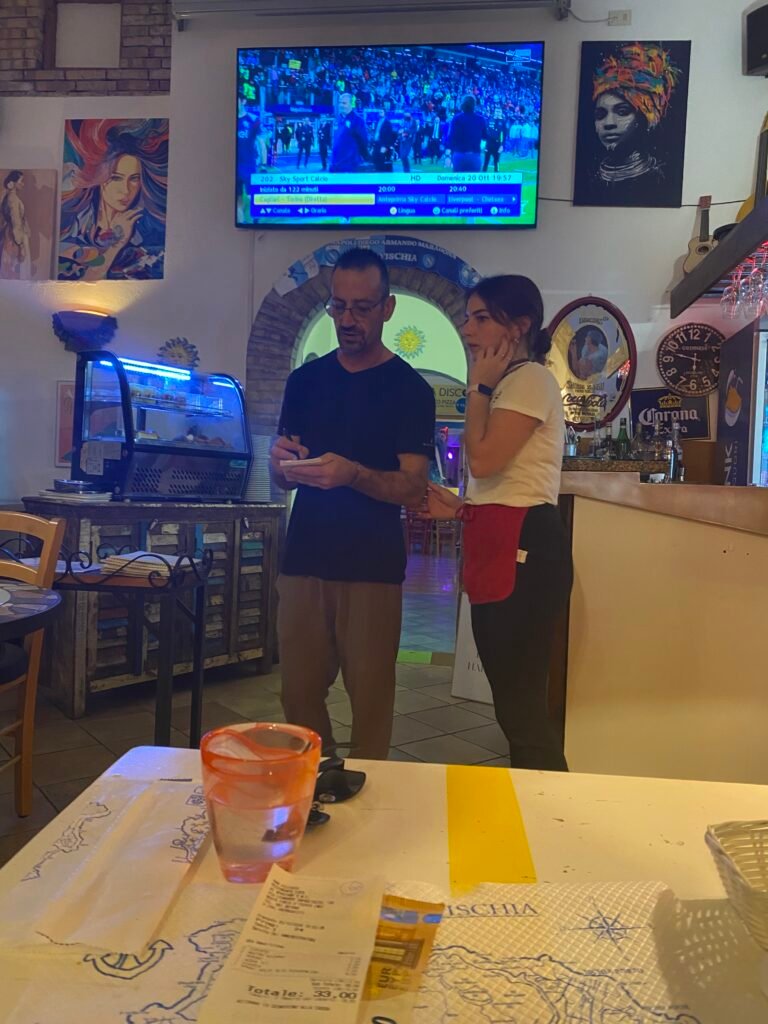
All faith in human nature is restored that evening by Luca and Danielle in their roadside pizzeria, with added Sky Sports. At first we are refused entry as it is an hour before opening time. However, as soon as I mention we want to watch football, we are ushered in, tables and chairs are moved, and then they spend ages looking for the right Sky channel despite us apologising and being prepared to skip out. A cast of several come to help, and they won’t let us leave. The chef, with just the right touch twist of the controls, eventually found the game. We’re made comfortable before Daniela brings us complimentary bruschetta as a comfort snack with the beer. Now we know we HAVE to stay for dinner, which turns out to be as good as any we’ve eaten on this trip. A great end to an eventful day. And I refuse to mention the mobile phone incident.
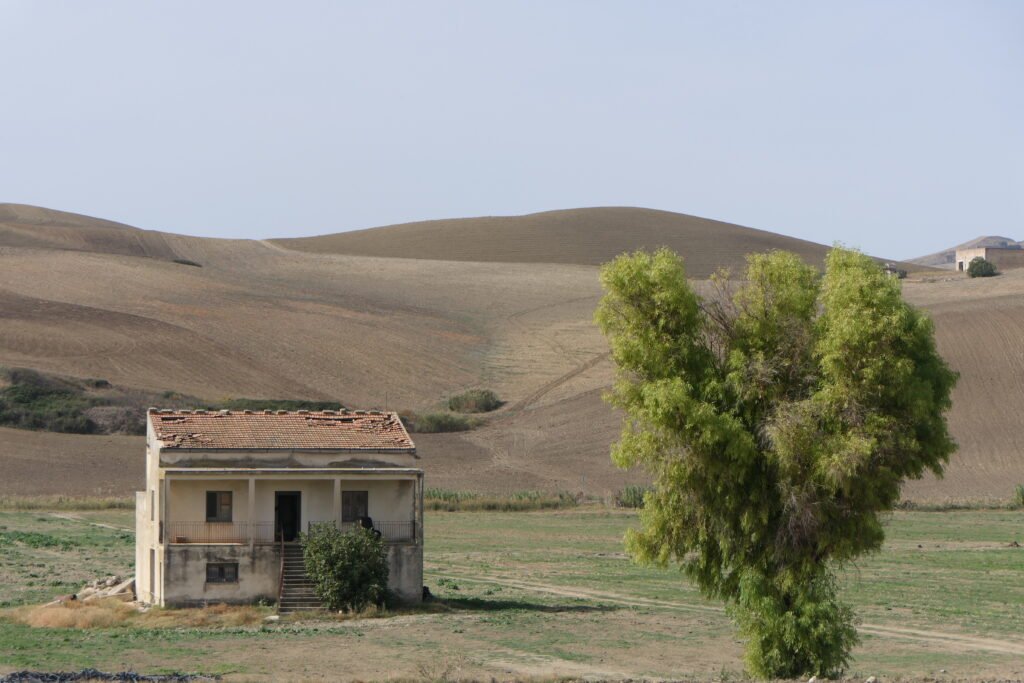
Home time comes too soon. Puglia not only stole our hearts, but mostly our stomachs. The coastline, tiny villages and blue sea are a delight and although inland the countryside is relatively flat and unexciting, it is always interesting. You can see the remains of how life was like here not all that long ago, but of a different era. It’s seen in the unkempt small farms, untilled soil and empty hillsides. It’s a timeline that is hanging on to its past by its fingernails, all too soon to be forgotten as modern-day windfarms creep slowly across the countryside like alien tripods from War of the Worlds. HG Wells was right in a way. A war of the worlds it is, separated only by time.