
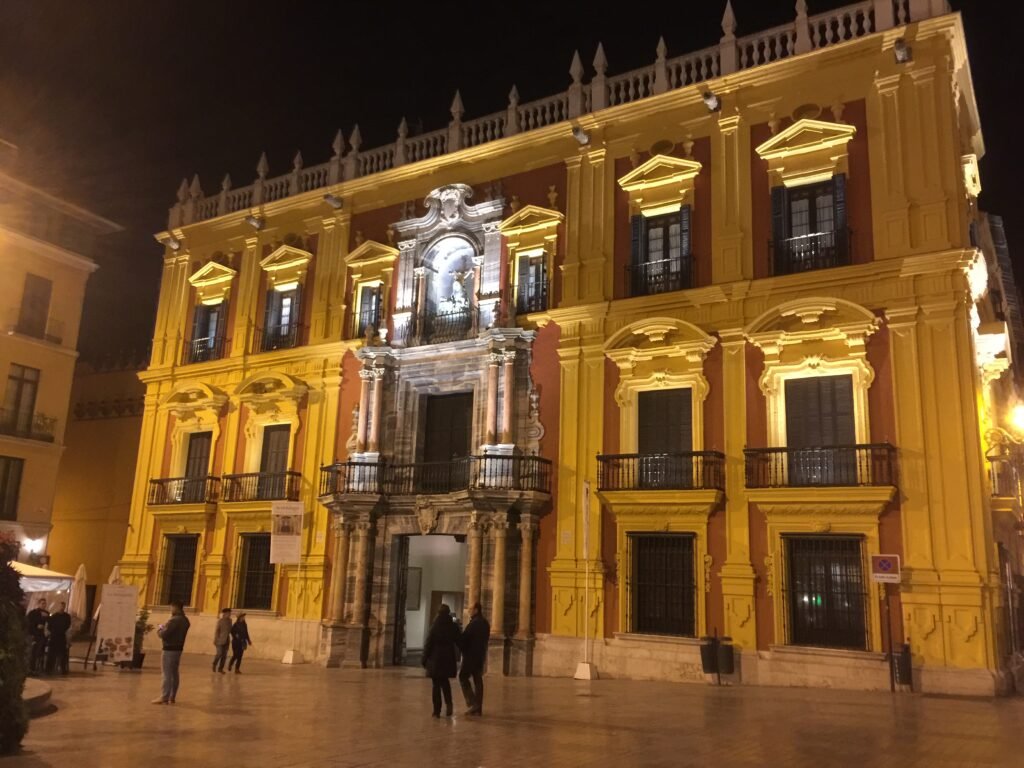
Picasso never ate at El Pimpi but he would have approved of the famous restaurant’s location on Calla Granada in Malaga’s old town just a few metres away from the museum dedicated to his work. Picasso obviously wasn’t impressed with the town way back in 1900 because he left Malaga for good at the age of 19. It seems he didn’t care much for Spain either because he rarely returned to the country before his death in 1973. El Pimpi continues to be a popular tapas restaurant co-owned by Hollywood actor Antonio Banderas alongside the original family owners. Founded in 1971 by Pepe Cobos and Paco Campos, the restaurant occupies an old 18th century townhouse. It’s the type of place you still expect a swashbuckling pirate to emerge from the bowels of the restaurant with a parchment menu stuck on the tip of his cutlass, ready to cut your head off if you order fries with your tapas.
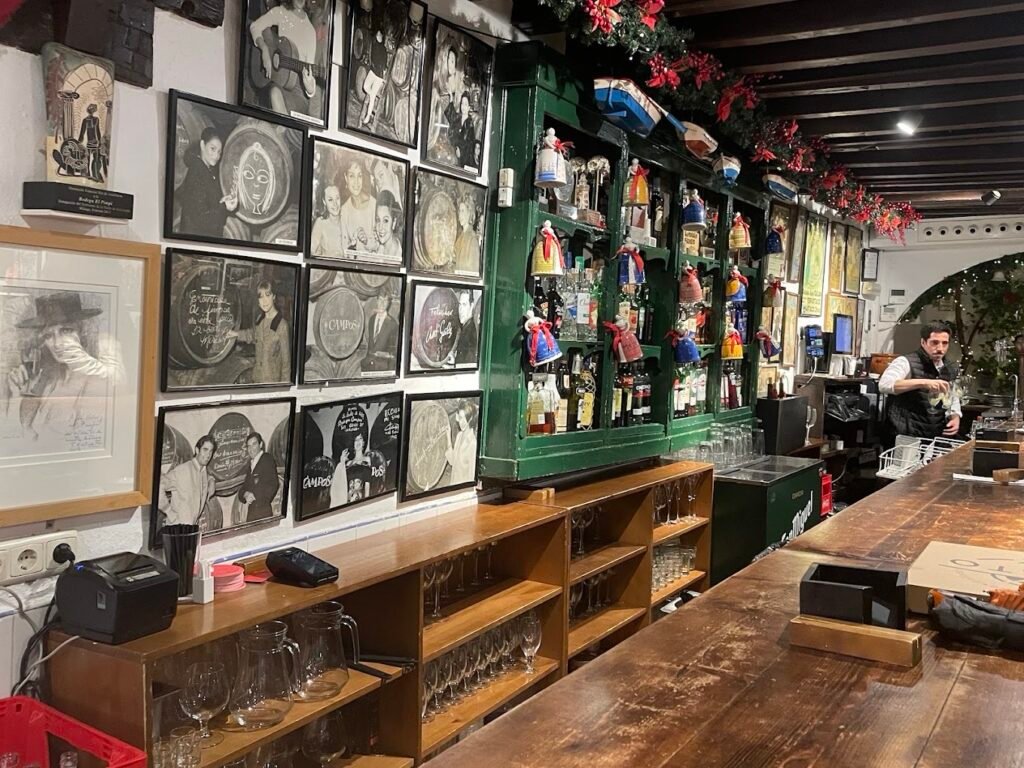
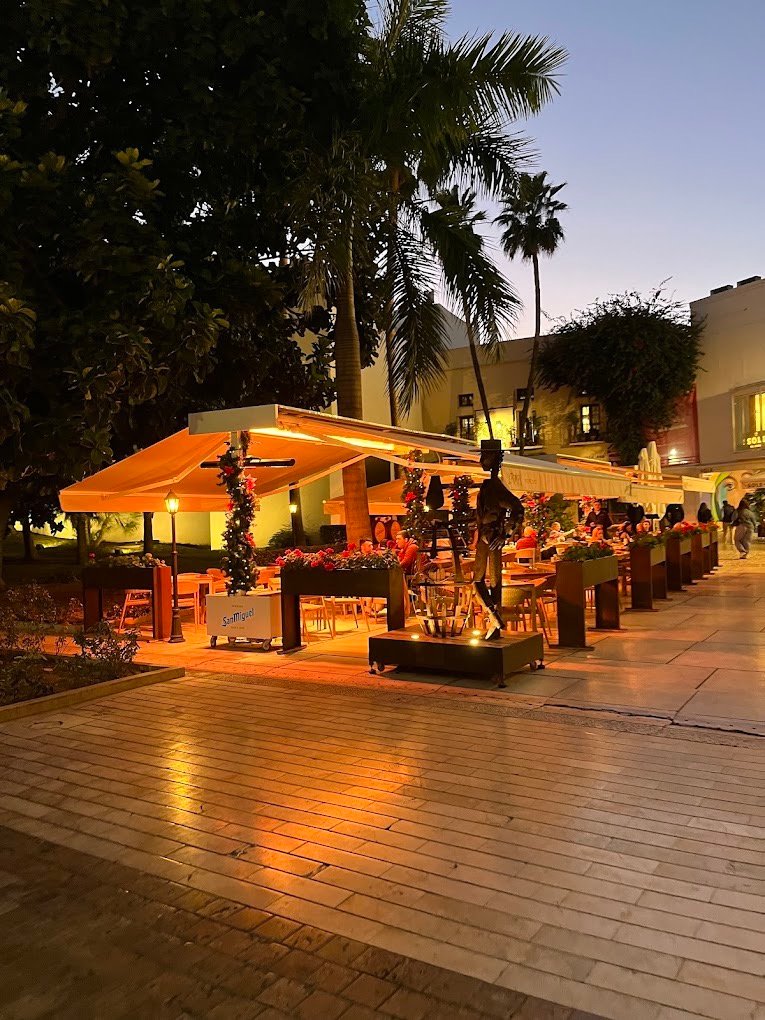
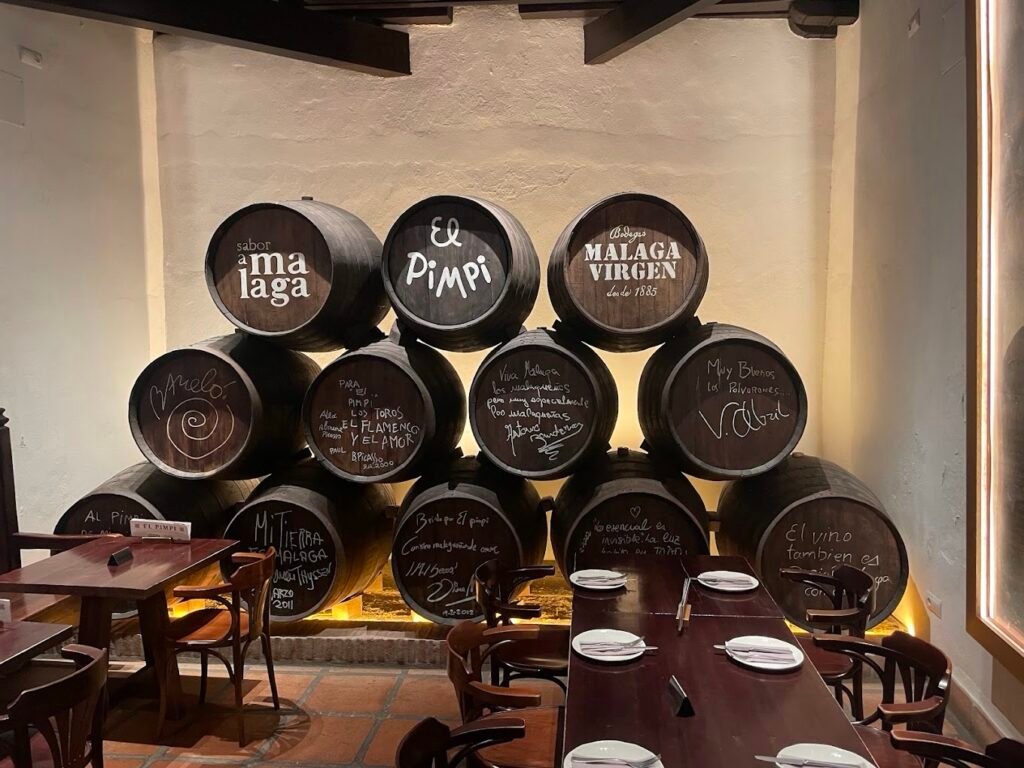
While Picasso never visited, members of his family apparently still do and the “Palomar de Picasso” room on the upper floors is dedicated to him. Wine barrels, signed by the Picasso family are spread around but sadly, remain empty. The outdoor terrace provides commanding views of the Moorish fortress Alcazaba, making it one of Malaga’s most photographed locations. Maybe Picasso would approve of the gentrification of the modern-day city, perhaps without the annoying, ever present tourists.
Apart from the tapas delights of El Pimpi, and for those who don’t care much for the artistry of Picasso, Malaga has a lot going for it. Classy shopping, churches, a bull ring with numerous taverns and restaurants all set in winding, mainly car-free streets. This is a place for wandering and getting lost, especially in one of the back street bars.
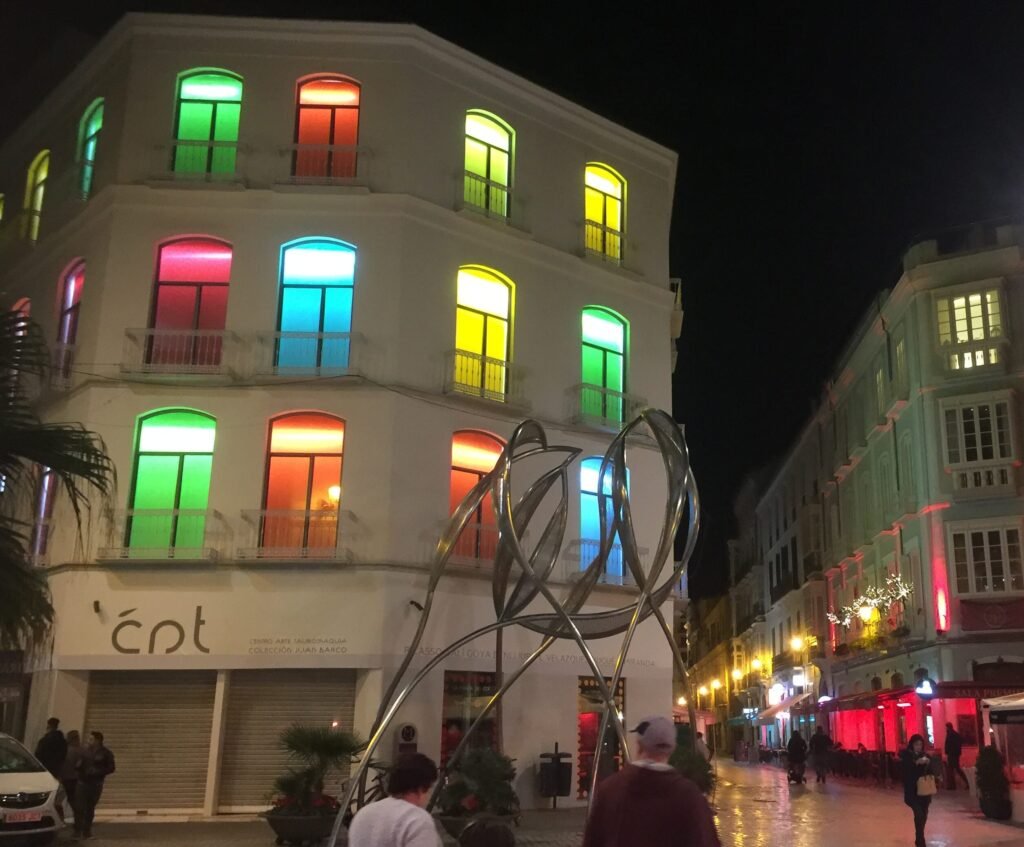
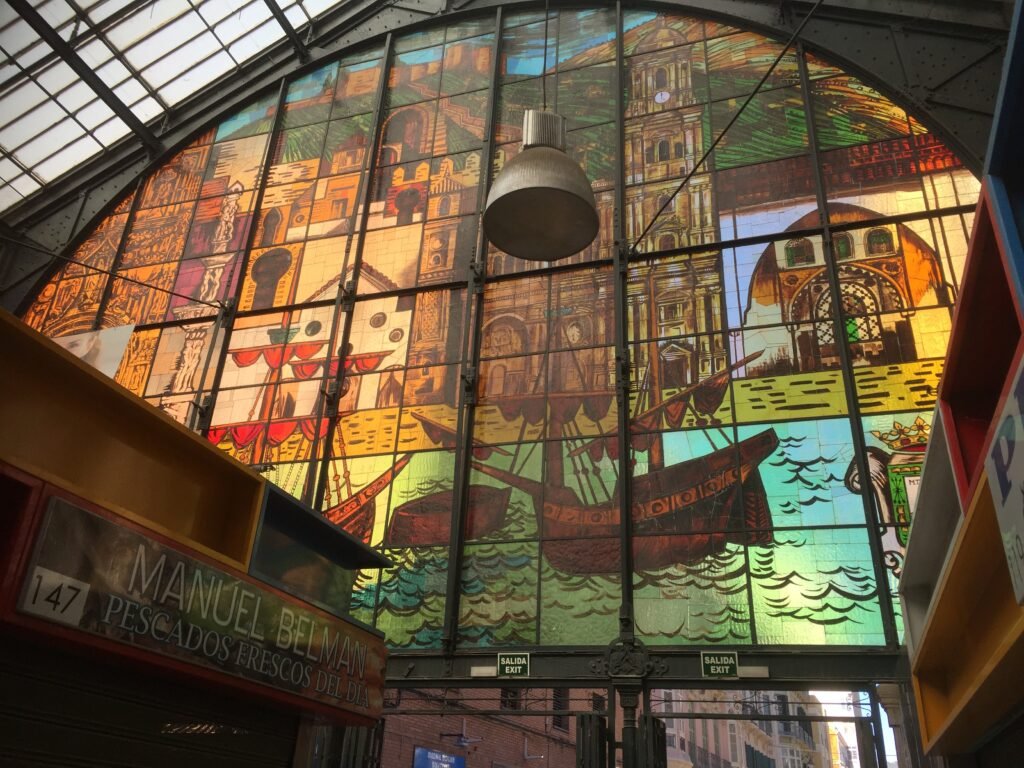
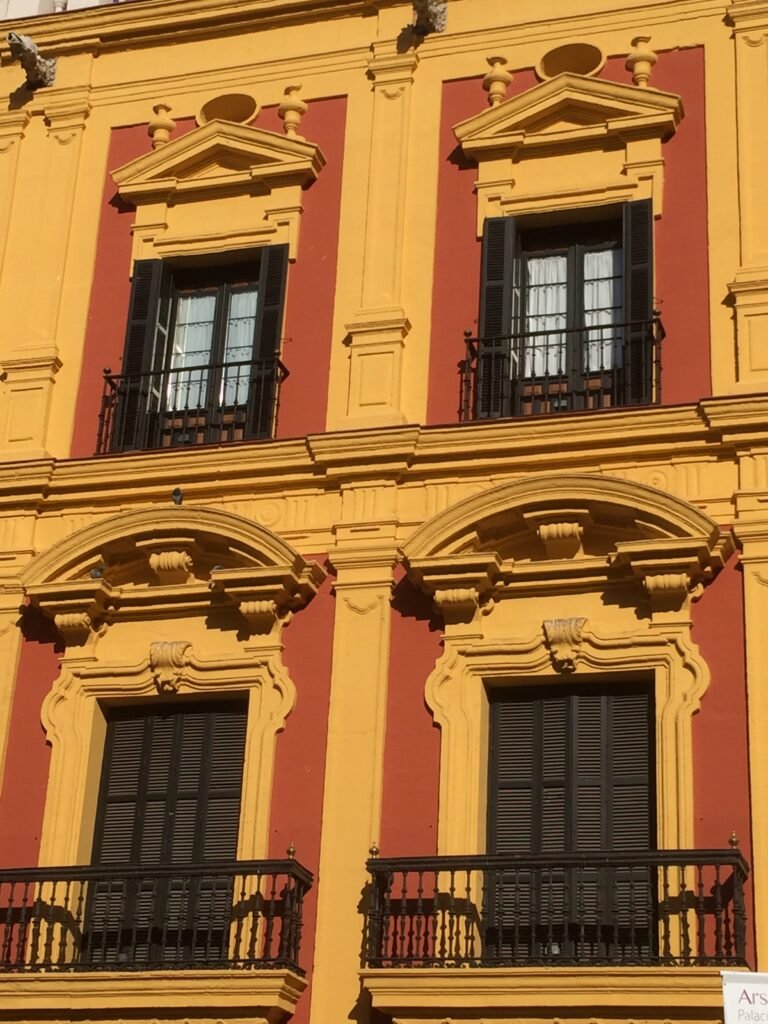
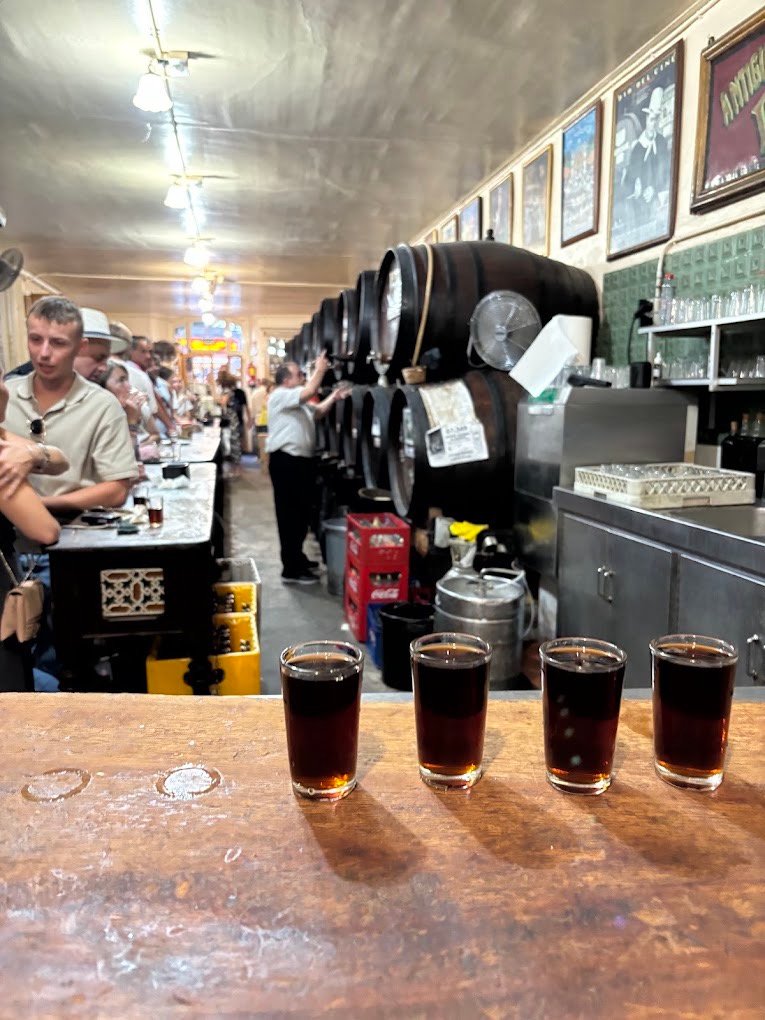
Dating back to 1840 “Antigua Casa de Guardia” claims to be the oldest bar in the city. The long wooden counter is there for resting on and deciding which barrel you’d like your wine poured from. Tasting all of them just seems like good manners. The bartender writes your bill on the wooden bar in chalk, so foiling all those looking for paper receipts to claim expenses after a lazy business lunch.
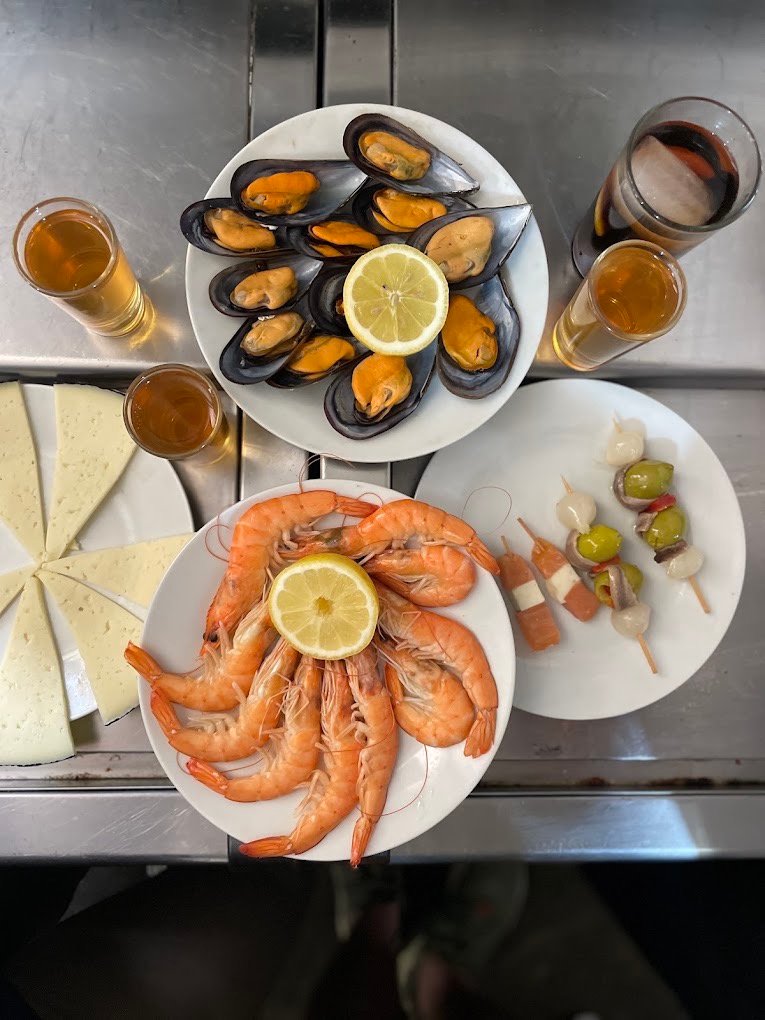
Malaga’s typical sweet pastry is called “tortas locas” or crazy tarts in English, of which there would seem to be many in town, mainly in the evening. The name goes back to the song “A loco se live major” or “It’s better to live crazy”, which is perhaps a more appropriate description of the tasty delicacies. The town clings on by its fingernails to its 2,800 year old history, and despite the boom in tourism in the 60’s and 70’s it has managed to create a modern, thriving cosmopolitan city that still recognises its past.
Malaga to Seville is one of southern Spain’s most scenic drives, covering around 125 miles. The journey takes about 3 to 4 hours but as with all road trips, it is best enjoyed over a full day or supplemented with an overnight in Ronda. This is Andalusia and not a region for rushing, requiring an inquisitive mind to take things in slowly.
As the sea disappears behind us, we point the car north towards one of Spain’s most enthralling attractions—El Caminito del Rey. Once considered one of the world’s most dangerous walkways, this spectacular cliffside path has been completely restored into a safe and unforgettable hiking experience, a sensory masterpiece of engineering and nature, sliced directly into the vertical limestone walls of the Desfiladero de los Gaitanes gorge.
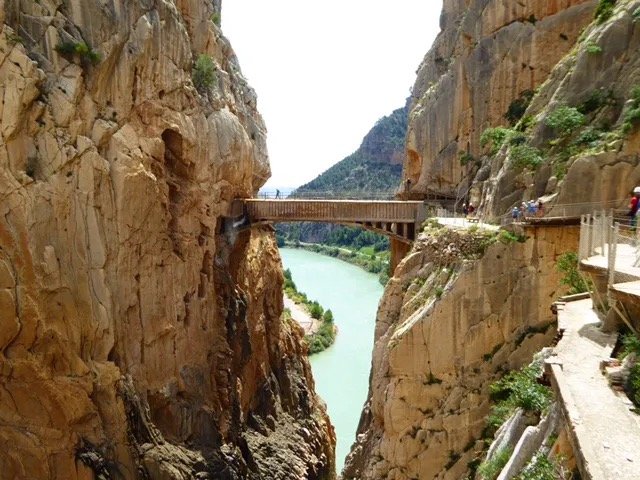
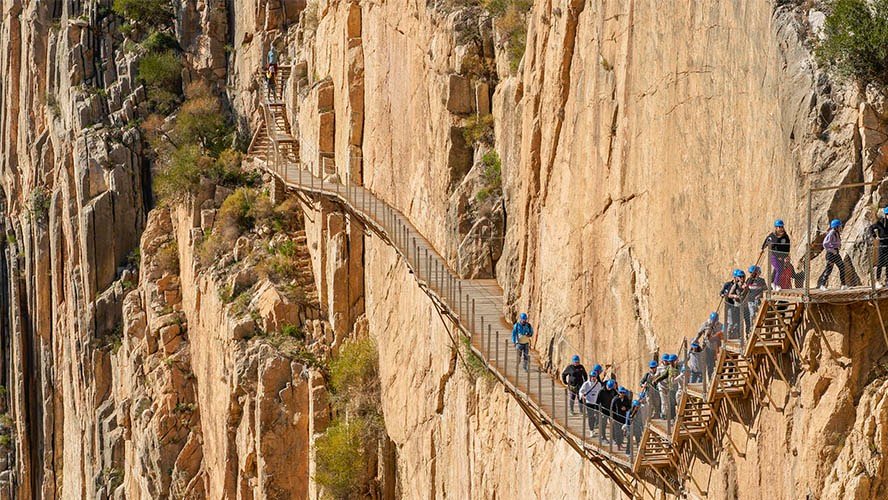
The route offers breathtaking views of towering cliffs, turquoise waters, and narrow canyons. Approximately 8 km long it takes around three to four hours to complete, adding a different dimension to understanding the diversity of Andalusia. Only 1,200 people can use the trail each day. “Only” being a relative word in this case. Being such a popular place, booking in advance is essential. It is also a one-way route, so conveniently, a bus service is on offer to get the tired hiker back to the start point or alternatively you have the delightful option of walking the additional 11km return route. A seat seems preferable in this instance. The mandatory requirement to wear the helmet provided, somewhat dissipates the expectant thrill of the adventure ahead, or maybe it gives you some comfort that the plastic covering is going to protect you from a large rock fall. The footbridge near the end of the hike across the gorge is perhaps the highlight. The towering canyon walls rise 300 metres high, squeezing the sky into a narrow blue-ribbon overhead, whilst sunlight barely touches the bottom of the ravine, leaving deep shadows while the upper peaks glow in bright Mediterranean gold. 100 metres below, the Guadalhorce River is a churning ribbon of jade and white foam, carving relentlessly through the limestone. It is a spectacular scene and completes a memorable walk.
From El Caminito del Rey, the next section of the drive could have been an anti-climax but the road winds through the stunning landscapes of the Sierra de as Nieves with viewpoints over valleys, olive groves and limestone peaks, ending in the historic town of Ronda and so confirming its status in the world of great road trips.
Ronda perches dramatically above the deep El Tajo Gorge where Ernest Hemingway called it the ultimate romantic setting for a honeymoon. Wandering through the rustic old town, a visit to the Plaza de Toros de Ronda, one of Spain’s oldest bullrings is an interesting, if quiet stop. It’s quiet because there is a distinct lack of bulls. Apparently, the ring is only used once a year in September during the local festival. You wouldn’t want to enrol in the local bullfighter school with those job prospects on offer.
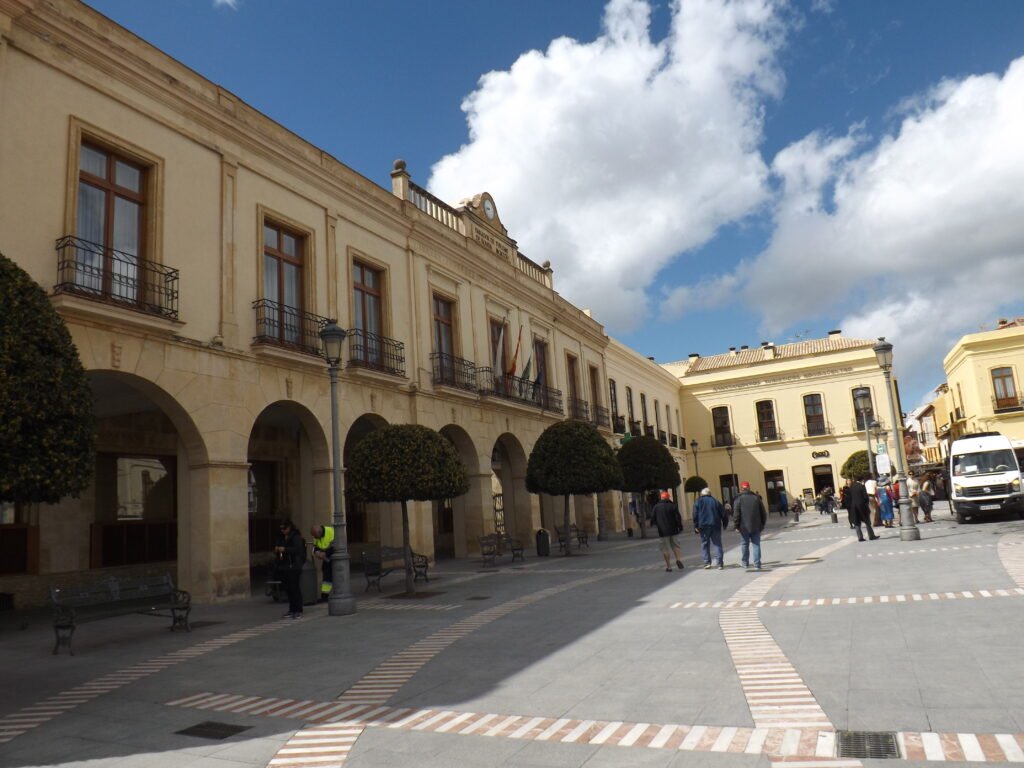
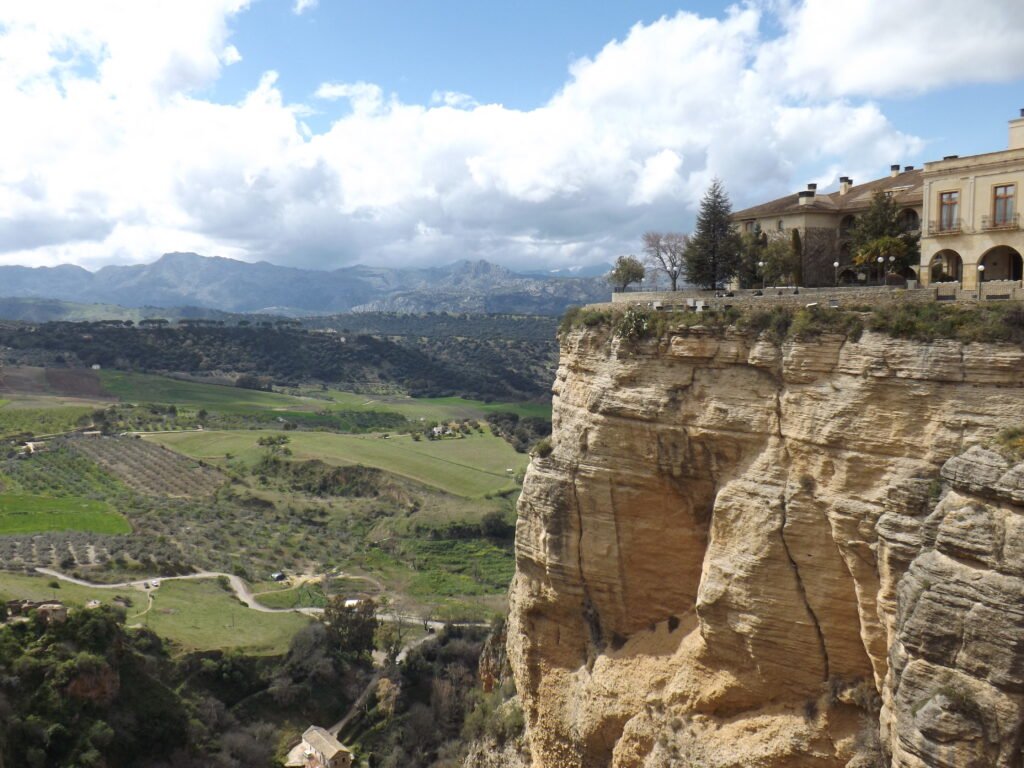
Numerous cafés with cliffside terraces provide perfect spots to enjoy local Andalusian cuisine while taking in unforgettable views. The local Parador de Ronda is an excellent ‘glass of wine’ stop while sitting overlooking the valleys and fields below. Converted in 1994 from the old town hall and food market, the building still retains the original facade with its arches, cornices and traditional clock. Inside, the Parador is home to a major collection of art about bullfighting with over a hundred works in different formats and styles. There’s more bullfighting going on here than in the actual arena 200 yards down the road.
The Parador stands like a grand dame proudly guarding The Puente Nuevo, the 18th-century bridge spanning the gorge 100 metres below, which is Ronda’s “Arc de Triomphe”. A monument to the extraordinary skills of craftsmen who took 34 years to complete in 1793.
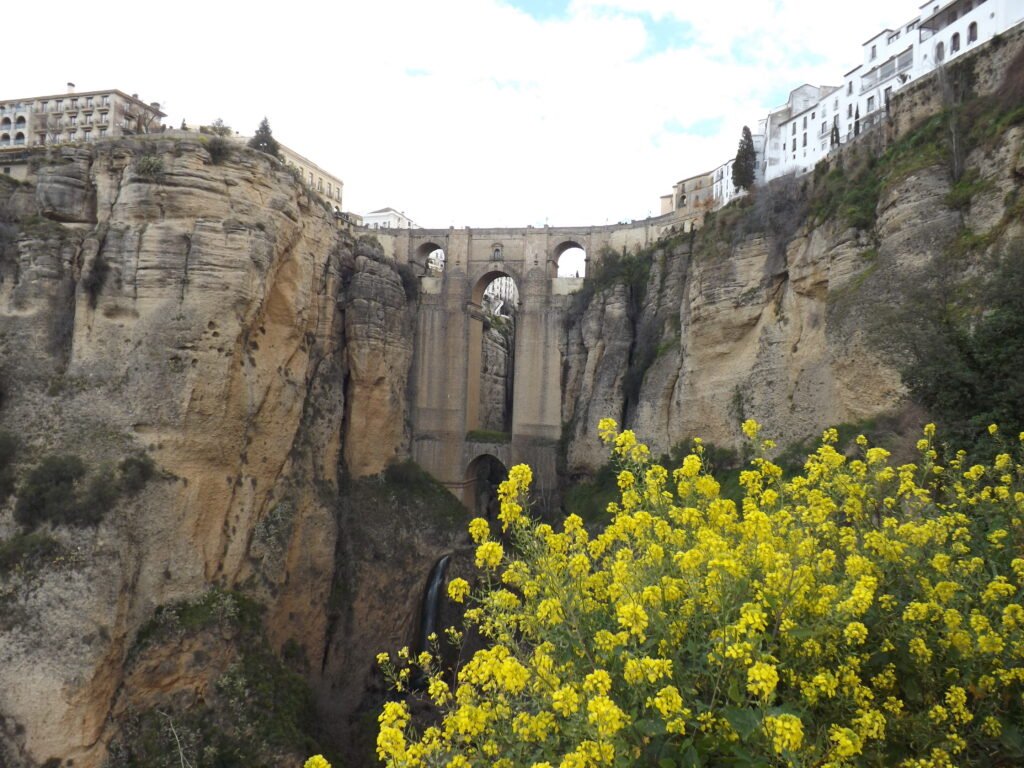
The many visitors gawp at the surrounding landscape offered from the viewpoint, all the while trying to dodge the constant traffic moving back and forth across the bridge. Tourists tend to be lazy in towns like this. Most just stand on the bridge or use the various viewing points. The truly curious take time to walk down the path towards the El Tajo river some several hundred feet below and gain a stunningly different perspective of the structure towering above, appearing like a giant extension of the steep cliffs on either side. From here, far away from the noise of the traffic above, you can hear a catalogue of gentle birdsong over the sound of the mini waterfalls tip-toeing through the boulders of the gorge before disappearing into the valley below. Captured against the bright blue sky, coloured butterfly’s dip and dance their way across the fields in the distance.
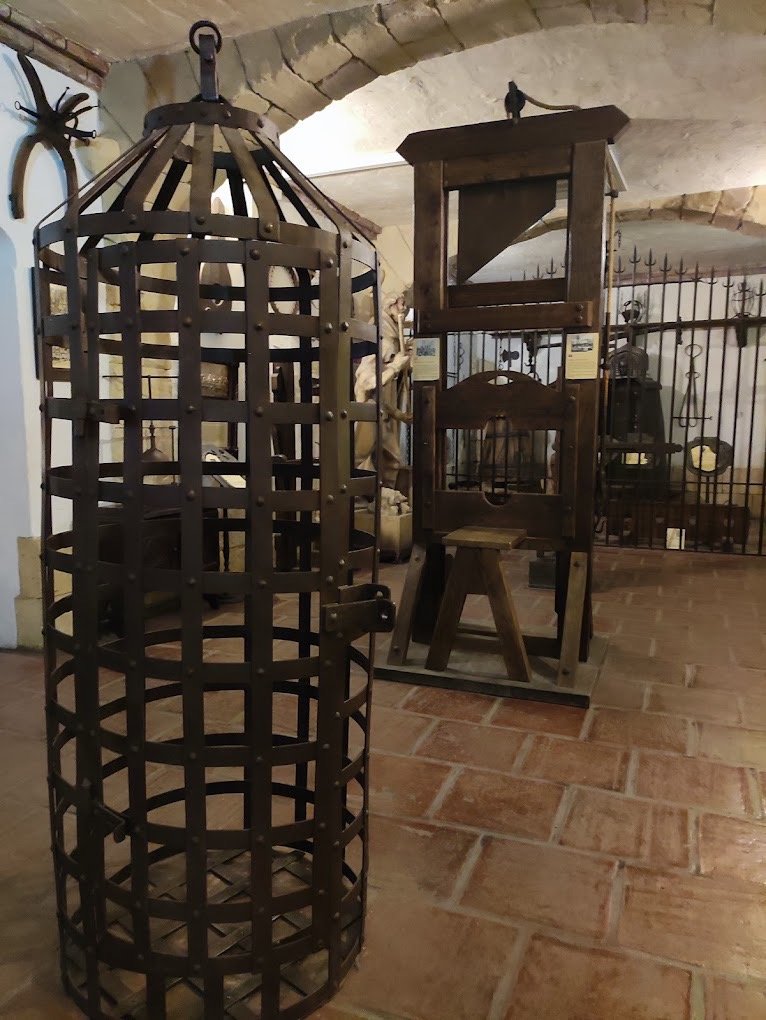
Back in town, Museum Lara Ronda, based only yards from the bridge, comes as somewhat of a surprise. It showcases the massive personal collection of founder Juan Antonio Lara Jurado and includes an unusual mix of artefacts across a diverse set of subjects, from cinema to typewriters and from jewellery to ancient armour, including a carriage you can ride in. All very sweet and ordinary but for those brave enough to venture down to the cellar below, the visitor is confronted by a gruesome Spanish Inquisition and Torture collection. It features a macabre display of historical interrogation and execution devices used during the Middle Ages, complete with tall, caped mannequin inquisitors. For those of a bloodthirsty nature, notable pieces on display include a stretching rack, a guillotine, an iron maiden, thumbscrews, a garrote, head crushers, and a chair of nails. A further room is dedicated to witchcraft, alchemy, and folklore, showcasing taxidermy creations, potions, and mythical displays. I would have just confessed in those days as I came down the stairs. No need to wear out all the machinery on my behalf. Neither would I want to be the one to lock up at night.
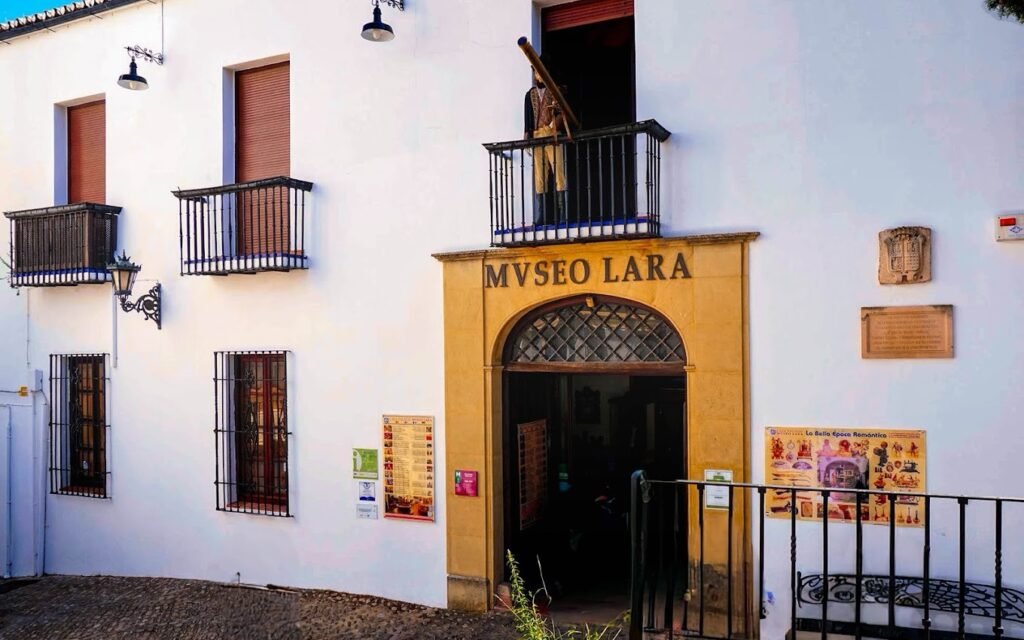
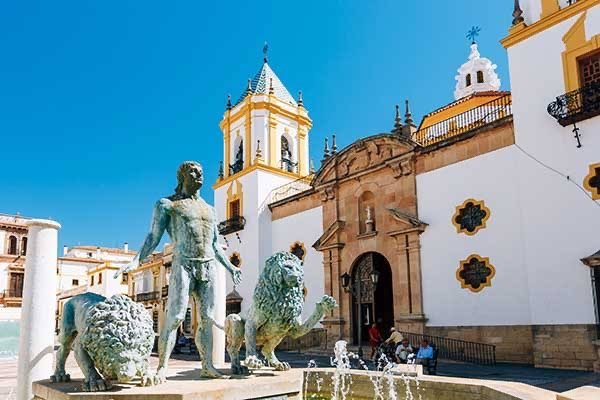
Ronda may be a small hilltop settlement, but it leaves a lasting impression of the spectacular surrounding scenery, its stately Parador and once-a-year bull ring, along with its bars, restaurants and little museums.
From Ronda a short detour is required to the picturesque white village of Setenil de as Bodegas, famous for its houses built directly beneath massive rock overhangs. The unique streets, where cafés and homes are tucked into the cliffs, make it one of Andalusia’s most memorable settlements. It must feel like living with a hat on all the time. There is many a winding, if steep walks through town with a stop for coffee here, glass of wine there and the odd snack to provide sustenance.
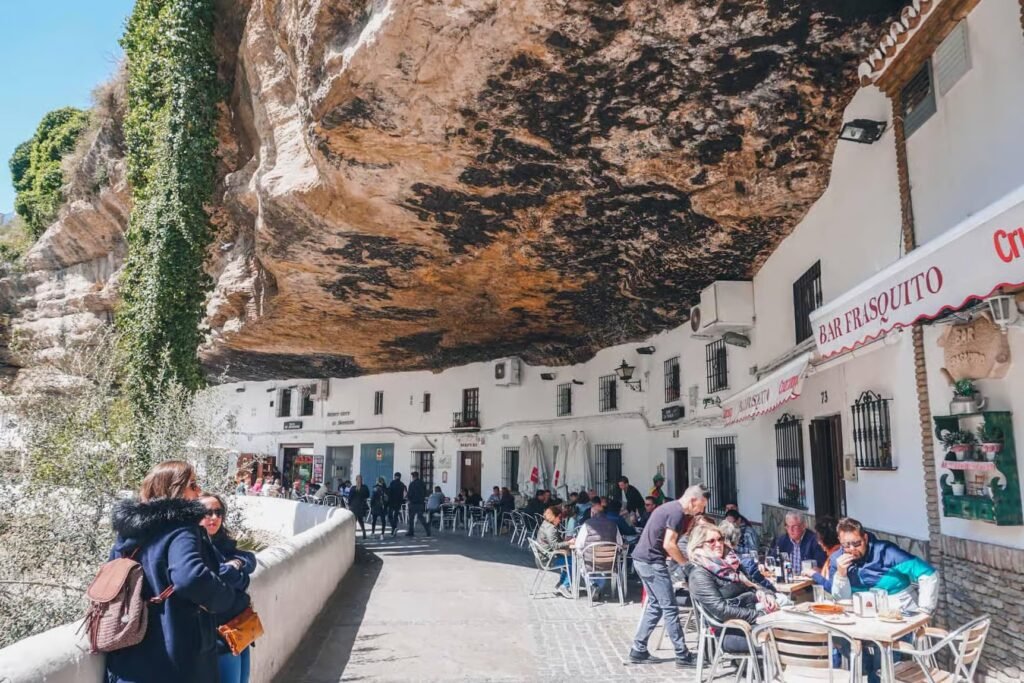
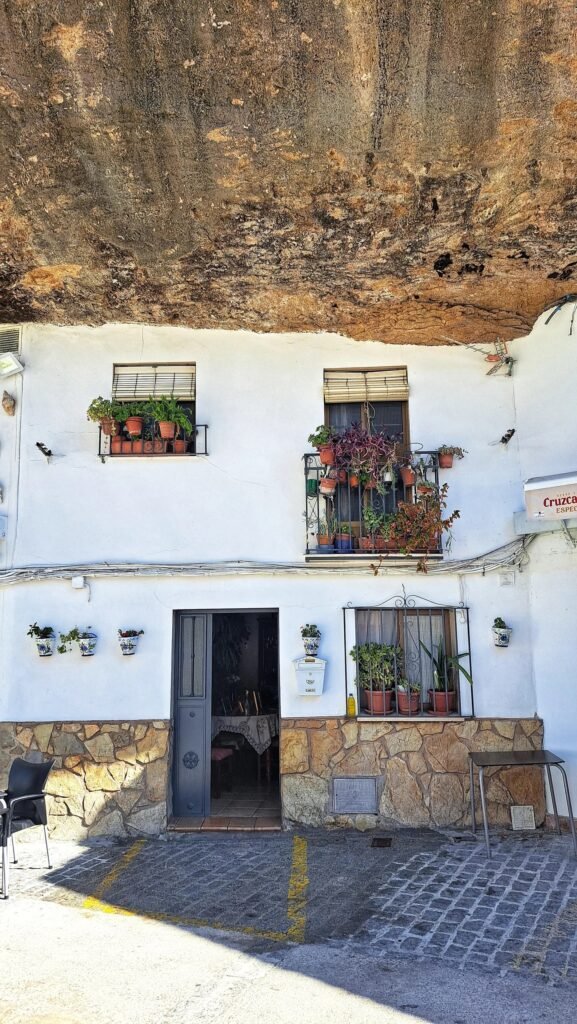
Continuing towards Seville and with no reason to rush, a visit to the white hilltop villages of Zahara de la Sierra and Olvera offers narrow cobbled streets, historic churches, sweeping views across rolling countryside dotted with olive trees, and several flat-capped craggy-faced senior citizens mulling over the news that their daily coffee has gone up in price by 10 cents. Gentle quiet scenes that are at the heart of Andalusia.
On the approach to Seville, the Italica is one of Spain’s finest Roman archaeological sites. The remarkably preserved amphitheatre and mosaics give a fascinating glimpse into Roman life and with great foresight were clearly built as a filming location for several scenes in Game of Thrones.
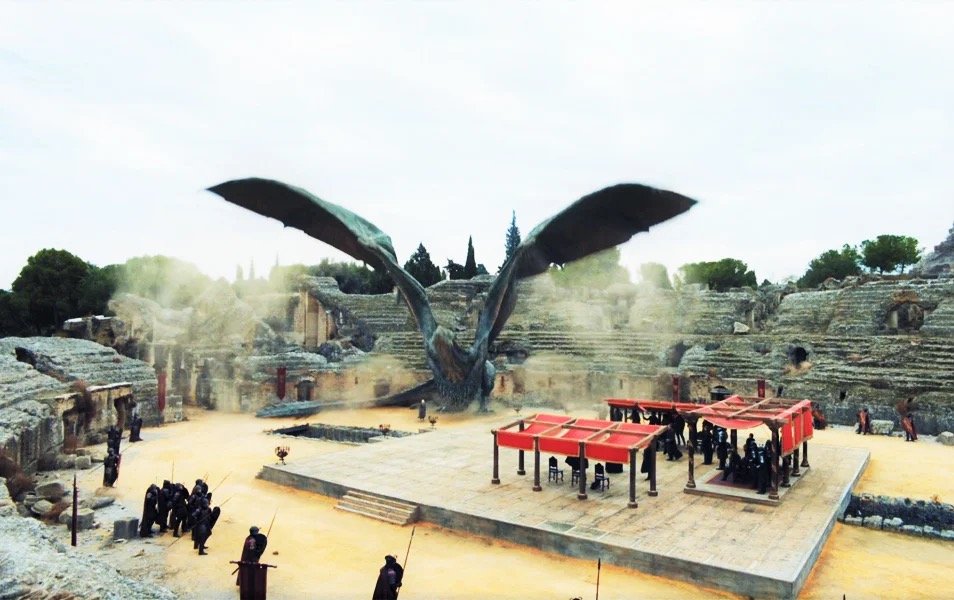
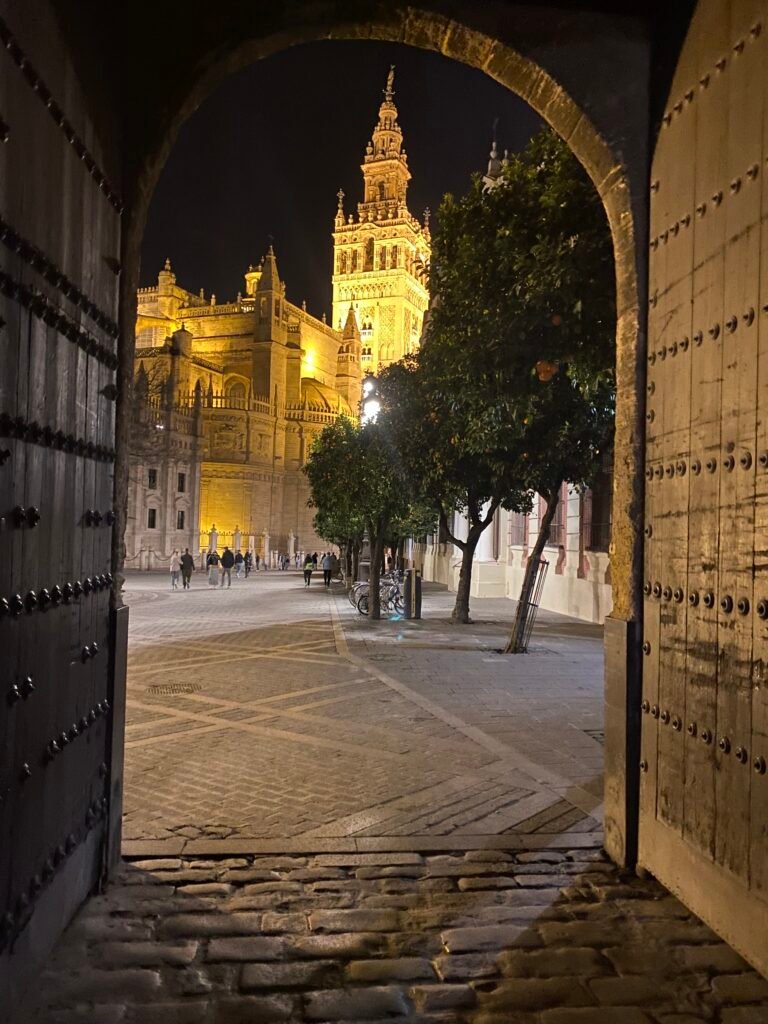
Seville itself is the cultural heart of Andalusia and probably my favourite city in all of Europe. The City of Oranges oozes with the romance of flamenco and echoes of its distant past. Architecture that mixes Moorish with Islamic and Gothic with Renaissance to create the magnificent Seville Cathedral. It is a walk rather than a climb up the Giralda Tower by 35 gradual ramps designed long ago so guards could ride horses to the top. Such a lazy army in those days. Panoramic city views make the journey well worthwhile.
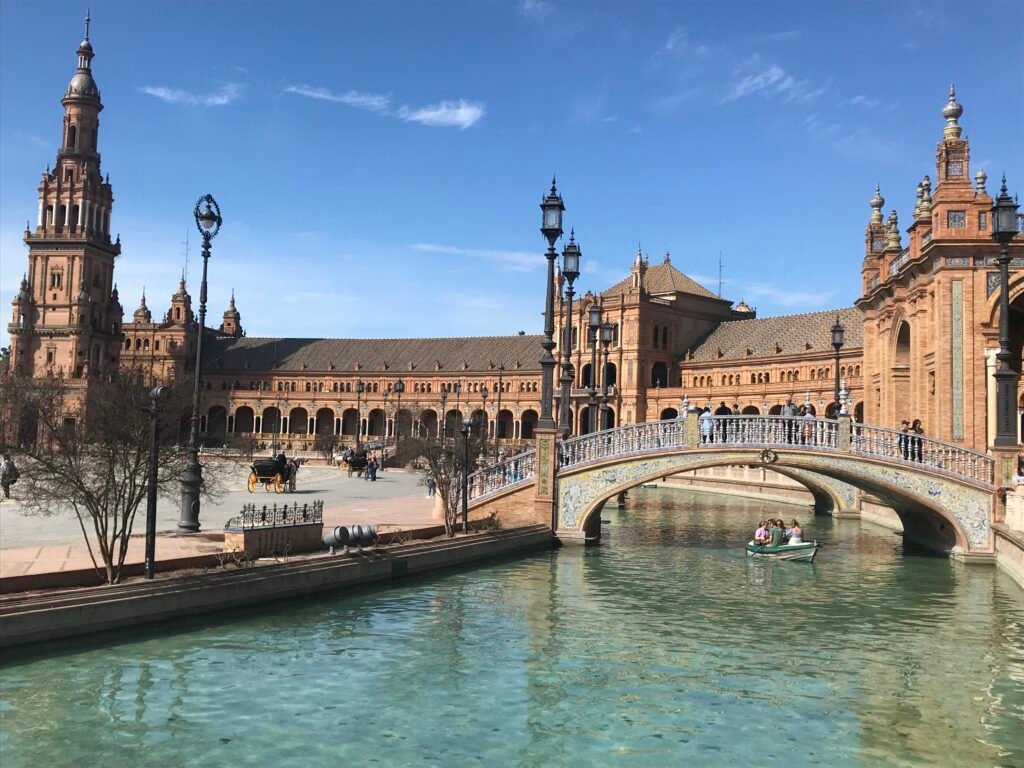
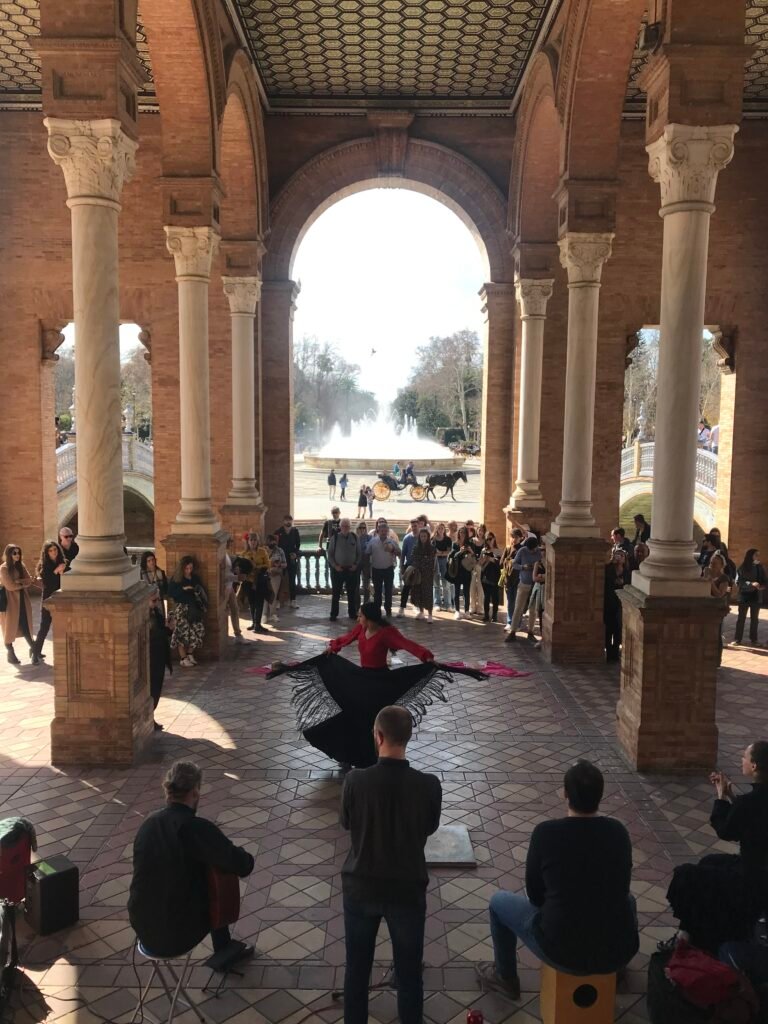
A stroll through the enchanting Real Alcázar of Seville in the warm sunshine, renowned for its intricate Mudéjar architecture and lush gardens, allows a little exercise before settling down on the cool marble seats in the beautiful Plaza de España, built for the Ibero-American Exposition of 1929, to watch some energetic and evocative street flamenco. Horse-drawn carriages clatter in the background taking tourists for a ride. Literally. This massive, semicircular pavilion features elaborate bridges, fountains, pools and vibrant ceramic alcoves creating one of Spain’s most iconic public squares.
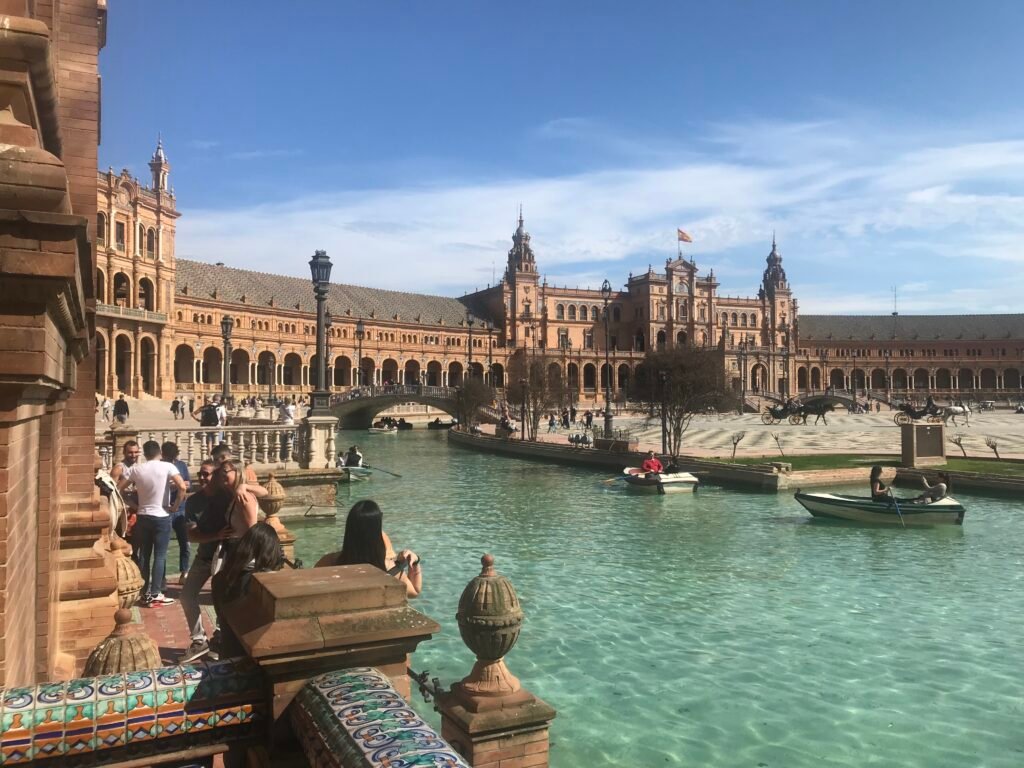
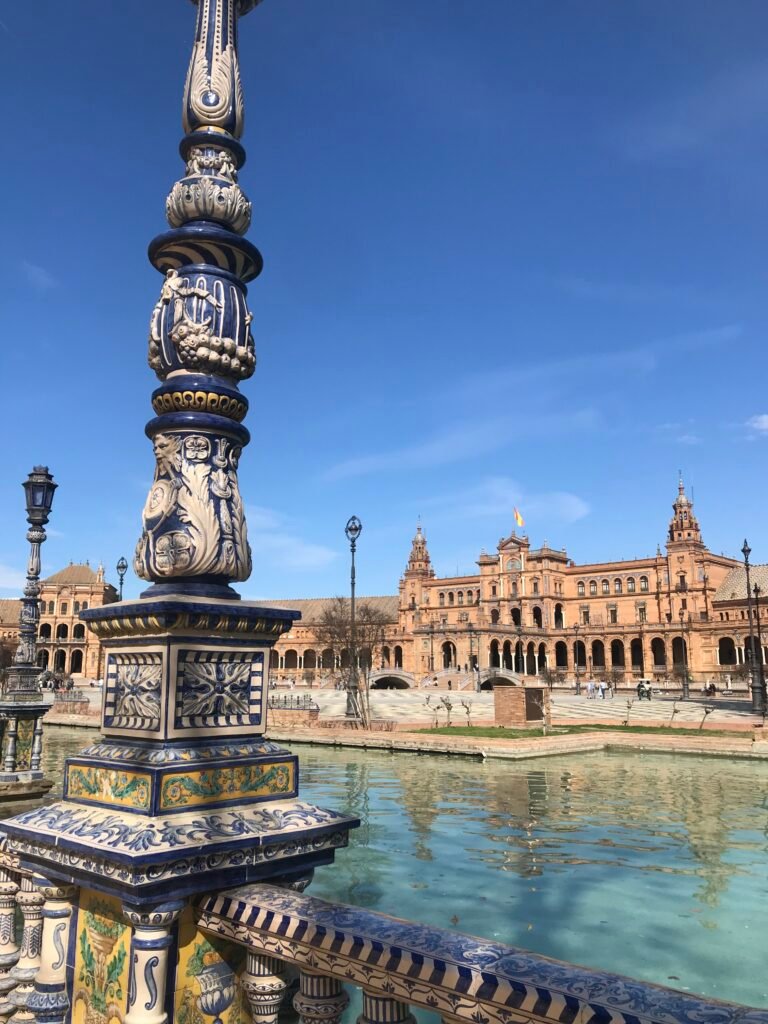
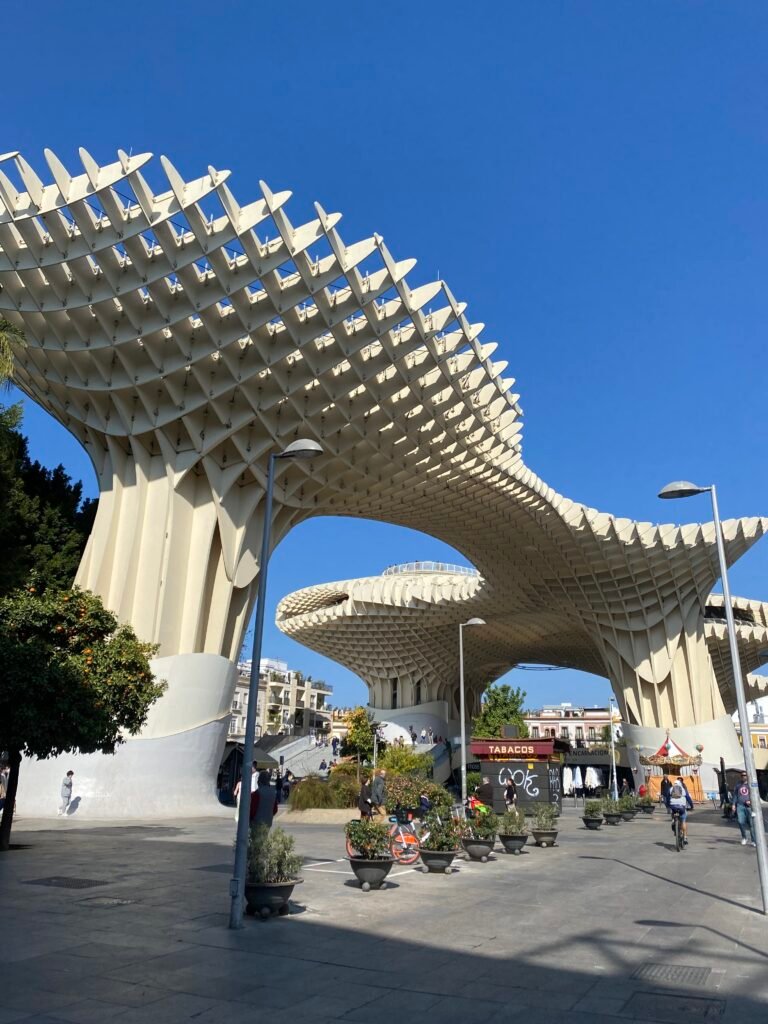
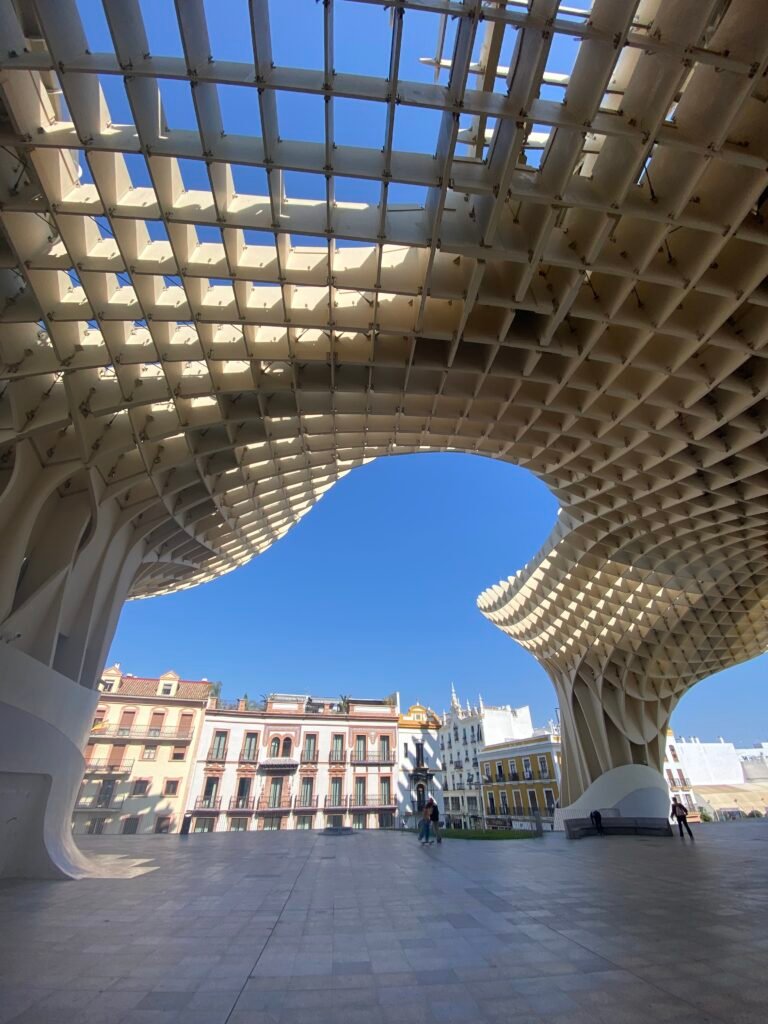
Elsewhere in the city, The Metropol Parasol (Las Setas) contrasts all that historic architecture by claiming to be the largest wooden structure in the world. It was built to redevelop an old market, originally costed at 50 million euros. The construction company quickly found out the architect’s plan was not technically feasible as a number of structural assumptions had not been tested. The cost doubled to 100 million euros. I suppose that’s what you get for being innovative, and believing the architect knew what he was doing. While it is a spectacular structure there may have been some better ways of spending a fortune.
Seville is the birthplace of tapas, the best culinary invention of all time. Even better than the burger. Socializing revolves around moving from bar to bar late at night to share small plates of traditional food, and of course several glasses of wine to wash it down. It’s such a civilized and social way of eating, especially as nobody will find out which bar you’ve ended up in, including you.
The city contains more orange trees than any other city in Europe. In the spring, the entire city smells of azar (orange blossom). 25,000 bitter orange tree’s line the streets. Locals use the oranges to produce marmalade and surprisingly – perfume. I don’t ever recall encountering a whiff of “eau d’orange” wafting from some excitable flamenco dancer as they careered past me in their final twirls off the dance floor, however I’ll take their word for it.
It comes as a surprise to visitors that the stretch of water between the city and Triana, the one spanned by the Isabel 11 Bridge is not the Guadalquivir River. It is in fact a long winding dock made from the old historic riverbed, now blocked at both ends. Between 1902 and 1961 the original River burst its banks in Seville 18 times, and so a new channel was dug in the early 50’s to the west near La Cartuja to divert the Guadalquivir River. This body of water is now the Alfonso X111 Canal and is why the water is always still and helped to make one of Europe’s leading rowing capitals.
If there is one thing that defines Seville it is flamenco. You will see it in the street theatre where couples dance just because they can, in the bars where they dance as entertainment for the customers and in some of the larger venues where the tourist receive their sanitised version. However, for the most genuine and authentic version of this extraordinary dance, we seek out one of the small whitewashed houses in the backstreets of town where displays are put on for only a dozen people. It’s impossible to cram any more into the tiny front room. The passion, the pouring sweat, the intense looks and animal magnetism of the dancers take it to another level because of the sheer intimacy of the surroundings. This type of experience won’t be found in big guidebooks. You have to seek them out from local concierges, waiters, bar staff or the many small posters stuck up around town. If there is one thing to round off a special, romantic and stunning road trip. This is it.
The route combines dramatic mountain scenery, charming white villages, Moorish architecture, Roman history, and vibrant Andalusian culture, making it one of the most rewarding road trips in Spain. Whether you’re drawn by photography, history, food, or simply the pleasure of driving through spectacular landscapes, the Málaga–Ronda–Seville route offers an unforgettable taste of southern Spain and feels like a curated experience of Andalusia’s soul.