
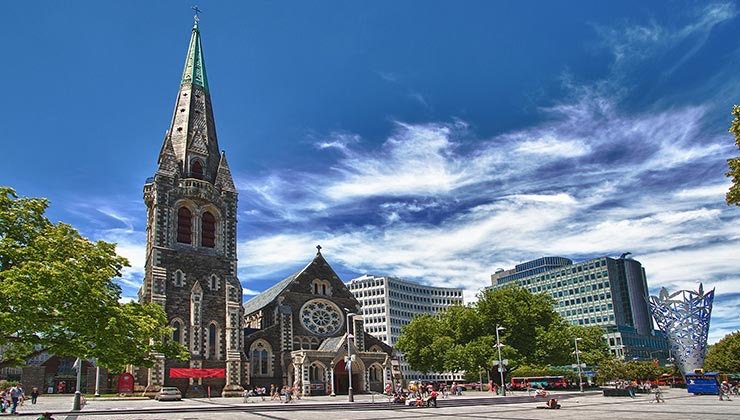
Christchurch is not the most dynamic of places, however it eases you out of town with tidy streets, leafy parks, and a comforting genteel presence. It feels organised. Sensible. Composed. Queenstown, at the end of my route, is anything but sensible, composed or organised and despite its remoteness, it is everything Christchurch is not.
The near 500 kilometre drive crosses through landscapes so dramatic they make my photo collection look like a screensaver catalogue. It’s not just a drive. It’s a gradual escalation of scenery beginning with polite farmland and ending in full alpine theatre, with several moments along the way where you just stop and gawp.
Within an hour, the city’s neat geometry dissolves into the wide openness of the Canterbury Plains, where fields stretch into the distance and the sky expands like it’s been given extra room to breathe. Traffic thins. Tractors appear. Mountains hover faintly ahead reeling you in ever closer to an expected spectacle
The Canterbury Plains
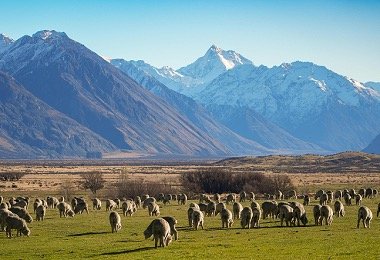
Driving across the Canterbury Plains provides a lot of time to think. The land is vast, the air feels bigger, and the horizon appears to have moved further away out of spite. Sheep are arranged with geometric precision, and there are lots of them. At the last known count there were over 11 million sheep on New Zealand’s South Island. There could be many more as I assume the people counters fell asleep long before they’d finished. Wind bends the long grass in coordinated waves. I start describing the scenery to myself as if filming a documentary.
Lake Tekapo
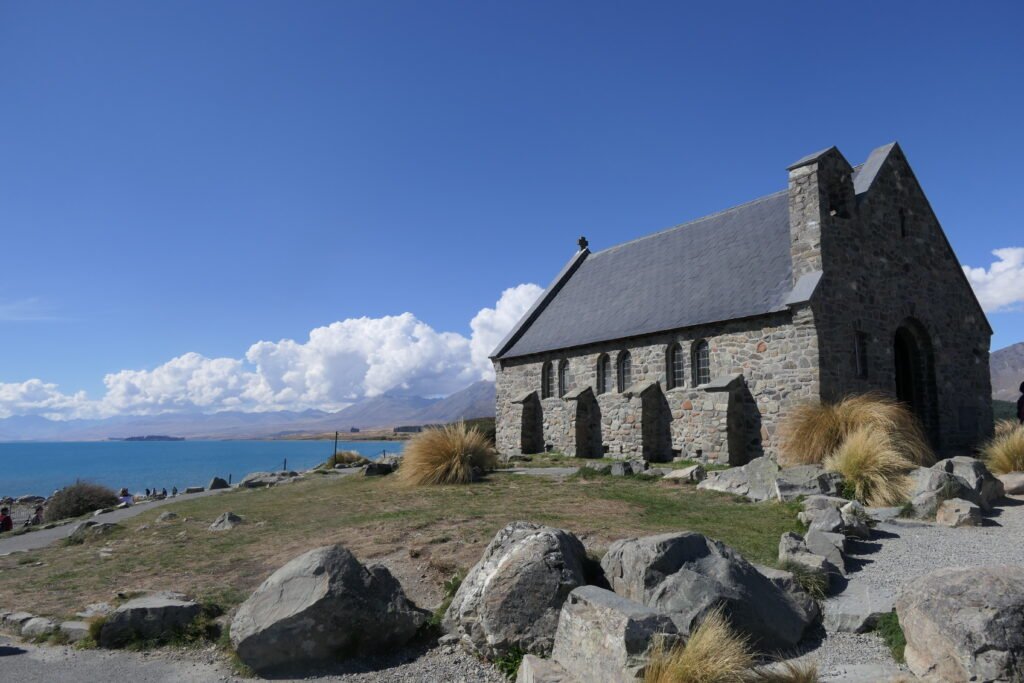
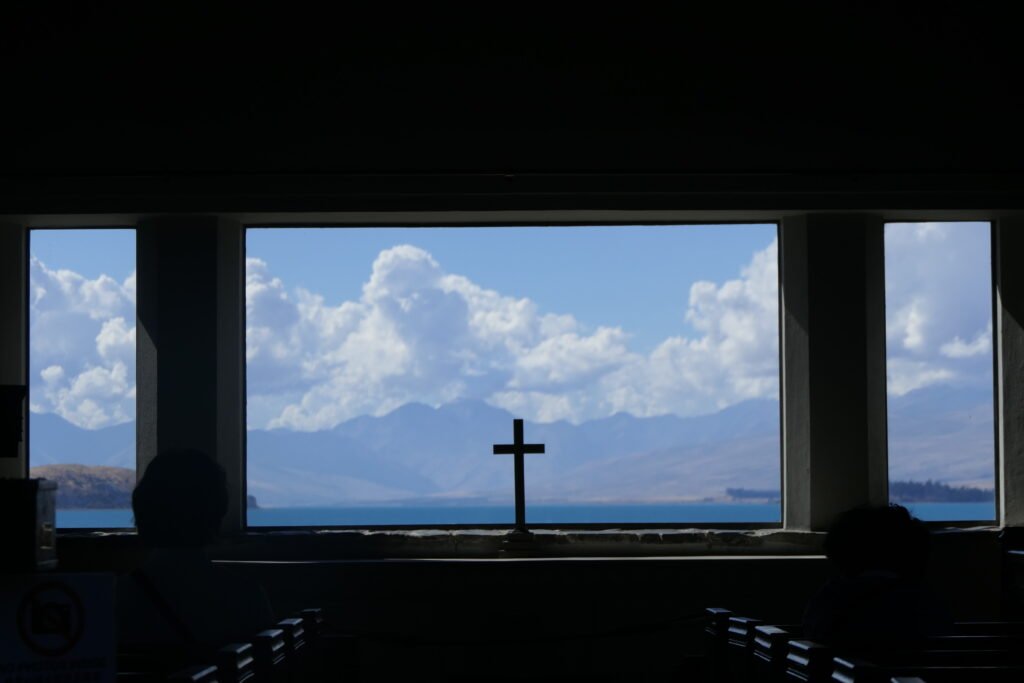
With just over 150 miles under our wheels, Lake Tekapo appears. The lake is an opaque, luminous turquoise created by glacial rock flour suspended in the water – a scientific explanation that does nothing to reduce the feeling that someone poured melted gemstones into a basin. Nearby sits the tiny Church of the Good Shepherd, positioned so perfectly beside the lake that it looks like it was placed here by an artist. I take photos. I take more photos. I then take the same photo again because the light changed slightly. Apparently, this is normal around here. I pass by a guy dressed in a check shirt and jeans leaning against the edge of the little church. I mumble a weak ‘hello” and he’s rasps back “Nice view eh ?”. This is Dan, who apparently drives a large van, and tells me he stops here every time he passes. “Just long enough to enjoy the world for a few minutes”. I nod quietly in agreement.
Lake Pukaki
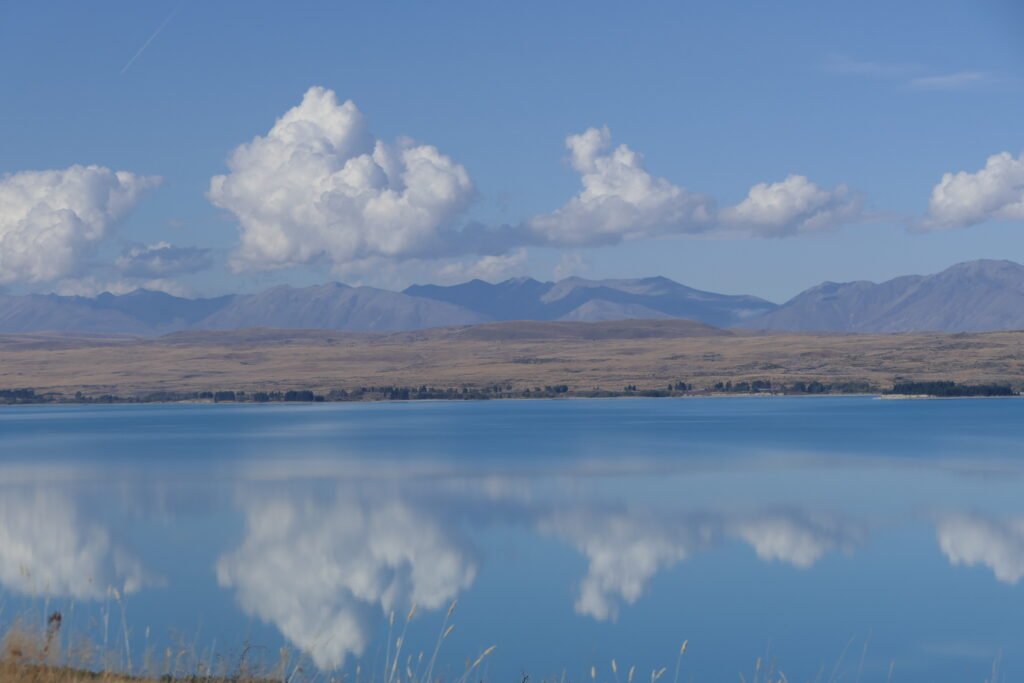
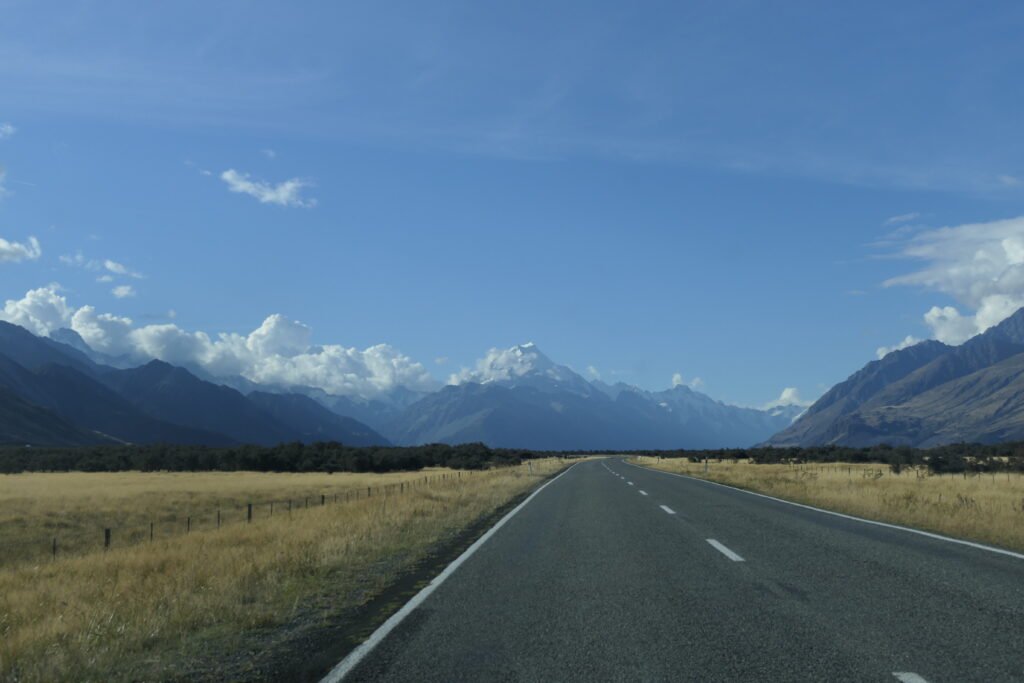
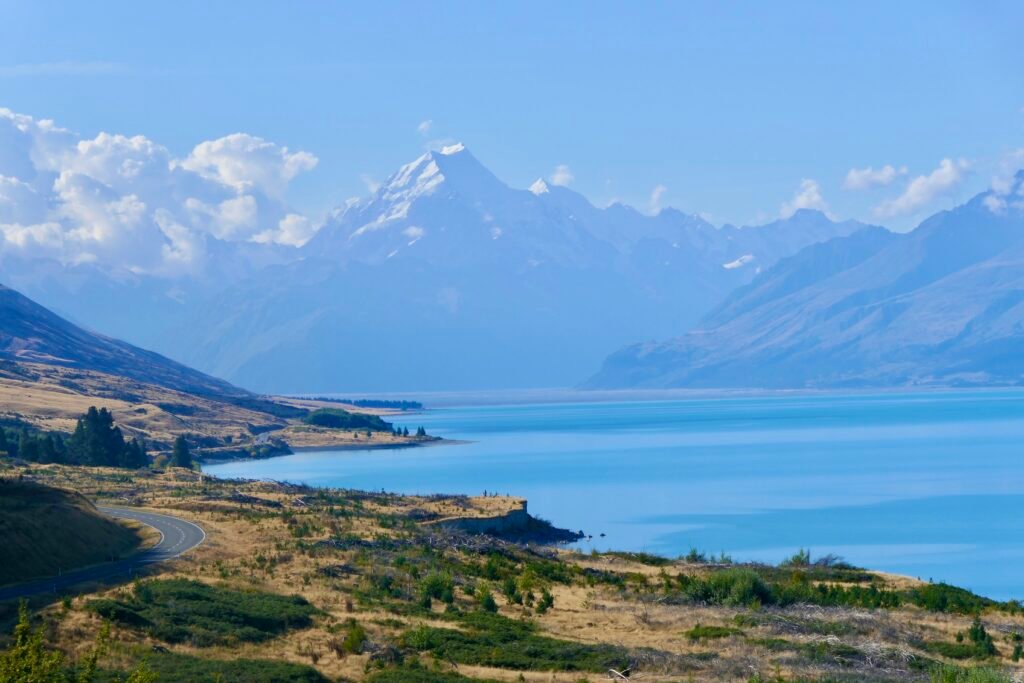
A short drive south brings us to the slightly bigger Lake Pukaki, which looks like Lake Tekapo but with more gravitas. The lake stretches toward the horizon in impossible blue. Who knew that turquoise water is so emotionally destabilising. In the far distance Mt Cook makes its presence known by pushing its snowy top into the passing clouds. It’s another ‘wow’ moment before a short 35 mile drive to Mt Cook Village, at the base of New Zealands highest mountain. Thankfully overnight accommodation awaits where the Alpine Lodge or Hermitage Hotel offer a choice of inexpensive and expensive sleeping arrangements. We choose the inexpensive one for accommodation and the expensive one for the wine served at the more sophisticated bar.
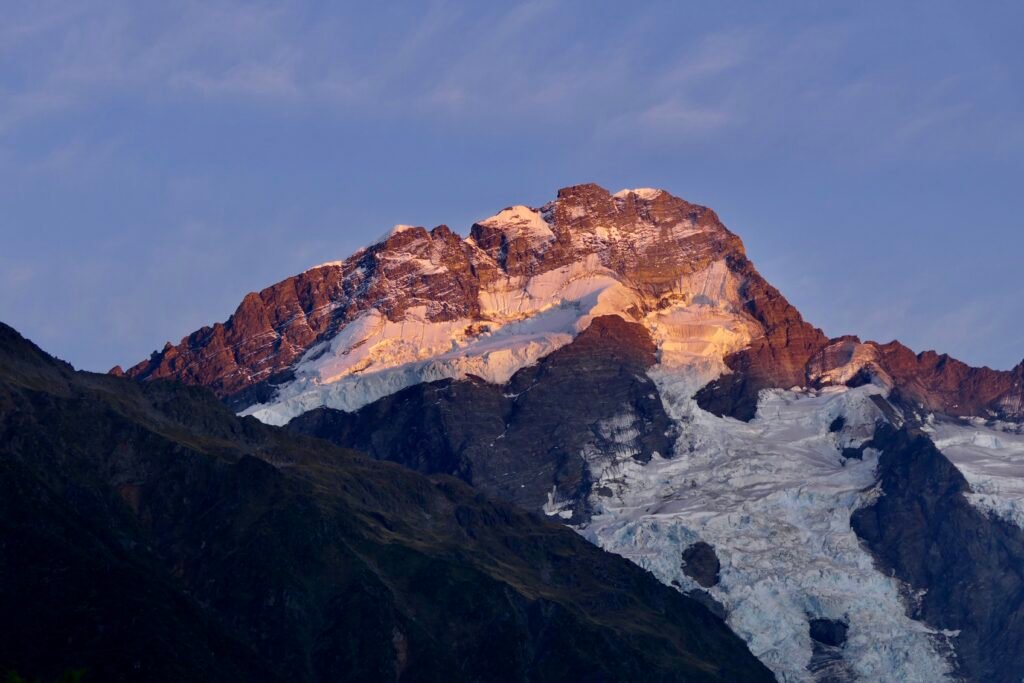
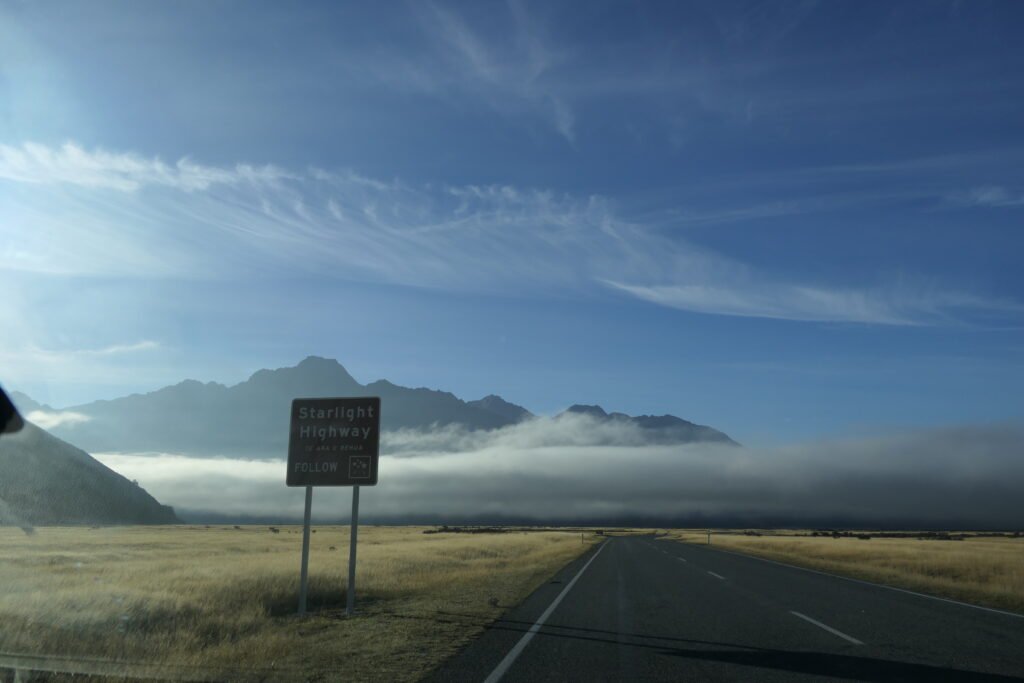
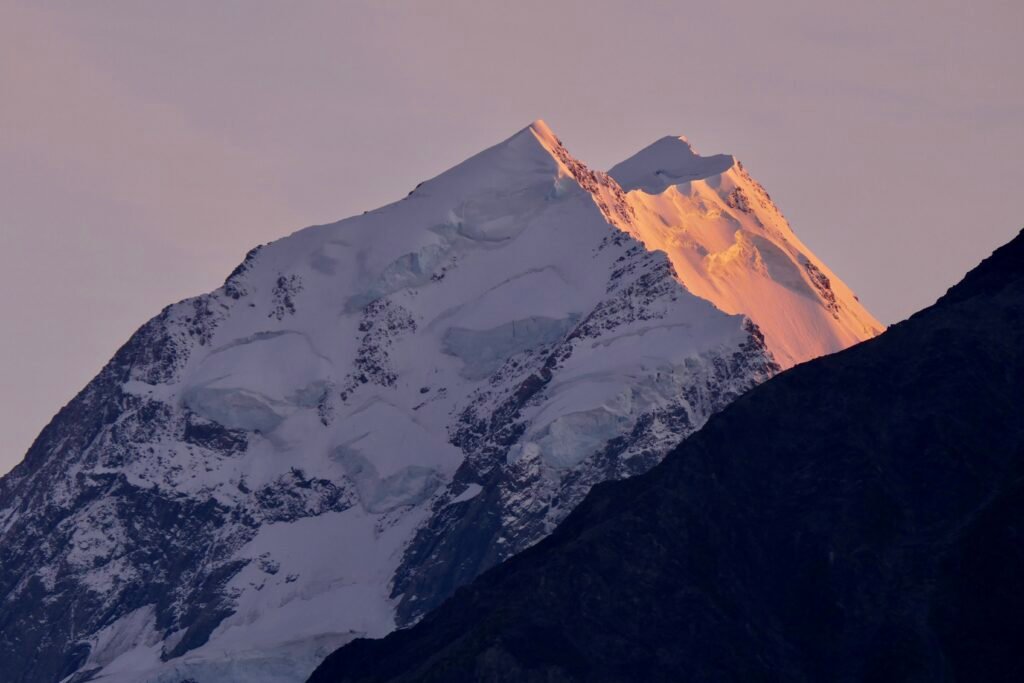
Waking up in the morning, the mist in the valleys clear slowly as the sun rises over the not-so-distant peaks. Like melted gold the sun’s rays slide over the mountains and down through the cracks and fissures of each peak. I’ve never seen that shade of gold before, and I can’t take my eyes off the changing hues as the rock lightens and darkens in equal measure. Nature is wonderful, as Dan would concur.
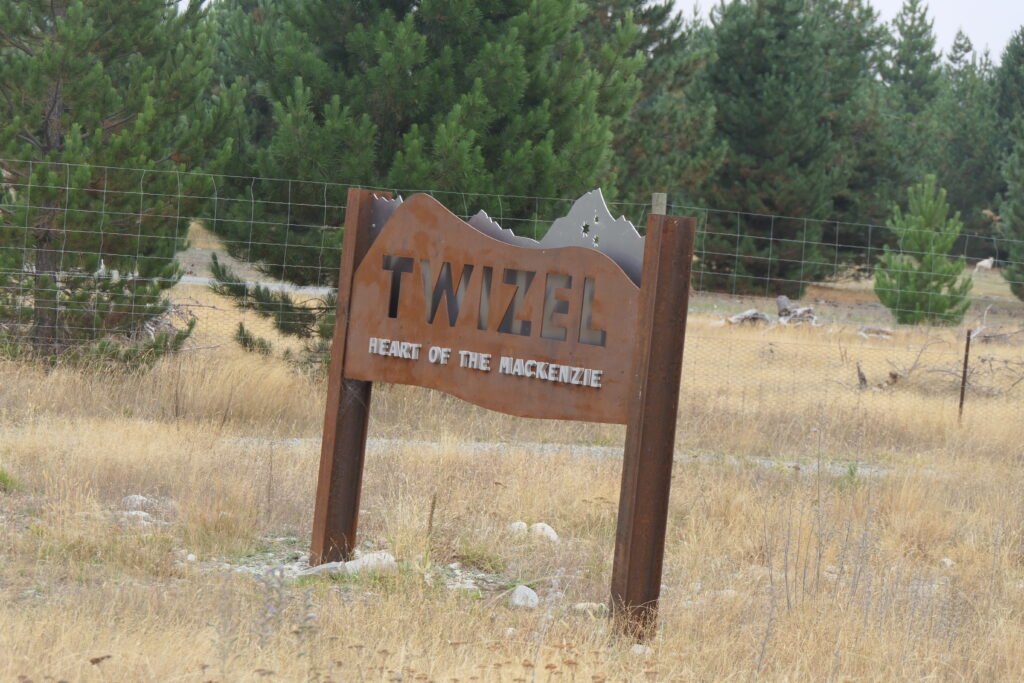
Twizel
Twizel is more a practical than scenic stop — fuel, snacks, coffee — and an opportunity to process what we’ve just seen. It is also where you realise New Zealand doesn’t do slightly scenic. It’s a cinematic extravaganza.
The road climbs into Lindis Pass, a high-country landscape of golden tussock hills rolling into the distance like a minimalist painting. Unlike the lush greens many expect from New Zealand, Lindis Pass offers warm ochres and earthy tones that shift with the light. In autumn: gold and copper hues. In winter: snow-dusted serenity. Year-round: a compelling urge to film a fantasy epic. At the summit, wind sweeps across the ridges, and I briefly feel like the protagonist in an epic quest despite currently holding a bag of fries for sustenance.
Cromwell
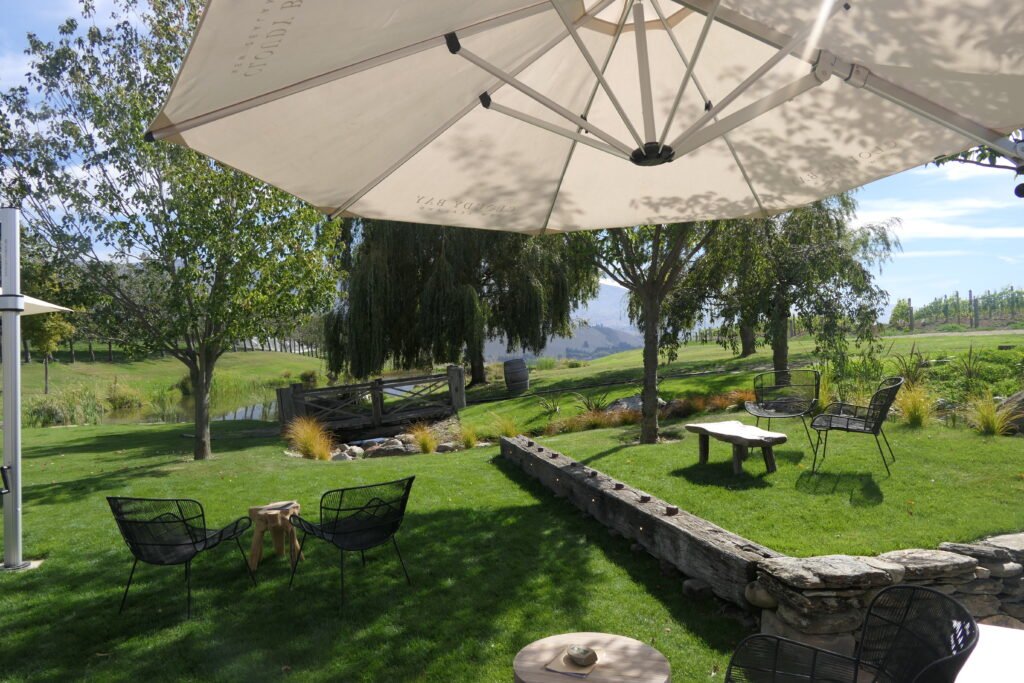
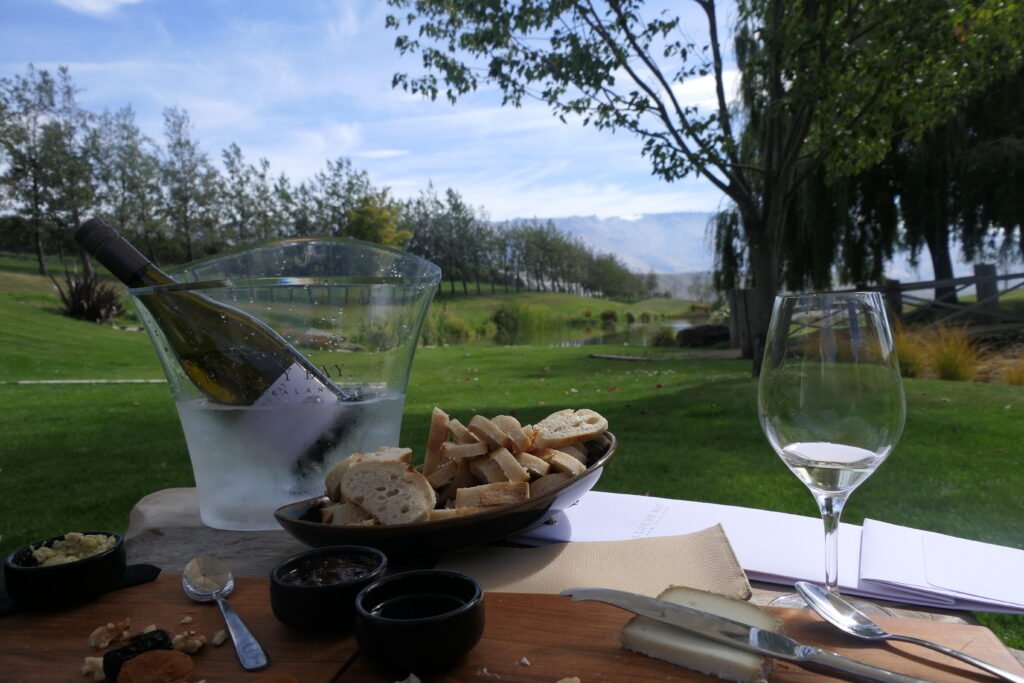
Descending into Central Otago, the landscape shifts once more. Suddenly it’s sunnier, drier, and dotted with orchards and vineyards. Just outside Cromwell sits Cloudy Bay Shed. If this is what sheds are like in New Zealand, I’m all for it. A shed with wine. It’s really a Cellar Door because here in the gardens over the laziest of lunches, you can experience this vineyard’s famous wines in a beautiful setting, overlooking the Pisa Mountain Range in the distance. Cromwell itself is a good place to stop for fruit so fresh it’s starting to feel smug about it. Depending on the season, roadside stalls offer cherries, apricots, or nectarines that taste like summer distilled into edible form
The Kawarau Gorge
The drive tightens through the Kawarau Gorge, where the river slices between rocky cliffs and the road clings to the terrain in a way that feels both thrilling and slightly theatrical. At the historic Kawarau Gorge Suspension Bridge, we watch humans voluntarily leap toward the river below attached to an elastic cord. This is widely considered as fun. We prefer to watch while eating ice cream. Both are valid choices. I bizarrely get too much enjoyment from their intermittent screams.
Arrival in Queenstown
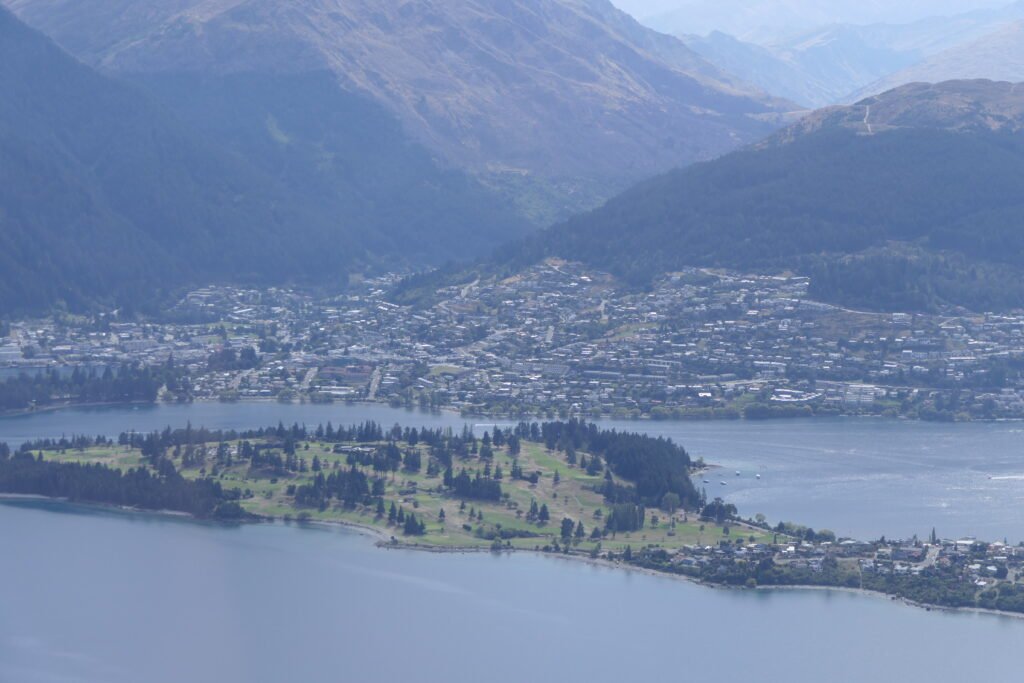
As we approach Queenstown, Lake Wakatipu appears like a deep blue welcome mat framed by the jagged peaks of The Remarkables. Think Austrian village set in the middle of the Canadian Rockies. That’s Queenstown. It’s lively, scenic, and enthusiastically good at adrenaline. Here you can skydive, jet boat, ski, paraglide, or simply sit beside the lake wondering why your life has been insufficiently adventurous. Queenstown makes you realise why mountains improve everything in life.
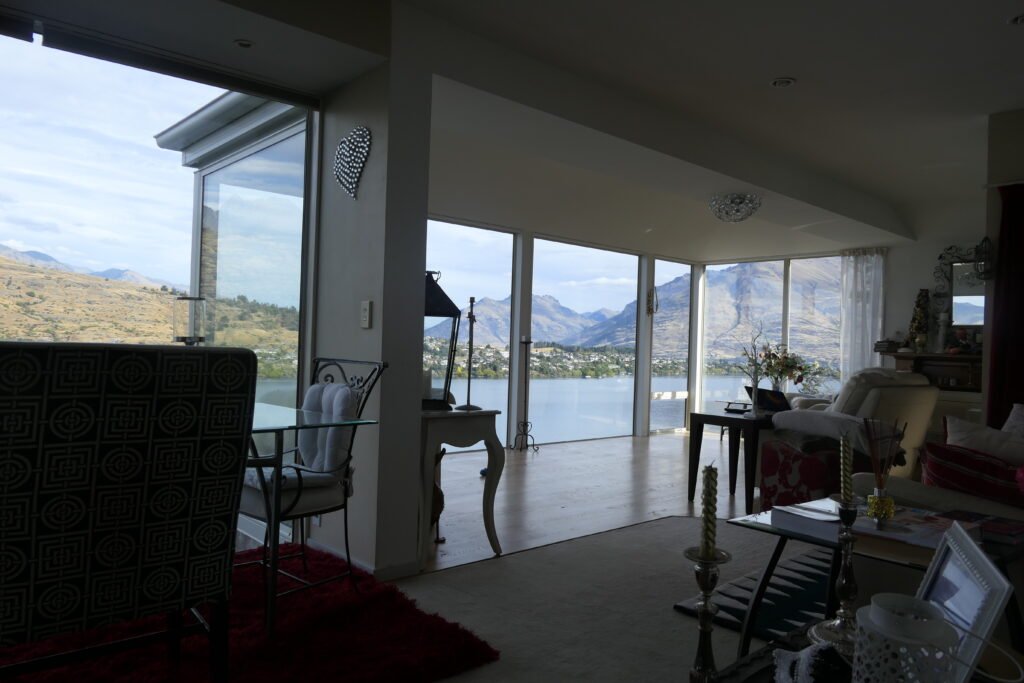
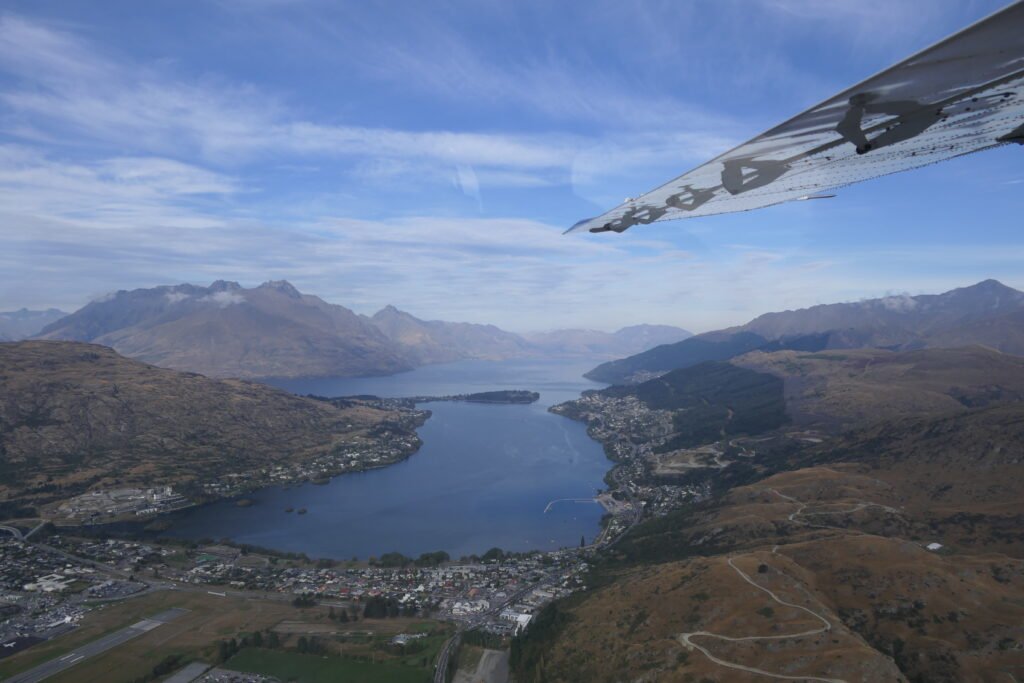
We settle into our hillside accommodation overlooking the lake while the resident hound follows me around looking for cuddles.
Queenstown earned its title as the Adventure Capital of the World. It was here that brave entrepreneurs launched world-first commercial adventures like bungy jumping in 1988 and jet boating in, would you believe 1958. It set the stage for decades of adventure innovation to follow. In winter, there’s skiing on the slopes of the Remarkables and Coronet Peak, while it’s also a base for exploring the region’s vineyards and historic mining towns, like Arrowtown.
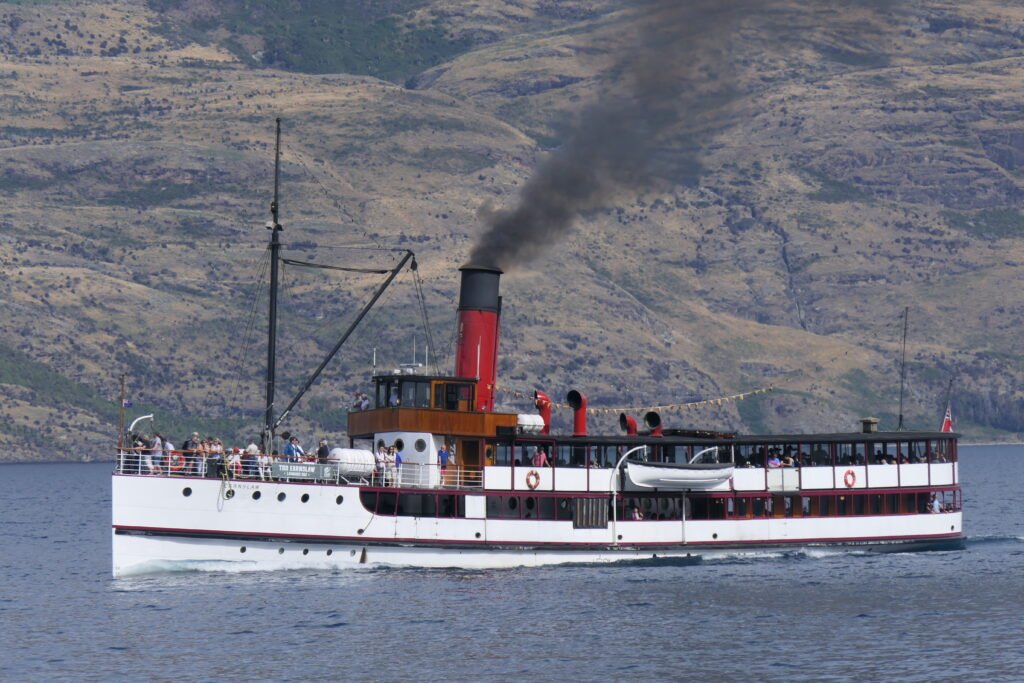
The 1912 coal-fired steamship, the TSS Earnslaw known as “Lady of the Lake” comes into view, returning to Queenstown after its regular 90-minute cruise on Lake Wakatipu. It also offers tours and dining at Walter Peak High Country Farm at the tip of the lake.
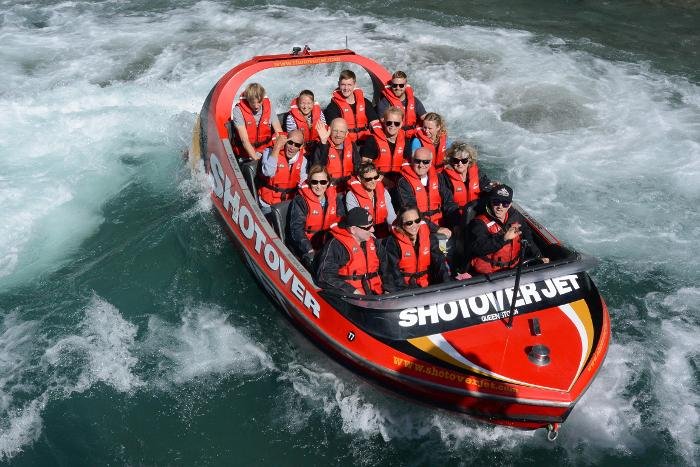
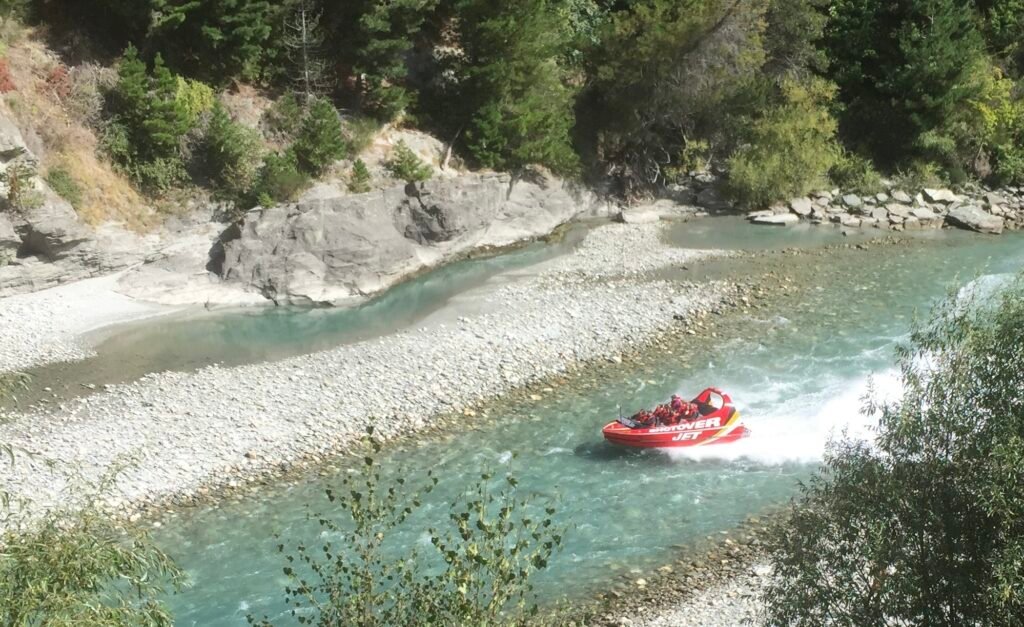
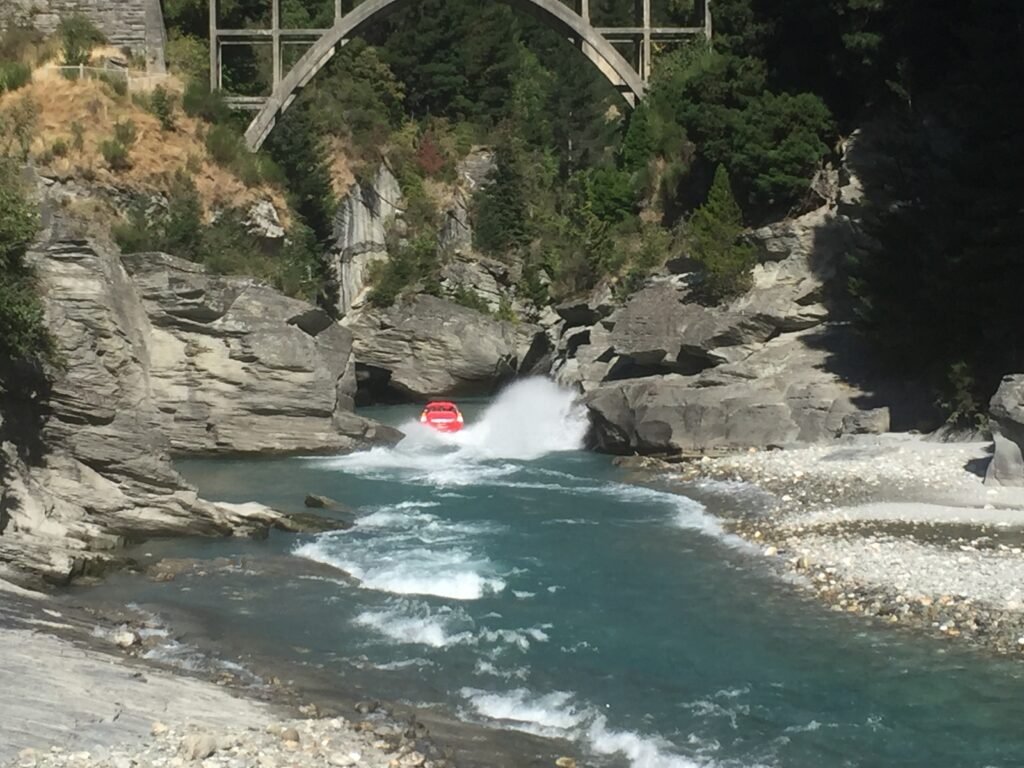
A trip on Shotover Jet has been one of Queenstown’s favourite attractions for nearly 60 years, and provides an adrenaline-filled experience as it skips over just a few inches of water down the Shotover River at speeds of up to 90kmph. Barely missing rocky outcrops and sheer cliff walls, the additional 360 degree spins seem pale by comparison. As soon as we get off, we want to get back on again.
Milford Sound is on most people’s itineraries when visiting Queenstown, however it is a four hour drive. When taking the road to Milford Sound it is advisable to overnight in Te Anau rather than Queenstown as it’s only a couple of hours drive in each direction. The town is also the last stop to get fuel.
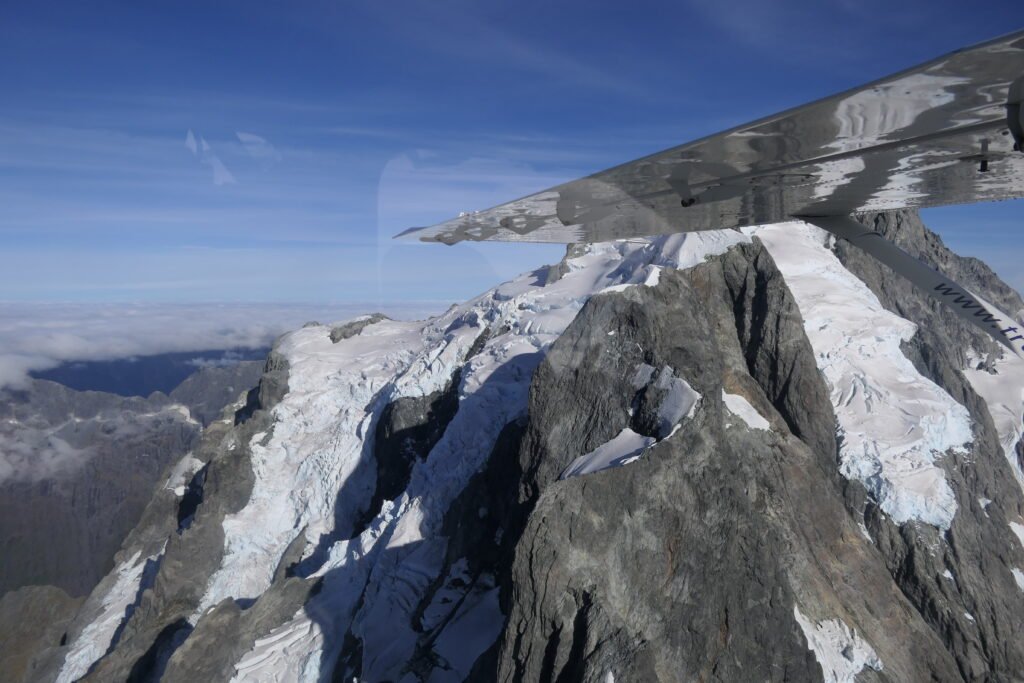
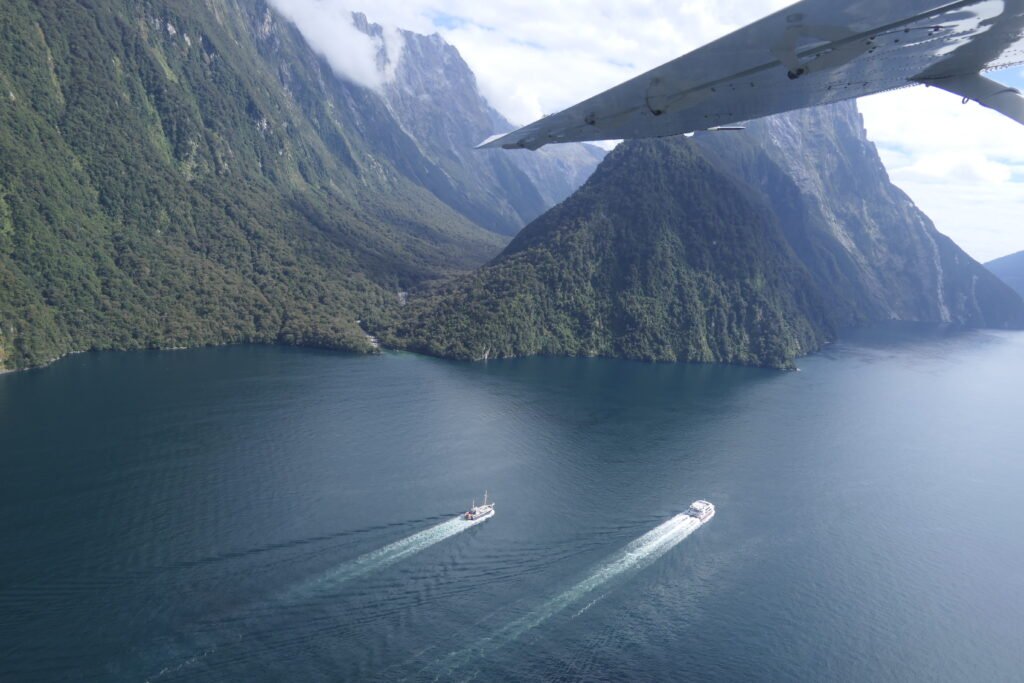
As much as I like driving through spectacular scenery, we decide to splash out and take a small plane tour which allows us a full day trip to include a cruise on the Sound. The tour isn’t small but the plane is. Our booked flight is cancelled on the day because of low cloud, which is a big disappointment as we are leaving in two days. Twenty-four hours later, on a bright and sunny morning, it’s back on as we’re summoned to the airport. Each passenger has their weight checked before boarding, the pilot clearly believing our own estimates are slightly optimistic. We don’t want the plane unbalanced just because of a couple of pizza’s the night before.
Boarding our little eight-seater aircraft, I bemoan the fact there is no room for a stewardess and drinks trolley. Flying into and over the Southern Alps to Fiordland National Park provides an example of why we all travel. It’s a pricey but never to be forgotten experience. Flying through mountains rather than over them gives a unique and extraordinary perspective on the massive landscape stretched out before us. Our pilot, clearly in good humour as its a clear day or with just a death wish, decides to swing round so close to a couple of them we can almost touch the snowy peaks as they slide by.
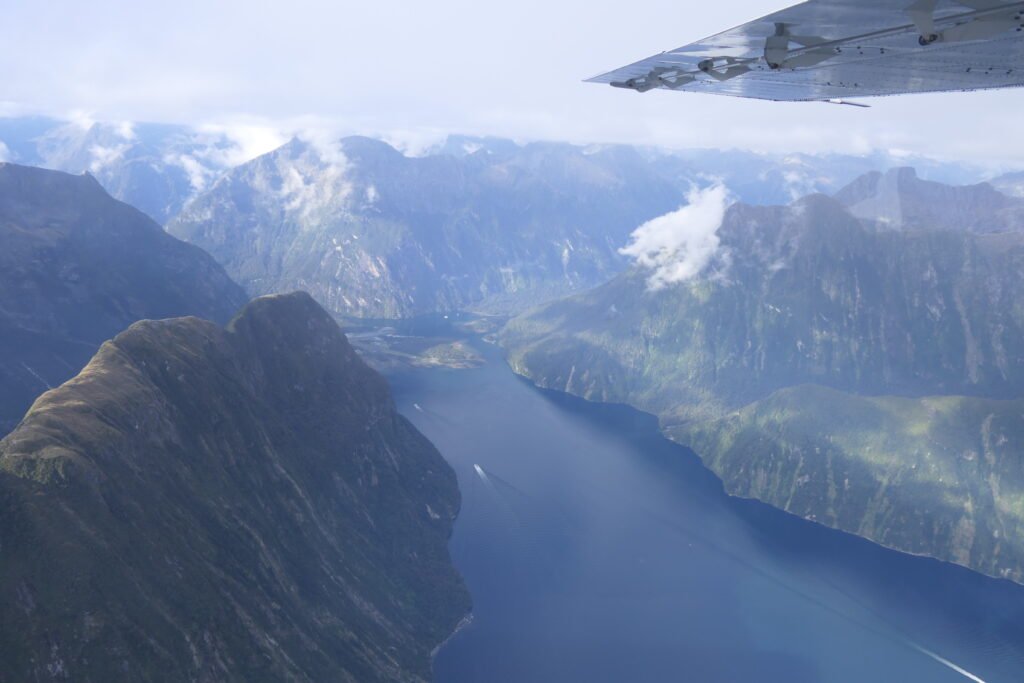
Arrival into Milford Sound by plane is an experience in itself. The vastness of this unique country is laid out below, while little white lines of foam trail behind the seemingly tiny boats sailing down the Sound. As we descend below the mountain peaks and past the huge cliffs peppered with thousands of waterfalls, a darkness falls across our little cabin in the air, and a different magic enters our world. No sooner are we on the ground, than we are sailing down the cold waters of this great fjord on what turns out to be a much larger vessel than first appeared from the air.
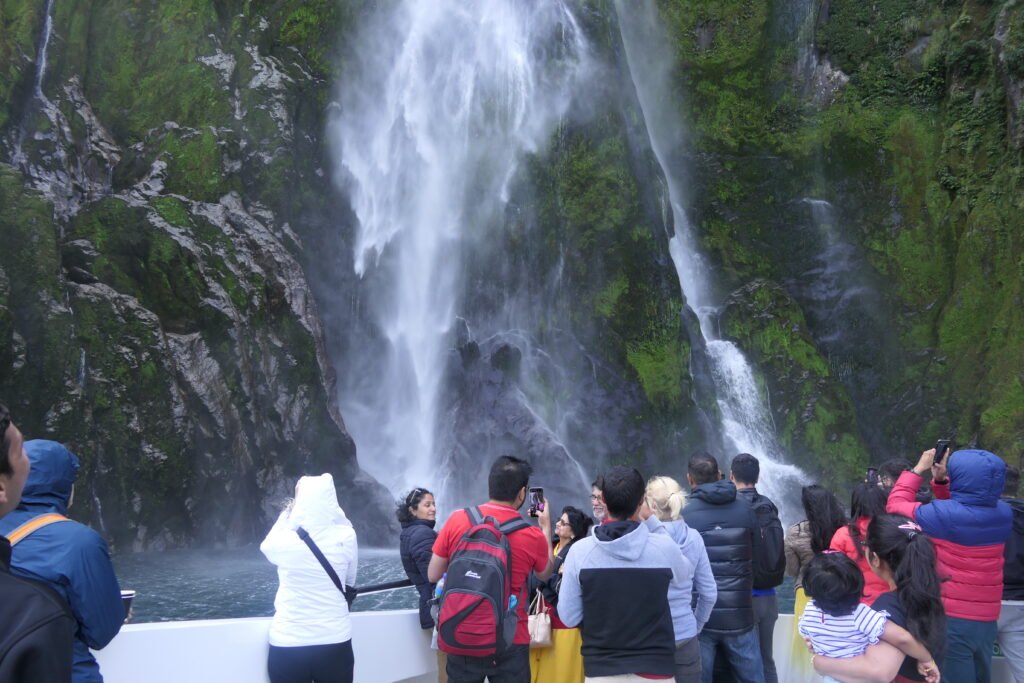
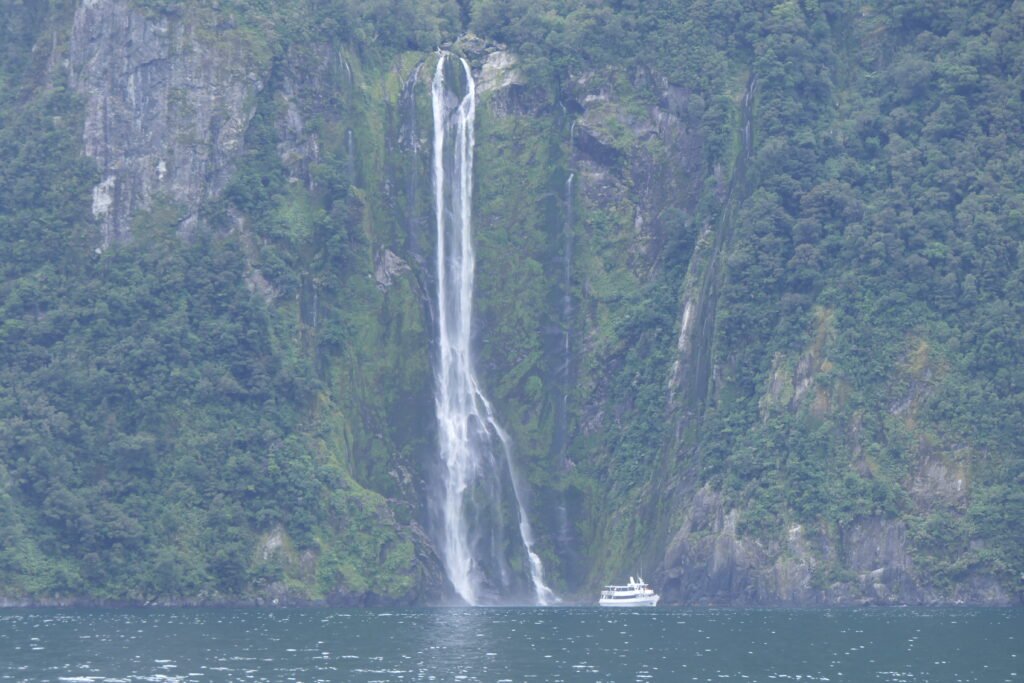
Milford Sound is one of the few places on earth that needs rain to be appreciated. The more the better, so as to feed the many waterfalls. It might play havoc with camera light settings, but the cliffs are impotent without rain. Surprisingly Milford Sound has only two permanent waterfalls – Lady Bowen Falls and Stirling Falls, but it is known as the land of a thousand waterfalls because a myriad of them appear during and immediately after a downpour. These temporary cascades vanish roughly 10 minutes after the rain stops. With seals, dolphins and various seabirds accompanying our return to port we raise a glass to a sensational few hours.
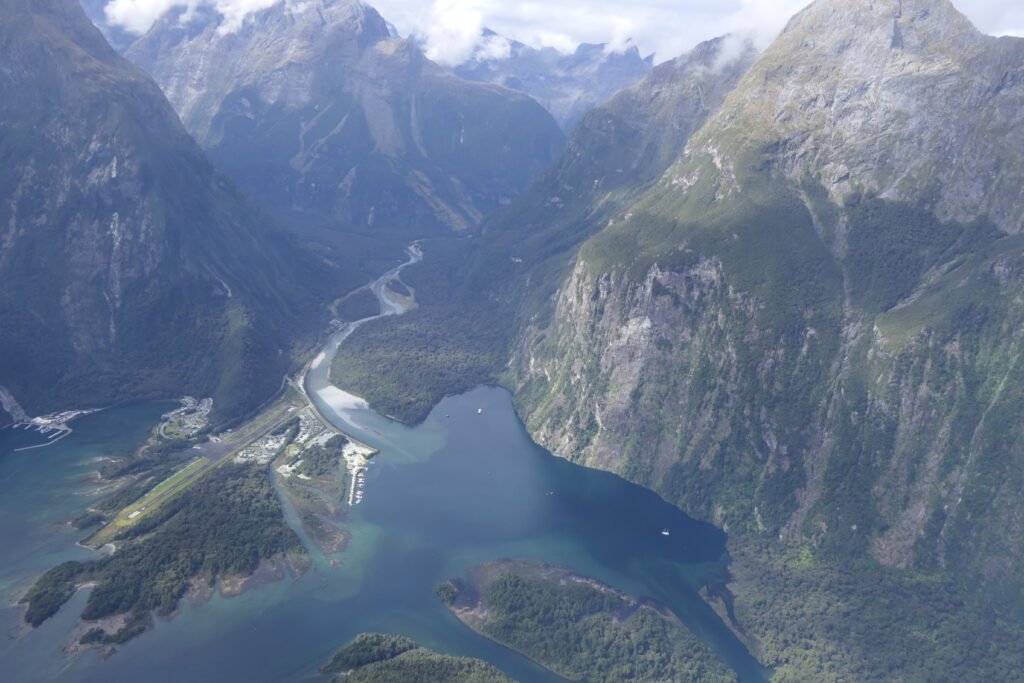
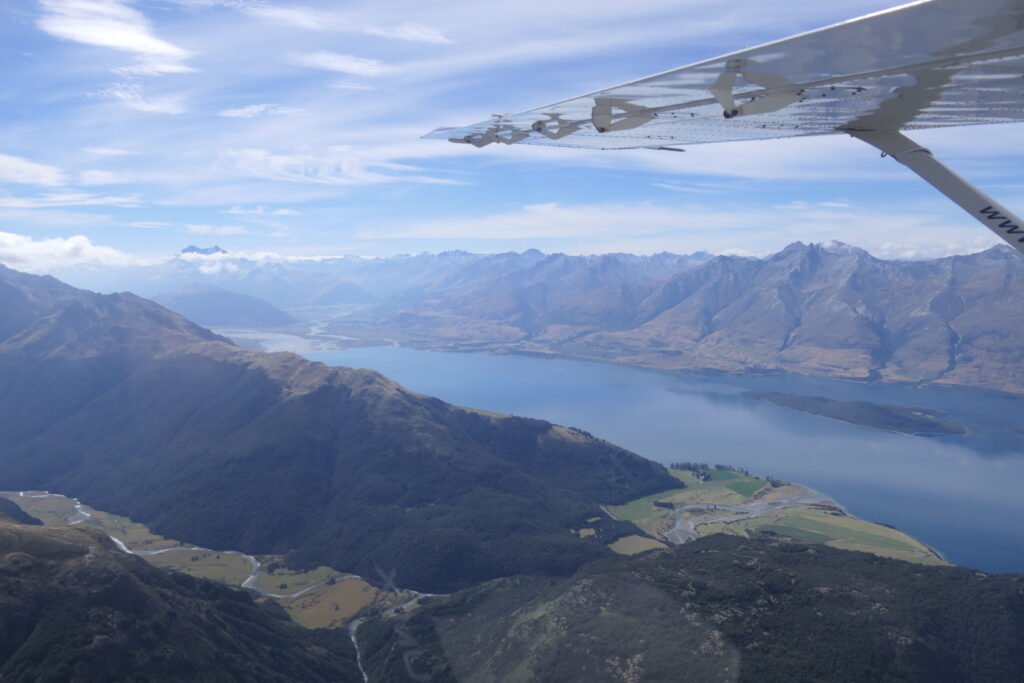
Our day and our trip ends with the flight back to Queenstown over the lengthening shadows covering the mountain ranges as the sun dips slowly over the horizon.
The Christchurch to Queenstown drive succeeds because it never lets the scenery dip. Each stretch escalates, from plains to lakes, lakes to mountains, mountains to gorges, gorges to alpine drama. This is not a journey about speed. It’s about surrendering to scenic wonder, pulling over often, and accepting that your camera will become a shrine to the high altar of towering mountains and blue lakes. It’s the land of Lord of the Rings, the Hobbit and other grand mystical stories. By the time you reach Queenstown, you’ll feel both exhilarated and slightly suspicious that nowhere else will look quite as good.
MILEAGE – 350